Do Finance Teams Need a DPIA for Microsoft Copilot Adoption?
Finance leaders see generative AI as the next efficiency wave. Yet privacy regulators also see new high risk in these tools. Therefore, many enterprises ask whether a Data Protection Impact Assessment is mandatory before enabling Copilot. This article answers that question for finance teams considering Microsoft Copilot Adoption today. We combine regulator guidance, Microsoft documentation, and Adoptify.ai field experience. Additionally, you will get a practical checklist and governance toolkit aligned with GDPR and U.S. rules.
Why Finance Teams Care
Finance workloads carry payroll, customer, and trading data that trigger strict oversight. Consequently, any mistake could leak account numbers or salaries within seconds. The stakes make Microsoft Copilot Adoption simultaneously attractive and scary.
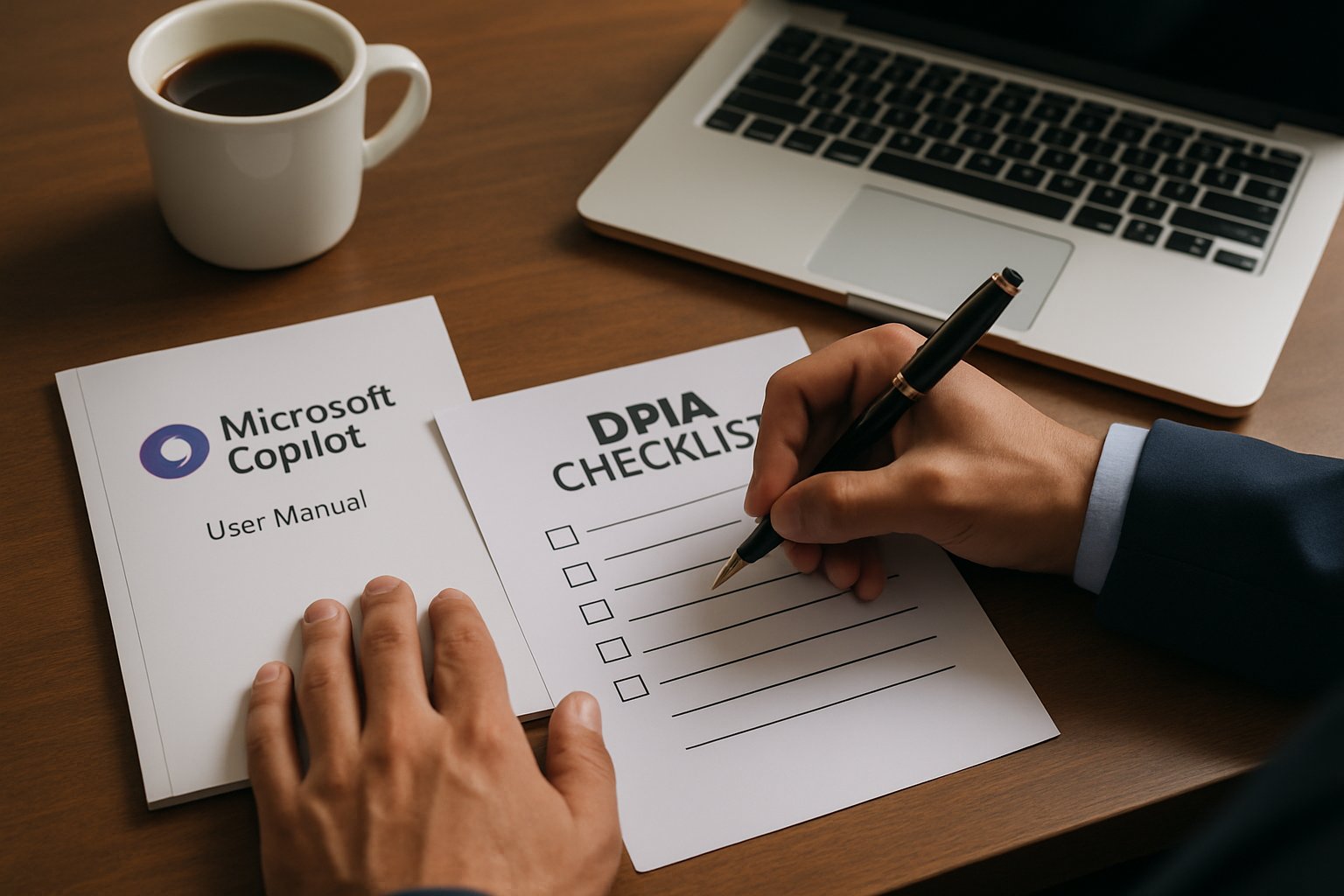
A single Copilot query can traverse mailboxes, ERPs, SharePoint and Teams. In contrast, manual analysts access only the files they open. That breadth increases Financial data privacy risks exponentially when access controls lag.
Additionally, finance records often mix employee identifiers with customer account data, complicating classification. Auditors flag such commingling as unacceptable without demonstrable segmentation and retention controls.
Typical Data Exposure Scenarios
Consider an accounts payable clerk asking Copilot for “contracts with overdue invoices.” If historic files hold social security numbers, Copilot may surface them together. Moreover, stale permissions often expose resignation letters, health claims, or board notes. These examples illustrate real Financial data privacy risks observed during pilots.
DPIA for Microsoft Copilot exercises show that 60% of shared drives include special categories. Consequently, Copilot privacy risk assessment workshops must inventory and classify data first. We close this section noting that revenue gains only arrive when trust exists.
Finance teams face unique sensitivity and regulator pressure. Careful scoping protects value and reputation before broad Microsoft Copilot Adoption. Now, let’s unpack the legal triggers that drive a formal assessment.
Critical Regulatory Triggers Today
GDPR Article 35 names “new technologies” and “large scale processing” as DPIA criteria. Generative AI plainly fits both points according to multiple EU Data Protection Authorities. Consequently, Enterprise Copilot GDPR compliance programs almost always begin with a DPIA.
National sandboxes from Norway and Netherlands confirm that DPIA for Microsoft Copilot is expected. Moreover, US regulators demand documented risk analysis, even without a statutory DPIA rule. Financial data privacy risks appear in GAO and SEC commentary on model governance.
Microsoft provides “Build your own DPIA” templates and financial compliance addenda. However, customers stay responsible for the Copilot privacy risk assessment outcome. Therefore, finance chiefs must sign off before production traffic flows.
- Systematic automated decision-making affecting individuals
- Large-scale processing of special categories
- New technology with untested impacts
- Cross-border financial data transfers
Regulators agree that generative AI meets several high-risk flags at once. Consequently, skipping a DPIA for Microsoft Copilot invites enforcement and reputational damage. Next, we detail a concise finance DPIA checklist you can execute this quarter.
In contrast, smaller SaaS startups sometimes ignore these triggers until a client security questionnaire arrives. Late remediation costs triple due to rushed legal reviews and unplanned tool purchases.
Finance DPIA Checklist Guide
Adoptify.ai practitioners build hundreds of DPIAs each year with finance clients. Their field data shapes this streamlined plan for Microsoft Copilot data protection success. Follow each step sequentially for clarity and audit readiness.
- Map use cases and data flows; create the Copilot privacy risk assessment scoping sheet.
- Run Purview scans and catalog sensitive files to reduce Financial data privacy risks early.
- Draft the baseline DPIA for Microsoft Copilot using Microsoft templates plus internal controls.
- Implement Entra least-privilege and Purview DLP; document measures for Enterprise Copilot GDPR compliance.
- Pilot with 50-200 users; collect telemetry and ROI metrics for board reports.
- Iterate the DPIA quarterly; update risk ratings and mitigation status.
Copilot ROI Evidence Examples
Forrester studies project 52%–468% three-year ROI depending on function. Finance pilots inside Adoptify show median productivity gains of 19% within six weeks. Consequently, governance effort, including Microsoft Copilot Adoption workstreams, usually pays back quickly.
A documented ROI also convinces auditors that controls fuel performance, not bureaucracy. Therefore, linking financial benefits to the DPIA narrative helps leadership allocate budgets.
The checklist above aligns compliance and value. Next, we review technology enablers that accelerate each step.
Each step should involve legal, security, and finance stakeholders to align terminology and accountability. Moreover, recording decisions in the DPIA platform builds traceability for future audits or breach notifications.
Governance Tools That Help
Technology choices determine whether policies survive day-two realities. Adoptify’s AdaptOps model bundles crucial controls into deployable playbooks. Those playbooks anchor Microsoft Copilot data protection in actual configuration files, not slideware.
The governance starter kit maps data, flags high-risk flows, and suggests Purview DLP templates. Additionally, Entra policies enforce least-privilege while Copilot control lists block restricted repositories. Consequently, Enterprise Copilot GDPR compliance evidence becomes exportable with one click.
Pilot telemetry dashboards compare KPI baselines against productivity shifts. Therefore, boards witness Microsoft Copilot Adoption progress alongside risk reduction.
Adoptify AI dashboards pull Purview, Entra, and Copilot telemetry into one canvas for fast triage. Therefore, executives see correlations between productivity gains and policy violations in real time.
Integrated tools cut manual labor and shorten audit cycles. Now, continuous monitoring keeps safeguards current despite evolving AI models.
Ongoing Monitoring Action Steps
Generative AI evolves fast, so static documents age quickly. Finance teams must operate a living Copilot privacy risk assessment loop. Accordingly, schedule quarterly DPIA reviews tied to release notes and policy changes.
Adoptify guidance recommends alerting when prompts reference regulated identifiers. Meanwhile, incident drills test response plans before regulators do. These routines further solidify Microsoft Copilot data protection posture.
Keep stakeholder engagement high with dashboards showing incident counts, ROI and training completion. Consequently, Microsoft Copilot Adoption momentum remains strong while controls mature.
Supervisors should schedule red-team prompt injections to test guardrails quarterly. Meanwhile, user champions can crowd-source suspicious output examples through secure feedback channels.
Ongoing monitoring sustains both value and compliance. We close with core lessons and an Adoptify solution overview.
Conclusion
Finance leaders now know Microsoft Copilot Adoption demands structured governance. A DPIA for Microsoft Copilot and rigorous Copilot privacy risk assessment guard budgets. Embedding Microsoft Copilot data protection controls early slashes Financial data privacy risks. Enterprise Copilot GDPR compliance also boosts audit confidence with regulators. Consequently, Microsoft Copilot Adoption becomes faster and safer.
Why Adoptify AI? The platform merges AI adoption, in-app guidance, analytics, and automated workflows. Organizations using Adoptify accelerate Microsoft Copilot Adoption with secure playbooks and ROI dashboards. Visit Adoptify AI to improve onboarding and governed AI at scale today. Every workshop, dashboard, and alert aligns with your Microsoft Copilot Adoption objectives. Start Microsoft Copilot Adoption the smart way—guided, measured, and auditor-ready.
Frequently Asked Questions
- Is a DPIA mandatory for Microsoft Copilot Adoption in finance?
Yes, finance teams should perform a DPIA for Microsoft Copilot since GDPR and U.S. guidelines classify large-scale AI processing as high risk. Adoptify AI streamlines DPIA documentation and data mapping for compliance. - How does Adoptify AI help manage financial data privacy risks with Copilot?
Adoptify AI automates risk assessments by integrating Purview scans, Entra least-privilege policies, and real-time telemetry dashboards, ensuring robust control over financial data and regulatory compliance. - What are key regulatory triggers for performing a DPIA in finance?
Regulatory triggers include handling sensitive financial data, large-scale AI processing, and cross-border transfers. Finance teams must follow GDPR Article 35 and SEC guidelines, with Adoptify providing automated compliance support. - How does ongoing monitoring enhance Copilot adoption success?
Ongoing monitoring with Adoptify AI ensures continuous DPIA updates, real-time alerts for data risks, and effective performance measurement, fostering secure, sustainable Microsoft Copilot adoption.

FEATURED
How to Identify and Overcome Cultural AI Adoption Barriers
March 3, 2026
FEATURED
What Are the Most Common AI Adoption Challenges for Businesses
March 3, 2026
FEATURED
The Complete Guide to Building an AI Adoption Framework for 2026
March 2, 2026
FEATURED
Who Owns the Intellectual Property in Enterprise AI Adoption
March 2, 2026
FEATURED
7 Reasons To Embrace AI-Native Architecture
March 2, 2026