Credit Scoring Fairness: Enterprise Adoption Guide
Regulators, investors, and consumers now demand transparent lending decisions. Consequently, leaders rush to embed credit scoring fairness into every underwriting workflow. However, many pilots stall because governance, skills, and proof points lack alignment. This guide explains how enterprises can adopt ethical AI, meet strict rules, and secure lasting ROI.
We draw on Adoptify.ai’s AdaptOps framework, global supervisory statements, and live bank pilots. Readers will learn concrete steps to govern models, test for bias, upskill teams, and scale securely. Throughout, we prioritize short sentences, clear actions, and enterprise-grade examples.
Worldwide Regulatory Pressure Rise
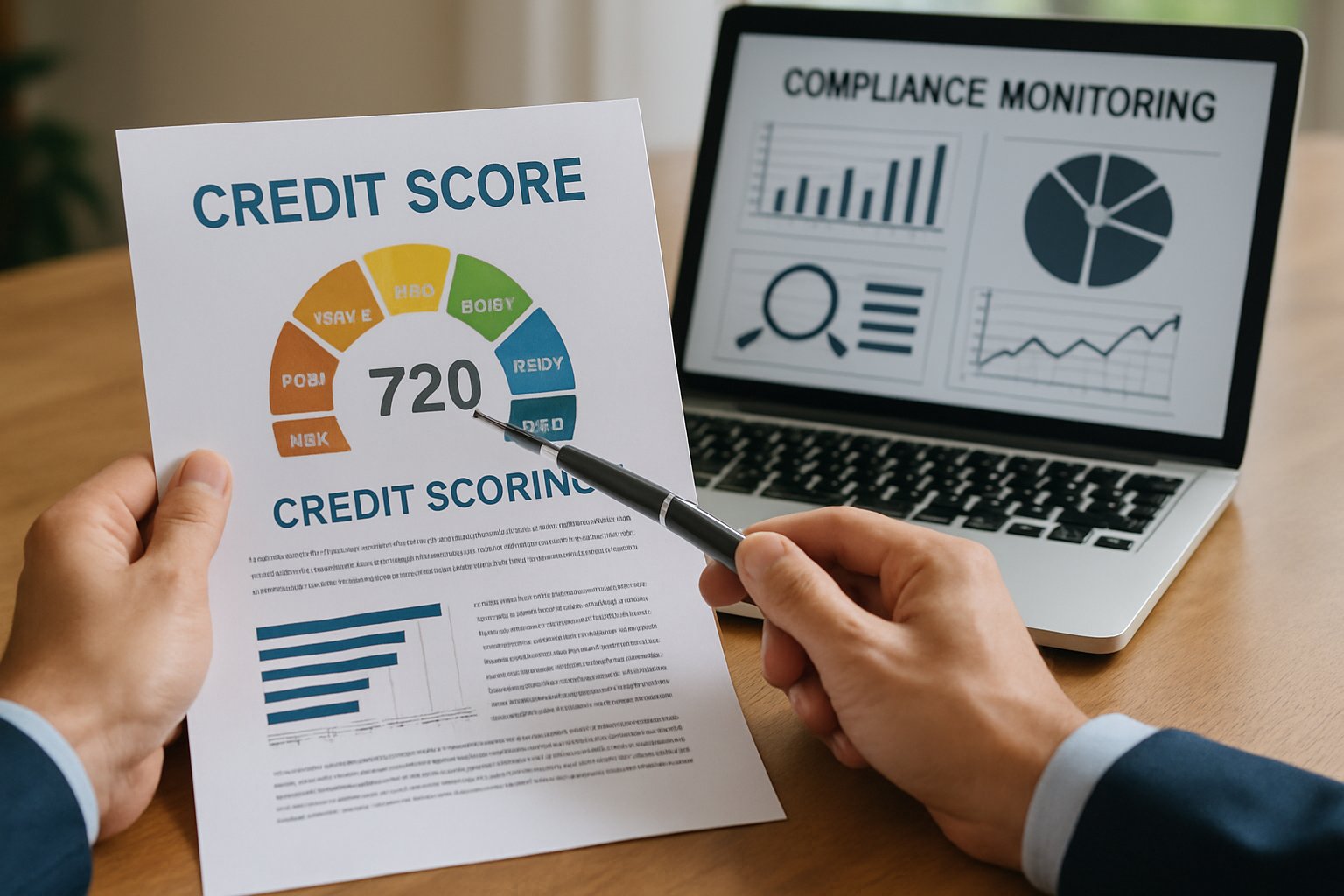
Rules tighten quickly across jurisdictions. In the United States, the CFPB insists that complex models still deliver specific adverse-action reasons. Furthermore, supervisors now expect searches for less-discriminatory alternatives (LDAs). Meanwhile, the EU AI Act classifies credit scoring as “high-risk,” requiring human oversight, robustness checks, and detailed documentation.
Institutions ignoring these mandates face fines, reputational damage, and lost market share. Therefore, governance teams must codify obligations early. AdaptOps helps by mapping policy templates, SOC integration, and human-in-the-loop gates to each lifecycle phase.
Key takeaway: regulatory heat will only intensify. Next, we examine why embracing credit scoring fairness boosts business performance. Transitioning now prevents catch-up costs later.
Credit Scoring Fairness Wins
Fair models are not charity projects. They unlock new borrower segments, improve risk calibration, and slash manual reviews. Vendor studies cite 25–40% more approvals and 20% lower charge-offs when fairness optimization layers sit on machine-learning scores. Moreover, McKinsey estimates AI could trim certain banking expenses by up to 70%.
However, 59% of enterprises cannot yet measure productivity gains from pilots. AdaptOps counters this gap with KPI dashboards that link fairness, approval rates, and cost per loan within 90-day pilots. Consequently, executives can defend ongoing investment.
Summary: aligning ethics with economics accelerates adoption. The following section shows how a governance-first operating model embeds credit scoring fairness from day one.
Governance First Operating Model
Effective programs begin with a transparent inventory. Classify every scoring component as high-risk and record purpose, data lineage, and owners. Subsequently, set policy gates: readiness assessment → pilot → scale → govern. AdaptOps automates these stages, supplying policy templates, role-based approvals, and audit trails.
Explainability tooling plugs into this pipeline. Feature-attribution charts feed adverse-action engines that produce compliant applicant letters. Additionally, continuous monitoring dashboards flag drift and disparate impact in real time. Teams receive in-app guidance to resolve alerts quickly.
Takeaway: governance must live inside workflows, not in slide decks. With structure established, technical fairness tests can run reliably.
Technical Fairness Testing Steps
Robust testing protects applicants and institutions. Adopt the following repeatable loop:
- Collect protected and proxy variables under strict access controls.
- Run multiple metrics: demographic parity, equalized odds, calibration, benefit ratio.
- Execute automated LDA searches for alternative models with lower disparities.
- Generate human-readable adverse-action reasons from local SHAP values.
- Log results and sign-offs for regulators.
Furthermore, schedule revalidation after material changes or quarterly at minimum. Drift detection triggers earlier reviews. AdaptOps links each test to owner certifications and evidence repositories.
Key point: consistent, automated tests make credit scoring fairness sustainable. Next, we address the people factor.
Workforce Upskilling Essentials
Technology fails without trained staff. Therefore, lenders must equip data scientists, credit officers, and compliance teams with aligned skills. Role-based microlearning, live simulations, and short assessments ensure knowledge sticks.
AdaptOps provides in-app walkthroughs for policy steps, fairness dashboards, and adverse-action workflows. Additionally, adoption champions drive peer coaching. Consequently, teams speak a common language when discussing bias metrics or regulator questions.
Summary: sustained credit scoring fairness requires ongoing learning. Finally, we plot a roadmap from pilot to enterprise scale.
Pilot To Scale Roadmap
Start lean. Select one product line, define KPIs, and cap the pilot at 90 days. Use AdaptOps ECIF-backed co-delivery with Microsoft to reduce infrastructure costs. Capture baseline approval rates, average underwriting time, and fairness metrics.
During the pilot, embed human-in-the-loop reviews for borderline scores. Subsequently, present KPI and fairness improvements to governance committees. If targets hold, expand feature sets, automate monitoring, and roll out to additional geographies.
Reminder: document everything. Regulators value versioned datasets, model cards, and operator certifications. AdaptOps centralizes these artifacts, easing supervisory exams.
Takeaway: disciplined scaling turns early wins into enterprise transformation. The journey ends, yet continuous improvement never stops.
Continuous Improvement Loop
Even strong models age. Therefore, institutions must monitor performance, fairness, and data drift daily. Automated alerts prompt retraining or policy tweaks before issues escalate. Moreover, periodic “red team” audits stress-test assumptions and surface hidden proxy risks.
By closing feedback loops, lenders uphold credit scoring fairness and maintain competitive advantage. We now conclude with actionable next steps.
Conclusion
Regulatory momentum, market opportunity, and social expectations converge. Enterprises that operationalize credit scoring fairness enjoy larger addressable markets, lower risk costs, and stronger reputations. The path demands governance-first processes, rigorous testing, continuous monitoring, and deep workforce enablement.
Why Adoptify AI? The platform fuses AI-powered digital adoption capabilities, interactive in-app guidance, intelligent user analytics, and automated workflow support. Organizations achieve faster onboarding, higher productivity, and audit-ready scaling—all while protecting sensitive data with enterprise security controls. Experience streamlined credit scoring fairness initiatives today by visiting Adoptify AI.
Frequently Asked Questions
- How does Adoptify AI support credit scoring fairness compliance?
Adoptify AI uses AdaptOps to integrate automated fairness testing, role-based in-app guidance, and continuous monitoring, ensuring credit scoring fairness while meeting regulatory mandates and reducing risk in lending workflows. - What role does digital adoption play in effective credit scoring?
Digital adoption streamlines the transition to automated processes, enhancing transparency, bias detection, and real-time monitoring, which leads to better credit scoring fairness and more compliant, efficient lending decisions. - How does workflow intelligence enhance regulatory compliance in lending?
Workflow intelligence leverages automated alerts, user analytics, and in-app guidance to continuously monitor model performance and fairness, ensuring lending processes meet evolving regulations and maintain robust compliance. - What are the benefits of using AdaptOps for credit scoring applications?
AdaptOps accelerates pilot-to-scale initiatives with KPI dashboards, automated support, and comprehensive audit trails, delivering faster onboarding, enhanced ROI, and reliable adherence to regulatory standards in credit scoring.

FEATURED
Artificial intelligence adoption: Copilot consulting ROI math
February 4, 2026
FEATURED
Microsoft Copilot Consulting: Bulletproof Security Configuration
February 4, 2026
FEATURED
Where Microsoft Copilot Consulting Safeguards Data
February 4, 2026
FEATURED
Microsoft Copilot Consulting: Automate Executive Presentations
February 4, 2026
FEATURED
Microsoft Copilot Consulting Slashes 15 Weekly Hours
February 4, 2026