Regulated Industry AI Vendor Security Audit Checklist Guide
Regulated enterprises feel constant pressure to prove that every new tool is secure. Consequently, an AI vendor security audit now decides whether a promising platform ever reaches production. However, many teams still rely on generic SaaS questionnaires that miss model-specific risk. This article offers a practical, governance-first checklist grounded in NIST, CSA, and Adoptify AI AdaptOps field work.
AI Vendor Security Audit
The term AI vendor security audit covers three intertwined goals. First, confirm the supplier meets baseline security practices. Second, verify AI-specific controls around data, models, and updates. Third, document evidence for regulators. Recent IBM data shows 97% of AI incidents involve missing access controls. Therefore, auditors demand deeper proof than a SOC 2 letter alone.
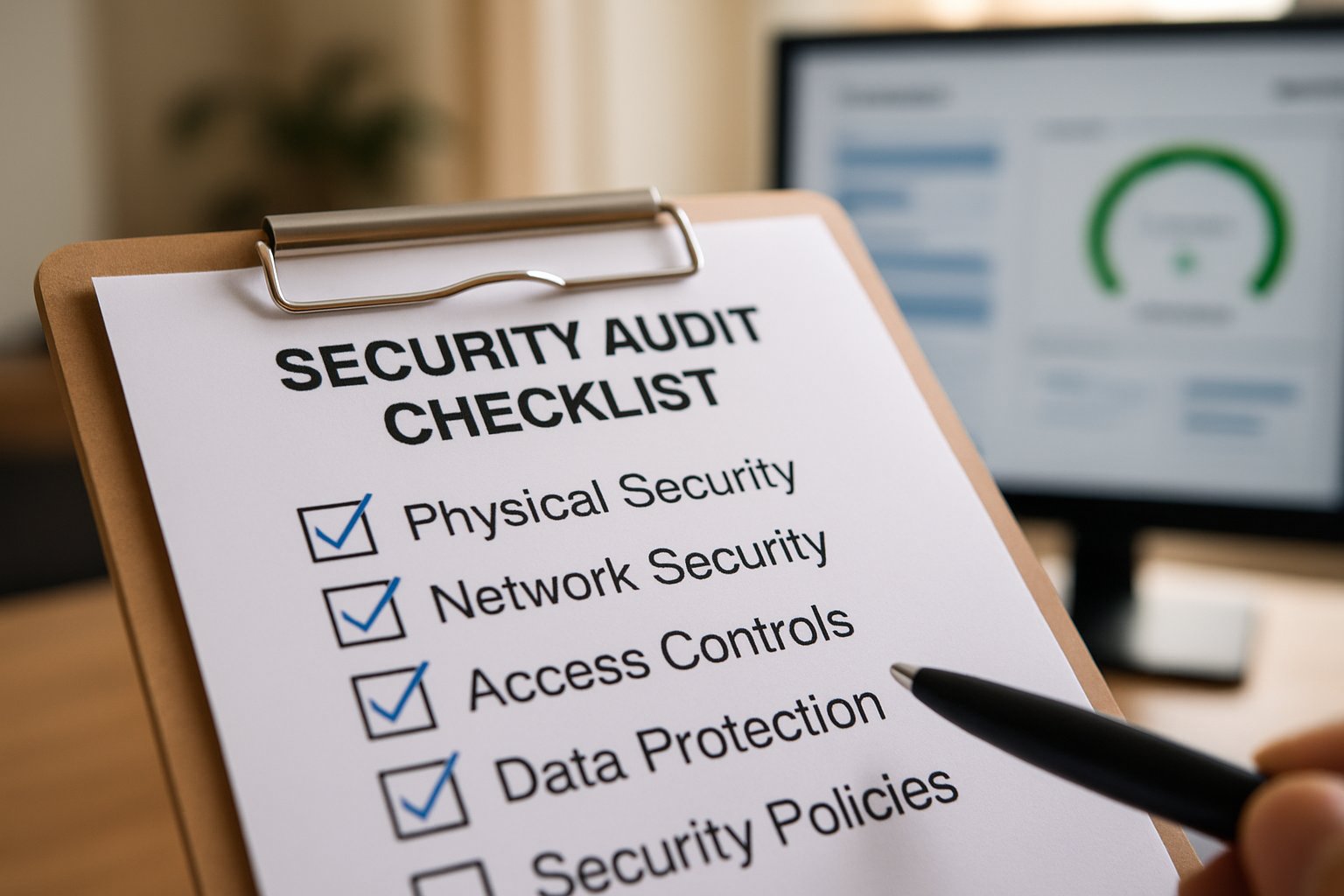
NIST’s AI RMF and the Cloud Security Alliance’s 243-control AICM now set the tone. Moreover, sector bodies like FS-ISAC publish tiered workbooks that map controls to business impact. Vendors must answer or risk removal from supplier lists.
Key takeaway: buyers expect mapped, testable controls. Consequently, vendors should prepare artifacts before a questionnaire arrives.
Transitioning to design, we explore how to build a tiered checklist.
Tiered Checklist Design Steps
Level One Basics Scope
Level One gathers essential facts. Include company profile, subprocessor list, data residency, and a draft DPA with a non-training clause. Add architecture diagrams and a model scope statement. Use the phrase AI vendor security audit here to anchor expectations early.
Level Two Depth Focus
Level Two targets medium / high-risk use cases. Require model cards, TEVV reports, pen-test results, and a 24-hour breach notification SLA. Furthermore, mandate audit rights, business continuity plans, and export options on exit. Vendors should map these items to NIST SP 800-53 controls for traceability.
Level Three Live Oversight
Level Three applies to critical workloads, such as PHI processing. Demand quarterly control revalidation, continuous telemetry, drift detection, and CSA AICM attestations. Additionally, integrate automatic evidence refresh into your GRC tool so risk scores update without manual chasing.
Key takeaway: a tiered approach scales review effort to business impact. Therefore, teams protect resources while covering every vendor level.
Next, we outline the must-have evidence each tier should capture.
Control Evidence Essentials Guide
An effective AI vendor security audit checklist captures six evidence groups.
- Data Handling: encryption, key management, minimization, and deletion attestations.
- Model Lifecycle: training data provenance, bias test results, update logs.
- Security Baseline: SOC 2 Type II, ISO 27001, vulnerability cadence, MFA, SSO.
- Operational Resilience: uptime SLA, DR plans, export rights.
- Auditability & Logging: tamper-proof logs, explainability artifacts, forensic retention.
- Legal & Contractual: signed DPA, BAA, liability caps, 72-hour breach notice.
Moreover, map each artifact to CSA AICM IDs. This crosswalk shows auditors you understand emerging AI standards.
Key takeaway: collect structured, mapped evidence. Consequently, review cycles shrink because stakeholders see clear alignment.
With evidence defined, continuous monitoring must keep controls alive.
Continuous Monitoring Loop Design
Static documents lose value within weeks. Therefore, an AI vendor security audit program needs telemetry. Adoptify AI’s Purview DLP simulations demonstrate policy hits before scaling. Furthermore, automated pipelines pull CAIQ responses, SSO logs, and vulnerability feeds into a single dashboard.
Adopt these operating patterns:
- Set quarterly checkpoint dates per risk tier.
- Run automated evidence collection one week prior.
- Hold a cross-functional gate meeting. Approve, remediate, or halt expansion.
Key takeaway: monitoring turns point-in-time audits into living oversight. Consequently, regulators gain confidence in your control maturity.
Next, learn how AdaptOps pilots embed these controls from day one.
AdaptOps Pilot Process Flow
The AdaptOps loop—Discover → Pilot → Scale → Embed—aligns perfectly with an AI vendor security audit. During Discover, Adoptify AI provides vendor selection templates. Then a controlled pilot of 50–200 users runs under role-based policies and Purview DLP simulation.
Telemetry feeds ROI dashboards that show value within 90 days. Meanwhile, governance gates pause expansion until security KPIs meet thresholds. Adoptify AI reports a 30% shorter approval cycle when teams follow this pattern.
Key takeaway: governance-first pilots prove value and controls together. Therefore, the business sees ROI while risk leaders stay comfortable.
Finally, consolidate critical factors for lasting success.
Checklist Success Factors Explained
Sustaining an AI vendor security audit program requires culture and tooling. Maintain a living inventory with risk ratings, artifact links, and next review dates. Moreover, align legal, security, procurement, and business owners on a single control matrix. Use transition words to reinforce collaboration; for example, “Consequently, faster sign-offs follow.”
Embed continuous training, such as AdaptOps credentialing, so teams understand new AI frameworks. Additionally, track metrics: approval time, incident count, and pilot-to-scale velocity.
Key takeaway: disciplined process plus shared visibility ensures audits drive enablement, not delays. Consequently, innovation and compliance advance together.
The conclusion distills these insights and points toward next steps.
Conclusion
A disciplined AI vendor security audit checklist now anchors regulated AI adoption. Tiered reviews, mapped evidence, and continuous monitoring protect data while accelerating value. Moreover, AdaptOps shows that governance-first pilots cut approval times and surface ROI in weeks.
Why Adoptify AI? The platform fuses AI vendor security audit rigor with AI-powered digital adoption capabilities. Interactive in-app guidance, intelligent user analytics, and automated workflow support drive faster onboarding and higher productivity. Furthermore, enterprise scalability and security stay built-in. Supercharge your next rollout by visiting Adoptify AI today.
Frequently Asked Questions
- How does an AI vendor security audit ensure compliance with industry standards?
The audit verifies baseline security practices, AI-specific controls, and mapping to frameworks like NIST and CSA. This comprehensive review, supported by in-app guidance, simplifies compliance and regulatory approvals. - What role does continuous monitoring play in the AdaptOps framework?
Continuous monitoring integrates automated evidence collection and telemetry, ensuring real-time updates to risk scores. This ongoing oversight supports secure workflows and faster remediation through automated support. - How does Adoptify AI enhance digital adoption while managing vendor security?
Adoptify AI combines interactive in-app guidance, intelligent user analytics, and automated support to streamline digital adoption alongside rigorous AI vendor security audits, ensuring rapid onboarding and improved compliance. - What benefits does a tiered checklist provide in a security audit?
A tiered checklist scales review efforts from basic to critical risk. It ensures clear mapping of evidence, enhances control validation, and reduces approval times while safeguarding regulatory compliance.

FEATURED
Artificial intelligence adoption: Copilot consulting ROI math
February 4, 2026
FEATURED
Microsoft Copilot Consulting: Bulletproof Security Configuration
February 4, 2026
FEATURED
Where Microsoft Copilot Consulting Safeguards Data
February 4, 2026
FEATURED
Microsoft Copilot Consulting: Automate Executive Presentations
February 4, 2026
FEATURED
Microsoft Copilot Consulting Slashes 15 Weekly Hours
February 4, 2026