The global race to deploy artificial intelligence at scale is reshaping infrastructure priorities in ways few policymakers anticipated. As enterprises, governments, and hyperscale technology providers expand computational capacity, AI Adoption energy demand has emerged as a decisive force influencing long-term energy strategy. Data centers, once a marginal load on national grids, are now becoming central drivers of electricity planning.
This surge in demand is reviving serious interest in nuclear energy as a stable, carbon-free baseload power source. Long considered politically sensitive and financially complex, nuclear power is re-entering energy conversations not as a legacy solution, but as a strategic response to AI-driven infrastructure growth.
The convergence of AI expansion and energy security is no longer theoretical. It is shaping investment flows, regulatory frameworks, and national competitiveness agendas worldwide.
AI Infrastructure Growth Reshapes Power Planning
The rapid expansion of AI infrastructure is fundamentally altering how energy systems are designed. Large-scale AI models require continuous, high-density computing, placing unprecedented strain on electrical grids. As AI Adoption energy demand rises, grid operators face the challenge of supplying reliable power without increasing emissions or destabilizing pricing structures.
Unlike traditional industrial loads, AI workloads are persistent and location-concentrated. This makes them less compatible with intermittent power sources alone. As a result, governments and utilities are reassessing long-term baseload capacity options to ensure reliability as AI becomes embedded across economic sectors.
Energy planning is no longer detached from digital strategy; the two are now deeply interconnected.
Data Centers Become Strategic Energy Consumers
The growth of data center energy consumption is one of the clearest indicators of AI’s infrastructural impact. Hyperscale facilities supporting AI training and inference operate around the clock, consuming vast amounts of electricity and cooling resources.
In many regions, data centers are emerging as the single largest new category of industrial electricity demand. This shift is prompting regulators to rethink permitting processes, grid expansion timelines, and power sourcing requirements.
As AI workloads scale, planners must balance speed of deployment with long-term sustainability, ensuring that digital growth does not undermine national climate goals.
Why Nuclear Energy Is Re-Entering the Spotlight
Nuclear power offers a unique combination of attributes that align with AI infrastructure needs. It provides constant output, minimal land use, and near-zero operational emissions. As AI Adoption energy demand accelerates, these characteristics are becoming increasingly attractive to policymakers seeking stable, low-carbon power.
Modern nuclear designs, including small modular reactors, promise faster deployment and improved safety profiles. While challenges remain around cost and public acceptance, the strategic case for nuclear energy is strengthening as AI reshapes baseline electricity requirements.
Rather than replacing renewables, nuclear is increasingly viewed as a complementary foundation supporting AI-driven digital economies.
AI Electricity Usage and Grid Stability
Rising AI electricity usage introduces new risks for grid stability if not carefully managed. Sudden spikes in demand from AI training cycles can strain transmission networks and increase volatility in energy markets.
Nuclear power’s predictable output helps mitigate these risks by providing steady generation that anchors the grid. This stability becomes critical as AI workloads expand across industries such as finance, healthcare, manufacturing, and national security.
In this context, nuclear energy is less about legacy power generation and more about future-proofing digital infrastructure.
Balancing Clean Energy Goals With AI Expansion
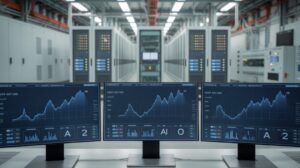
Rising AI workloads are forcing grid operators to redesign long-term energy capacity strategies.
The push for clean energy for AI is shaping how governments evaluate their energy portfolios. While solar and wind remain essential to decarbonization efforts, their intermittency limits their ability to independently support high-density AI workloads.
As AI Adoption energy demand grows, policymakers are recognizing the need for diversified clean energy strategies that include firm, low-carbon sources. Nuclear energy fits this requirement by delivering emissions-free electricity at scale without weather dependency.
This pragmatic approach reflects a broader shift from ideological energy debates toward infrastructure realism driven by digital growth.
Sustainable AI Infrastructure as a Policy Priority
The concept of sustainable AI infrastructure is gaining traction as AI becomes integral to economic competitiveness. Sustainability now encompasses not only emissions reduction, but also supply reliability, long-term affordability, and resilience against geopolitical disruption.
As AI Adoption energy demand continues to climb, nuclear power is increasingly framed as an enabler of sustainability rather than a contradiction to it. Long operating lifespans and stable fuel supply chains support predictable energy pricing for AI operators.
This alignment is influencing infrastructure investment strategies at both national and corporate levels.
Private Sector Signals Accelerate Nuclear Momentum
Technology companies and infrastructure investors are beginning to signal long-term power commitments aligned with AI growth. Strategic partnerships between data center operators and energy providers are becoming more common as organizations seek direct control over energy sourcing.
Frameworks that help enterprises assess readiness, energy dependencies, and operational risk are gaining importance. Platforms such as Adoptify AI support organizations in aligning AI deployment strategies with infrastructure capacity and sustainability objectives.
As AI Adoption energy demand reshapes corporate planning, structured decision-making tools are becoming essential for scaling responsibly.
Geopolitical Implications of AI-Driven Energy Demand
The intersection of AI growth and nuclear energy has geopolitical implications. Nations capable of supplying clean, reliable power at scale gain a competitive advantage in attracting AI investment and advanced manufacturing.
Countries that delay infrastructure adaptation risk falling behind as AI Adoption energy demand concentrates innovation and economic activity in regions with robust energy systems. Nuclear energy, once politically sidelined, is being reconsidered as a strategic asset in the AI era.
Energy independence is increasingly tied to digital sovereignty.
Long-Term Outlook for Nuclear and AI Growth
Looking ahead, the trajectory of AI Adoption energy demand suggests sustained pressure on global energy systems. Nuclear energy is unlikely to be a short-term solution, but its long planning horizons align with the enduring nature of AI infrastructure.
As regulatory frameworks evolve and public discourse shifts, nuclear power may emerge as a cornerstone of AI-driven economic growth. Its revival reflects not nostalgia, but necessity shaped by the realities of digital transformation.
The success of this transition will depend on transparent governance, technological innovation, and public trust.
Conclusion
The resurgence of nuclear energy is inseparable from the rise of artificial intelligence. As AI Adoption energy demand transforms infrastructure planning, nuclear power is being reevaluated as a reliable, clean foundation for the digital economy.
Rather than signaling a reversal of sustainability goals, this shift reflects a more mature understanding of energy systems capable of supporting AI at scale. The future of AI growth will be shaped not only by algorithms and data, but by the power systems that sustain them.
In this evolving landscape, energy strategy has become a defining factor in technological leadership.