Artificial intelligence is no longer confined to software platforms or cloud dashboards. It is increasingly reshaping physical infrastructure, power systems, and national energy strategies. At the center of this shift is the Electro-Industrial Stack, a concept that links compute hardware, energy generation, grid capacity, and industrial automation into a single operating layer. As governments and enterprises race to deploy advanced AI systems, infrastructure readiness has become the decisive factor.
The Electro-Industrial Stack is now influencing how data centers are built, how electricity grids are expanded, and how nations pursue technological independence. From hyperscale GPU clusters to sovereign AI initiatives, AI adoption is forcing a convergence between digital intelligence and physical energy systems. This article examines how infrastructure and energy investments are being restructured around AI, why capacity constraints are emerging, and what this transformation signals for the future of industrial-scale computing.
AI Infrastructure Moves Beyond the Data Center
For years, AI growth was measured in software capabilities and model performance. That framing is rapidly changing. The Electro-Industrial Stack highlights how physical infrastructure has become the limiting factor for AI expansion. Data center construction, power availability, and cooling systems now shape how quickly AI deployments can scale.
Modern AI workloads demand far more electricity than traditional enterprise computing. Large GPU clusters operate continuously, pushing energy consumption to levels comparable with heavy industrial facilities. This has led developers to prioritize proximity to power generation and transmission infrastructure rather than urban office hubs.
As a result, infrastructure planning has become a strategic discipline within AI programs. Enterprises deploying advanced models must now coordinate with utilities, equipment suppliers, and regional planners. In the next section, we will examine how data center buildout is adapting to these new constraints.
Data Center Buildout Accelerates Under AI Pressure
The expansion of AI-focused data centers is redefining industrial construction timelines. Facilities designed around the Electro-Industrial Stack integrate compute density, electrical redundancy, and thermal efficiency from the earliest design stages.
Unlike traditional cloud facilities, AI-optimized sites are built around GPU cluster requirements. These clusters demand high-voltage power delivery, specialized cooling systems, and resilient grid connections. Regions with available land and strong transmission infrastructure are emerging as preferred locations.
This shift is also changing procurement strategies. Infrastructure vendors are now embedded earlier in AI deployment cycles, aligning physical capacity with software roadmaps. In the next section, we will explore how grid capacity has become a bottleneck for AI-driven growth.
Grid Capacity Becomes a Strategic Constraint
Electric grids were not designed for sustained, high-density AI workloads. The Electro-Industrial Stack exposes this mismatch by linking AI expansion directly to grid modernization. Utilities are facing unprecedented requests for capacity from data centers that operate around the clock.
In many regions, grid upgrades now take longer than data center construction itself. Transmission lines, substations, and energy storage systems are expanding to support AI-driven demand. This has elevated energy infrastructure from a background consideration to a board-level priority.
Governments and enterprises are responding by coordinating long-term capacity planning. Some regions are accelerating grid investment approvals, while others are pairing AI deployments with dedicated power generation. In the next section, we will look at how GPU clusters are shaping infrastructure design.
GPU Clusters Redefine Industrial Computing
At the core of the Electro-Industrial Stack are GPU clusters that function more like industrial machines than IT assets. These clusters operate at massive scale, requiring synchronized power delivery and advanced orchestration.
Unlike traditional servers, GPUs draw peak loads that fluctuate with training cycles and inference demands. Infrastructure teams must balance efficiency with resilience, ensuring uninterrupted operation even during grid stress events.
This has driven closer collaboration between hardware manufacturers, energy providers, and infrastructure engineers. AI deployment has become a multidisciplinary effort that blends electrical engineering with software optimization. In the next section, we will examine how sovereign AI strategies are influencing infrastructure decisions.
Sovereign AI Drives National Infrastructure Investment
Many governments now view AI capability as a strategic asset. The Electro-Industrial Stack plays a central role in sovereign AI initiatives that seek to localize compute capacity and reduce reliance on external providers.
National investments are focusing on domestic data centers, secure energy supplies, and localized supply chains. These projects often integrate renewable generation with grid-scale storage to ensure long-term resilience.
Sovereign AI strategies are also reshaping regulatory frameworks. Energy permitting, land use policies, and industrial incentives are aligned with AI objectives. In the next section, we will explore how enterprises are adapting to this new infrastructure reality.
Enterprises Adapt to an Integrated Stack
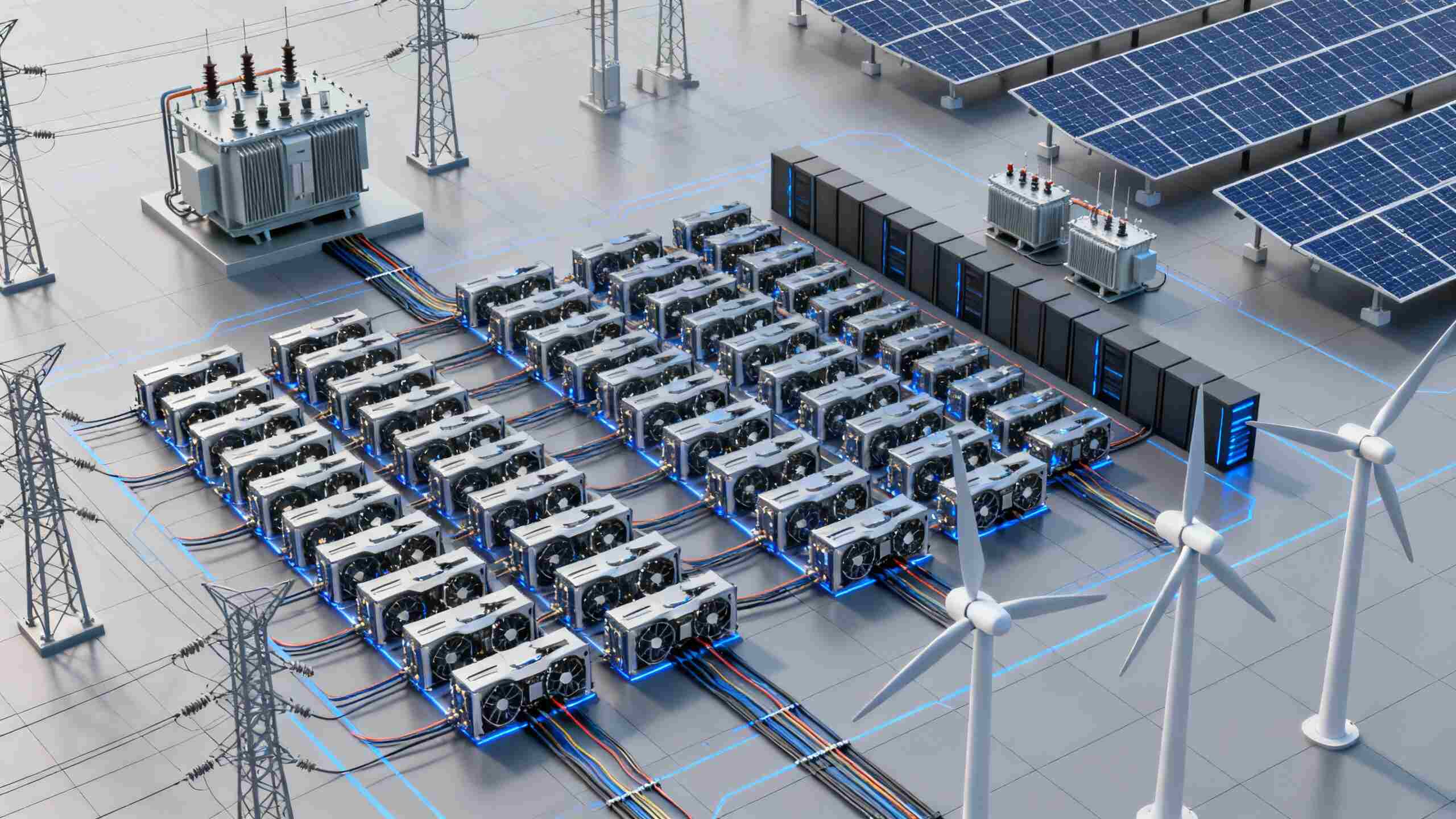
GPU clusters and grid capacity form the operational core of modern AI infrastructure.
For enterprises, adopting the Electro-Industrial Stack means rethinking AI deployment as a long-term infrastructure commitment. AI projects now involve multi-year planning horizons and capital-intensive investments.
Organizations are increasingly partnering with infrastructure specialists and platforms such as Adoptify AI to align technology adoption with operational readiness. These partnerships help enterprises assess energy requirements, infrastructure risks, and scalability pathways.
This integrated approach reduces deployment friction and ensures that AI initiatives remain viable as workloads grow. In the next section, we will analyze the broader economic implications of this shift.
Economic Implications of AI-Driven Infrastructure
The rise of the Electro-Industrial Stack is reshaping industrial economics. AI-driven infrastructure projects are generating demand for skilled labor, advanced manufacturing, and energy innovation.
Regions that can deliver reliable power and streamlined permitting are attracting significant investment. Conversely, areas with constrained grids risk falling behind in AI adoption. This divergence is creating a new form of digital infrastructure competition.
Over time, AI infrastructure may become as strategically important as transportation networks or telecommunications. In the next section, we will consider how sustainability factors into this transformation.
Sustainability and Long-Term Energy Planning
Sustainability is now inseparable from the Electro-Industrial Stack. AI energy consumption has intensified scrutiny on carbon footprints and resource efficiency.
Many infrastructure projects are pairing AI deployments with renewable energy sources and advanced cooling technologies. This approach reduces operational costs while aligning with environmental targets.
Long-term energy planning is becoming a prerequisite for AI scalability. Enterprises that fail to address sustainability risks may face regulatory and reputational challenges. In the next section, we will look ahead to what this means for future AI adoption.
Conclusion
The convergence of AI, infrastructure, and energy marks a defining moment in industrial transformation. The Electro-Industrial Stack illustrates how AI adoption now depends on physical systems as much as algorithms. From data center buildout to grid capacity and sovereign AI initiatives, infrastructure readiness has become the decisive factor.
As AI workloads grow more demanding, coordination between technology leaders, energy providers, and policymakers will intensify. Enterprises that align early with this integrated model will gain a durable advantage. For deeper insights into enterprise AI strategy, readers can revisit the previous article and follow ongoing coverage as this infrastructure-driven era of AI continues to unfold.