Marketing organizations are undergoing rapid transformation as Generative Optimization emerges as a core strategy fueled by AI adoption across industries. Companies are increasingly using artificial intelligence to improve campaign targeting, automate content creation, and enhance customer engagement across digital ecosystems. This shift is redefining how marketing teams operate and how brands connect with audiences.
The expansion of Generative Optimization reflects a broader shift in enterprise marketing strategies. Businesses are leveraging AI to analyze consumer behavior, personalize experiences, and optimize content distribution across search engines, social platforms, and conversational AI environments. As AI adoption continues to expand, marketing organizations are transitioning from traditional campaign execution models toward automated and intelligence driven engagement systems. This article explores how AI adoption is empowering marketing companies, reshaping customer engagement strategies, and transforming marketing outcomes across industries.
AI Adoption Is Transforming Modern Marketing Operations
The rapid integration of artificial intelligence into marketing workflows is accelerating the importance of Generative Optimization as a business growth strategy. Marketing companies are using AI to automate data analysis, optimize content production, and improve audience targeting capabilities.
AI adoption is helping marketing firms manage complex digital campaigns more efficiently. Through Generative Optimization, organizations can analyze large volumes of customer data, identify behavioral patterns, and generate personalized marketing content at scale. These capabilities are enabling marketing companies to deliver targeted messaging that aligns with consumer preferences and engagement patterns.
Marketing organizations implementing AI driven optimization strategies are also improving operational efficiency by reducing manual workload. AI tools help marketing teams automate campaign scheduling, performance monitoring, and audience segmentation. As a result, marketing firms are achieving higher productivity while improving campaign accuracy.
In the next section, we will explore how AI adoption is improving marketing personalization across industries.
Personalization Becomes Central to Marketing Success
One of the most significant benefits of AI adoption in marketing is the ability to deliver personalized customer experiences. Businesses using Generative Optimization are analyzing customer preferences and behavioral data to create tailored marketing campaigns.
Marketing companies leveraging Generative Optimization are developing dynamic content strategies that adapt to user behavior in real time. AI systems can generate product recommendations, personalized advertising content, and customized email campaigns that improve customer engagement.
Retail, finance, and healthcare organizations are increasingly using AI driven marketing platforms to improve customer retention. Companies are adopting AI powered personalization strategies to strengthen brand loyalty and improve customer lifetime value.
Marketing organizations are also using platforms like Adoptify ai to evaluate AI readiness and optimize AI deployment strategies. These platforms help businesses align personalization strategies with marketing objectives and operational capabilities.
In the next section, we will examine how AI adoption is reshaping search marketing and digital visibility.
AI Adoption Is Redefining Search Marketing Strategies
Search marketing is evolving rapidly as AI adoption changes how users discover and interact with digital content. The rise of conversational search and AI generated summaries is increasing the importance of Generative Optimization for marketing companies.
Marketing firms are developing content strategies that align with AI driven discovery platforms. Through Generative Optimization, organizations are structuring content to improve visibility in AI generated search responses and digital assistant recommendations.
Companies implementing AI driven search marketing strategies are improving brand discoverability across multiple digital platforms. AI systems analyze content authority, contextual relevance, and audience engagement patterns to determine search visibility. Marketing teams are adjusting content frameworks to meet these AI driven ranking requirements.
In the next section, we will explore how AI adoption is enhancing multi channel marketing strategies.
Multi Channel Marketing Expands Through AI Integration
Marketing companies are expanding their digital presence across multiple platforms as AI adoption enables unified campaign management. Businesses using Generative Optimization are coordinating marketing efforts across search engines, social media platforms, e commerce channels, and conversational AI interfaces.
AI powered marketing platforms allow organizations to monitor customer engagement across channels and adjust campaigns dynamically. Marketing teams implementing Generative Optimization are improving customer experience consistency while optimizing marketing performance.
Companies across industries are using AI to create integrated marketing strategies that align messaging across platforms. These capabilities are helping organizations strengthen brand recognition and improve customer journey management.
Organizations collaborating with Adoptify ai are improving multi channel marketing implementation by aligning AI optimization strategies with business growth objectives.
In the next section, we will analyze how AI adoption is improving marketing analytics and performance measurement.
AI Driven Analytics Improves Campaign Performance
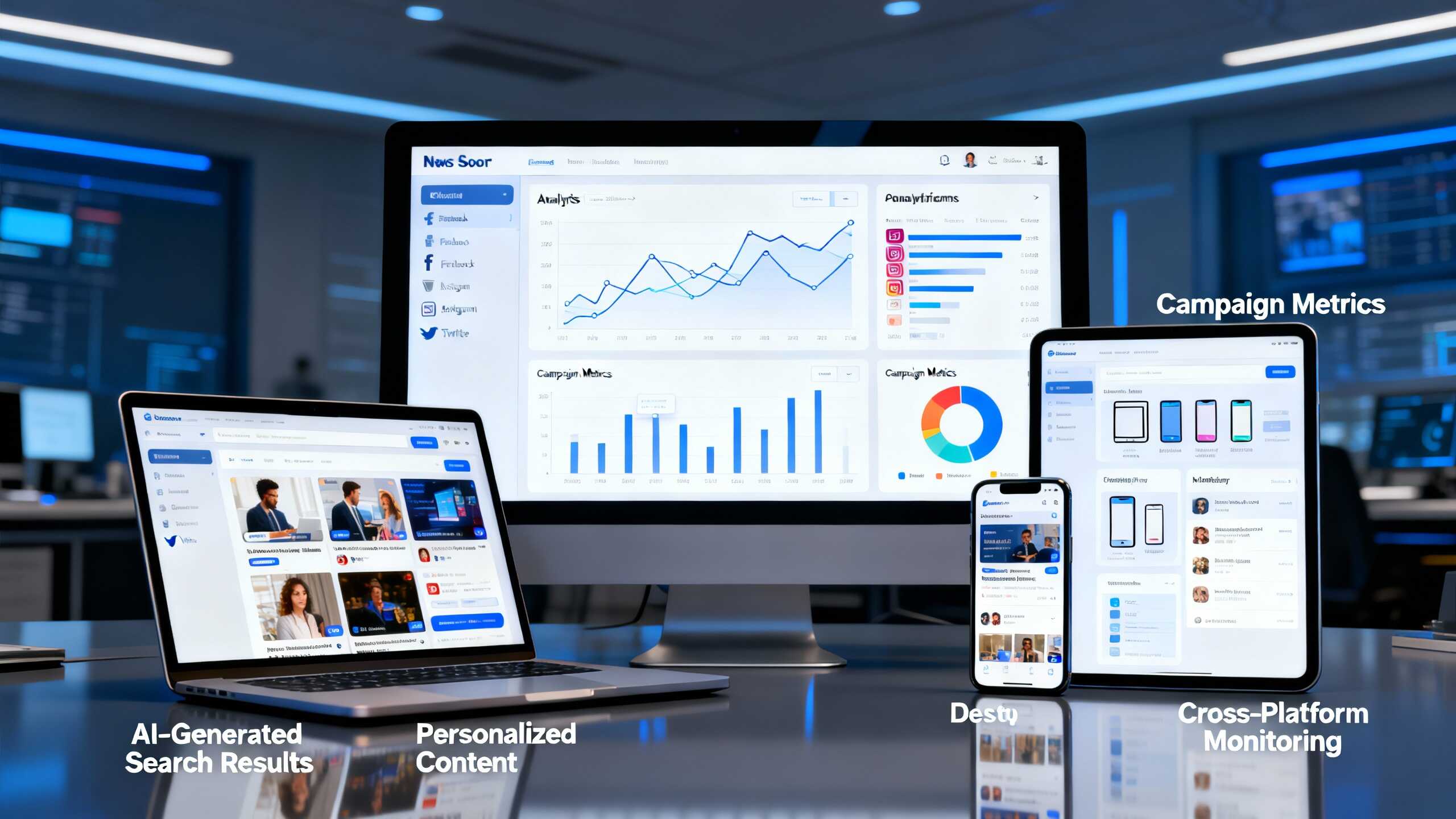
AI driven marketing strategies are expanding brand engagement across multiple digital platforms.
Marketing analytics is undergoing a transformation as AI adoption improves data interpretation and performance measurement. Marketing companies implementing Generative Optimization are using predictive analytics to identify marketing opportunities and optimize campaign effectiveness.
AI powered analytics platforms allow organizations to evaluate customer engagement patterns, forecast market trends, and optimize marketing resource allocation. Marketing firms leveraging Generative Optimization are gaining deeper insights into consumer behavior and campaign performance metrics.
Businesses are also using AI analytics to improve real time campaign adjustments. AI systems can analyze performance data continuously and recommend optimization strategies that improve marketing efficiency.
In the next section, we will examine how AI adoption is transforming content creation and marketing automation.
AI Adoption Accelerates Content Creation and Automation
Content production is one of the most visible areas where AI adoption is reshaping marketing workflows. Marketing companies using Generative Optimization are deploying AI tools to generate marketing content, promotional materials, and social media campaigns.
AI powered content generation enables marketing teams to produce large volumes of personalized content quickly. Organizations implementing Generative Optimization are improving campaign scalability while maintaining consistent brand messaging.
Marketing automation platforms powered by AI are also improving campaign execution efficiency. AI tools help businesses schedule content distribution, optimize messaging timing, and manage audience engagement workflows.
Industries including retail, technology, and entertainment are using AI driven content automation to accelerate marketing innovation and customer engagement.
In the next section, we will explore the challenges marketing organizations face when implementing AI driven optimization strategies.
Challenges Marketing Companies Face in AI Adoption
Despite the benefits of AI adoption, marketing organizations face challenges when implementing Generative Optimization strategies. Data privacy regulations, content authenticity concerns, and integration complexity remain significant barriers.
Marketing companies must ensure compliance with privacy laws while using AI to analyze customer data. Organizations implementing Generative Optimization are developing governance frameworks that support responsible AI usage and data protection.
Another challenge involves maintaining brand authenticity. AI generated content requires human oversight to ensure messaging consistency and brand alignment. Marketing organizations are developing hybrid AI models that combine automation with human creativity.
In the next section, we will examine the future outlook for AI adoption in marketing.
Future Outlook for AI Driven Marketing Transformation
The future of marketing will be shaped by the continued expansion of Generative Optimization across digital ecosystems. AI adoption will enable marketing companies to deliver highly personalized, data driven customer experiences.
Organizations investing in Generative Optimization are expected to gain competitive advantages through improved campaign efficiency, enhanced customer engagement, and scalable marketing automation. As AI technology continues to evolve, marketing companies will rely on AI driven optimization to manage complex digital environments.
AI adoption will also expand marketing innovation across industries by enabling predictive customer engagement, automated content production, and real time marketing performance optimization. Readers interested in understanding how AI is transforming other sectors can explore the previous article, which examined AI adoption trends in clinical healthcare and its impact on operational scalability.