How Corporate AI Adoption Reduced Operational Costs by 40%
Companies everywhere feel the pressure.
Electricity bills keep rising.
Hiring skilled people costs more each year.
Supply chains break without warning.
Customer service teams feel tired answering the same questions again and again.
Managers struggle to track spending across departments.
Many leaders wake up each day asking the same question. How can we reduce costs without hurting growth?
Companies scaling enterprise AI adoption saw major efficiency gains across operations and supply chains, with several early adopters reporting significant cost reductions in selected business units.
This shift is shaping how businesses think about corporate AI adoption. AI is moving from experiments to daily operations.
This is where companies like Adoptify AI quietly step in to guide organizations through practical AI transformation without chaos. You can explore how they approach enterprise AI adoption here.
Now let us understand how this 40 percent reduction really happens.
The Real Pain Behind Operational Costs
Imagine a factory.
Machines stop working suddenly.
Workers wait.
Orders get delayed.
Money leaks away every hour.
Or think about a retail company.
Warehouses are full of items that no one buys.
Popular products run out.
Delivery trucks travel half empty.
All of this wastes money.
Corporate AI efficiency metrics help leaders see these leaks clearly. AI studies patterns in data and shows where money disappears.
Before AI, teams used spreadsheets and manual checks. That process took weeks. By the time managers saw the problem, the loss had already grown.
With enterprise AI adoption, systems watch data in real time. They give alerts early. That changes everything.
Predictive Maintenance Saves Millions
One of the biggest cost savings comes from predictive maintenance.
AI studies how machines behave. It learns the sound, heat, and vibration patterns of healthy equipment. When something starts to change, the system sends a warning.
Instead of waiting for a breakdown, teams fix the issue early.
According to a 2026 Deloitte operations outlook, predictive AI systems reduced maintenance costs by up to 25 percent and cut downtime by nearly 40 percent in large manufacturing firms.
That is a direct impact of corporate AI adoption.
Fewer breakdowns mean fewer emergency repairs.
Fewer delays mean happier customers.
Happier customers mean steady revenue.
Smarter Supply Chains
Supply chains used to rely on guesswork.
Managers ordered large quantities to avoid running out. Extra stock filled warehouses. Storage fees increased. Some items expired or became outdated.
AI studies buying patterns, seasonal trends, and market signals. It predicts demand with strong accuracy.
Enterprise AI adoption allows companies to order the right quantity at the right time.
A 2026 report from Gartner highlighted that AI-powered supply chain planning improved inventory accuracy by over 35 percent in global enterprises.
That accuracy translates into lower storage costs and fewer lost sales.
If you want to see how AI applies across sectors like retail, healthcare, manufacturing, and finance, you can explore here.
Automating Repetitive Work
Think about customer service teams answering the same questions every day.
Where is my order?
How can I reset my password?
What are your working hours?
AI chat systems and smart assistants handle these routine tasks. Human teams then focus on complex issues.
This improves corporate AI efficiency metrics such as response time and cost per interaction.
A 2026 IBM Global AI Adoption Index showed that companies using AI-powered automation reduced customer service operational costs by an average of 30 percent.
When small savings happen across thousands of interactions, the total impact becomes huge.
Better Financial Planning
AI also supports smarter budgeting.
Instead of waiting for monthly reports, finance teams get real-time dashboards. AI tracks spending patterns and alerts leaders when a department crosses safe limits.
This makes corporate AI adoption a strong tool for financial discipline.
Companies using Enterprise AI Adoption often see clearer forecasting, fewer surprise expenses, and stronger control over cash flow.
For businesses wondering where to begin, structured guidance and planning make a big difference. Adoptify AI outlines its practical AI implementation services here.
Data-Driven Decisions Across Teams
Many companies collect large amounts of data. Yet they struggle to use it well.
Sales teams store data in one system. Operations teams use another. Finance has separate dashboards. Information stays scattered.
Enterprise AI adoption connects these systems. AI studies patterns across departments.
For example
- Sales data shows rising demand in one region.
- Supply chain data shows low inventory in that region.
- AI alerts managers before stock runs out.
- This coordination reduces lost sales and emergency shipping costs.
When corporate AI efficiency metrics improve across departments, overall operational costs shrink naturally.
Human Teams Become More Productive
Some people fear that AI will replace jobs. In many cases, AI removes repetitive work and allows teams to focus on creative tasks.
Engineers spend less time checking logs.
Finance teams spend less time correcting manual errors.
HR teams spend less time sorting resumes.
Productivity rises without increasing headcount.
That balance is one reason why corporate AI adoption can reduce operational costs by 40 percent in certain units.
A Clear Strategy Makes the Difference
Technology alone does not create savings. A clear roadmap matters.
Companies that succeed with Enterprise AI Adoption usually follow three steps
- First, identify cost-heavy processes.
- Second, apply AI where it solves real business pain.
- Third, track corporate AI efficiency metrics to measure impact.
- Without measurement, progress feels invisible.
- With clear metrics, leaders see exactly how much money they save.
If your organization is exploring this journey and wants guidance tailored to your needs, you can connect directly here.
The Bigger Picture
AI adoption in corporations is growing rapidly across 2026. News reports and industry surveys show that leaders now focus on measurable returns rather than experimentation.
Operational cost reduction stands at the center of this shift.
Enterprise AI Adoption helps companies
- Reduce downtime
- Lower inventory waste
- Improve service efficiency
- Strengthen financial planning
- Increase employee productivity
When these improvements combine, savings grow fast. In many real cases, operational costs drop close to 40 percent in targeted functions.
That is why corporate AI adoption is moving from optional innovation to core strategy.
The companies that act early build systems that learn and improve every day. Those systems quietly remove waste and improve performance.
The result feels simple on the surface. Lower costs. Higher efficiency. Stronger growth.
Behind that simplicity lies smart data, clear metrics, and thoughtful implementation.
FEATURED
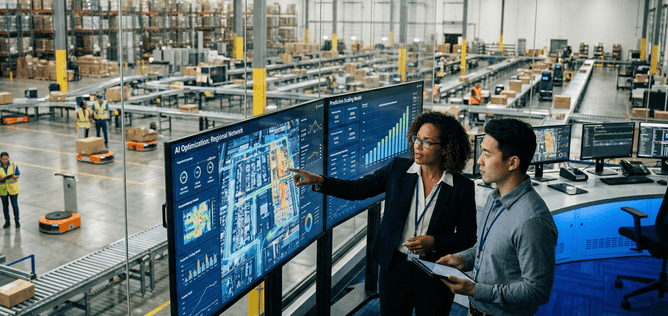
Scaling Retail Operations Through Corporate AI Adoption
February 27, 2026
FEATURED
Boutique Enterprise AI Adoption vs Big Four Consulting
February 25, 2026
FEATURED
Security Audit for Corporate AI Adoption
February 25, 2026
FEATURED
What is the Average Investment for Enterprise AI Adoption
February 20, 2026
FEATURED
Managed Enterprise AI Adoption Services for Legacy Systems
February 20, 2026