7 Reasons Model Context Protocol Leads AI Integration
AI budgets keep soaring, yet many enterprises still drown in pilot purgatory. Fragmented pipelines, unclear policies, and hidden costs stall scale. Fortunately, a new operating layer—called the Model Context Protocol—offers a practical escape path. This article unpacks seven concrete reasons why MCP now sets the bar for resilient AI data integration. Drawing on market data, practitioner playbooks, and Adoptify.ai’s AdaptOps experience, we translate theory into action. Moreover, we align each reason with the latest surge in Domain-Specific Language Models and agentic workflows. Consequently, you will see how the protocol slashes token waste while strengthening governance evidence. Finally, we highlight the benefits of mcp for enterprise ai programs chasing faster ROI. Failing to address integration now risks competitive lag as rivals industrialize their agent stacks. Therefore, understanding the protocol early offers a strategic edge.
Model Context Protocol Advantages
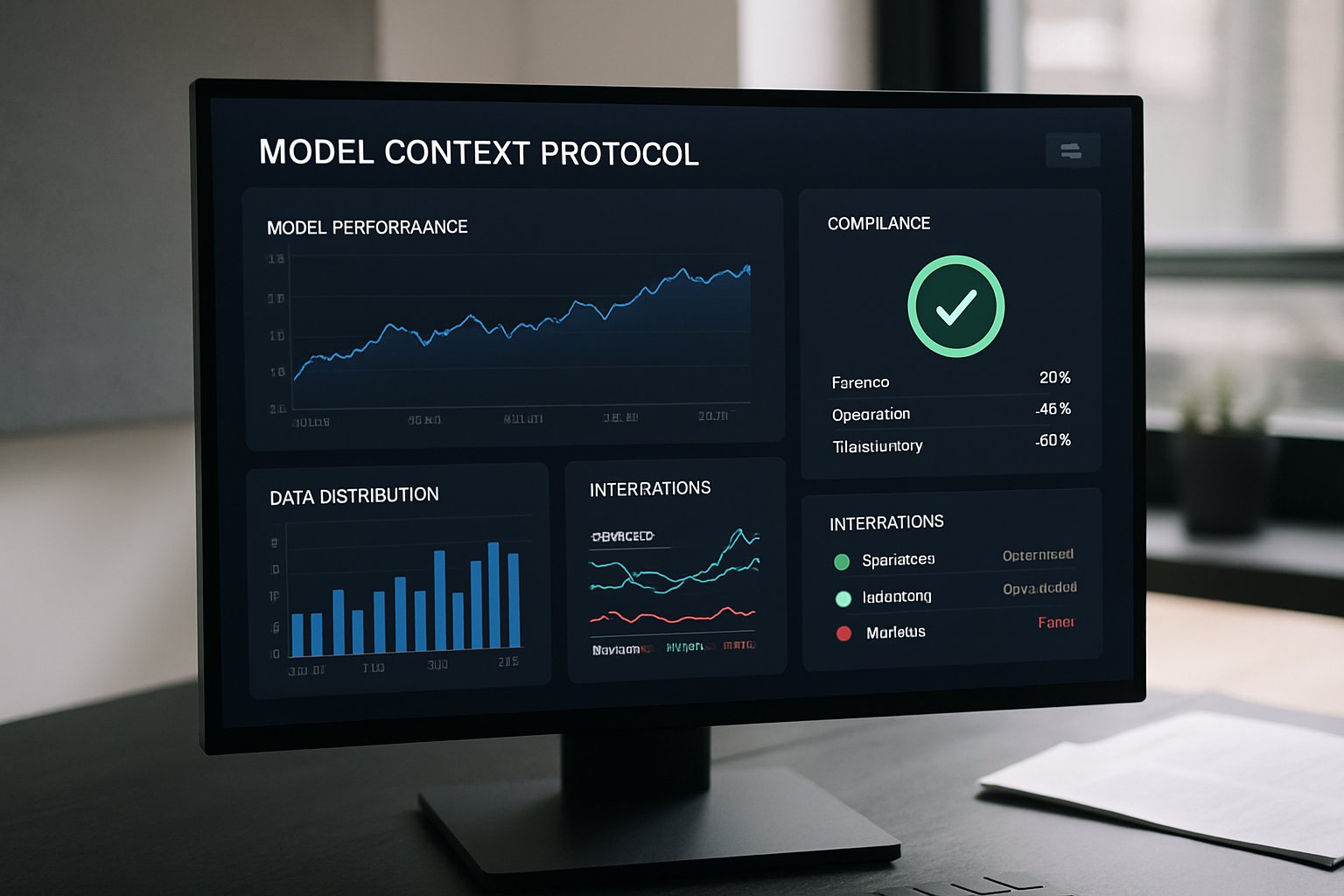
Enterprises crave a clear path from test rig to production success. However, moving data and models safely remains complex. That is where the Model Context Protocol shines. By inserting a policy-rich control plane between apps and models, it unifies routing, governance, and telemetry. So teams can ship faster without rewriting pipelines.
- Unified governance and policy
- Reliable context routing
- Observability and audit trails
- Cost and performance controls
- Multi-model orchestration
- Active metadata integration
- Adoption discipline at scale
Reliable Context Routing Wins
Context routing trims noise and sends only relevant data to each model. Consequently, Domain-Specific Language Models return sharper answers and lower token bills.
Together, these strengths answer the core questions facing AI adoption leaders today. Consequently, HR and SaaS teams gain predictable rollouts and measurable wins. Industry analysts predict that MCP adoption will hit 60% of Global 2000 firms by 2027. This momentum shows the pattern is not a fleeting trend but an operational necessity.
Key takeaway: MCP aggregates essential controls inside one layer. Next, we explore each capability in depth.
Unified Governance Explained Clearly
Governance failures sink many promising pilots. Moreover, regulators now expect lineage, privacy, and repeatability on day one. The Model Context Protocol centralizes access policies, residency checks, and role rules. Instead of scattering logic across scripts, teams configure a single registry and router.
Observability Lineage Audit Trails
Adoptify.ai’s AdaptOps mirrors this pattern. It enforces machine-readable data contracts before any model call proceeds. Consequently, HR or finance data never leaks into unauthorized prompts. That alignment delivers the benefits of mcp for enterprise ai with minimal retooling.
Active audit trails link every payload, prompt, and response back to business KPIs. Therefore, compliance reviews shrink from weeks to minutes. Legal teams gain a single contracts repository pointing to active policies. Consequently, procurement cycles shorten because clauses map directly to technical controls.
Key takeaway: Central governance lets enterprises scale without fear. The next section shows how context routing improves accuracy.
Cost Control And Performance
Token explosions can bankrupt an enthusiastic project. However, the control plane applies cost-aware routing and quota guards automatically. Teams set latency SLOs, region constraints, and quality thresholds once. The Model Context Protocol then picks the cheapest compliant model path each request.
Shadow and canary flows validate new models on real traffic before promotion. Therefore, unexpected regressions never reach end users. Many Domain-Specific Language Models benefit, because the router matches each with optimal context windows. Consequently, output quality rises while spend drops.
McKinsey estimates runaway token costs can swallow 30% of projected AI savings. Policy-driven routing mitigates that risk before CFOs panic. In contrast, ad-hoc scripts often hide spend until invoices arrive. CFOs appreciate seeing projected versus actual compute spend in the same dashboard. Therefore, budget planning improves and shock invoices disappear.
Key takeaway: Policy-first routing tames budgets and boosts stability. Finance leaders finally quantify ai adoption savings in monthly dashboards. Next, we link metadata control to fresh, trusted data.
Active Metadata Meets Integration
Data freshness matters for agents making real-time decisions. Yet, duplicating tables into bespoke vector stores creates risk. With the Model Context Protocol, active metadata becomes enforceable at the API layer. An MCP aligned with active metadata lets models query governed data in place. This feature empowers Domain-Specific Language Models to access correct schemas instantly.
Moreover, machine-readable contracts enforce schema, quality, and lineage checks at request time. Therefore, data engineers retire brittle ETL glue. RAG systems crave fresh vector embeddings. However, nightly ETL fails to capture morning updates. Embedding jobs triggered by metadata events keep knowledge current without manual steps.
Adoptify.ai integrates Purview-style labels, RBAC, and automated evidence into the same workflow. Consequently, regulated industries stay audit-ready by default. Data stewards also enjoy automated deprecation alerts when source tables change. Thus, they prevent broken prompts before business users notice.
Key takeaway: Active metadata plus MCP eliminates risky copies. The conclusion shows why Adoptify AI unites these strengths.
Adoption Discipline Accelerates Scale
Technology alone rarely drives lasting value. AdaptOps pairs the Model Context Protocol with a Discover-to-Embed operating rhythm. Role-based microlearning, in-app guidance, and champion networks embed new behaviors.
Furthermore, intelligent analytics highlight flows where users struggle or where Domain-Specific Language Models misfire. Teams then update prompts or training in days, not quarters. These feedback cycles showcase the benefits of mcp for enterprise ai with hard numbers. Consequently, executive sponsors see faster returns and approve bigger rollouts.
- Define KPIs before first pilot.
- Pick champions per business unit.
- Schedule weekly telemetry reviews.
- Refresh microlearning after feature changes.
- Celebrate quick wins publicly.
Early adopters report 20% faster task completion after microlearning modules launch. Additionally, champion forums surface workflow hacks that feed back into guided tours. Consequently, change fatigue drops and satisfaction rises. Therefore, ai adoption accelerates without sacrificing oversight.
Key takeaway: Governance plus change management closes the scaling gap. The conclusion shows why Adoptify AI unites these strengths.
Conclusion And Next Steps
The Model Context Protocol turns scattered pipelines into governed, measurable, and cost-controlled AI assets. Unified governance, context routing, observability, cost control, active metadata, and adoption discipline deliver compounding value. Consequently, ai adoption accelerates and benefits of mcp for enterprise ai appear on real dashboards.
Why Adoptify AI? Adoptify AI layers interactive in-app guidance, intelligent analytics, and automated workflow support atop your MCP. Therefore, teams onboard faster, stay productive, and scale securely across the enterprise. Moreover, the platform scales with enterprise security and compliance built in. Explore the platform now at Adoptify.ai.
Frequently Asked Questions
- What is the Model Context Protocol (MCP) and how does it improve AI adoption?
MCP provides a unified operating layer for governance, context routing, and cost control, improving AI adoption by ensuring controlled data flows and performance. It is key to achieving faster, measurable, and secure AI rollouts. - How does Adoptify AI accelerate digital adoption for enterprises?
Adoptify AI accelerates digital adoption by combining in-app guidance, role-based microlearning, and intelligent analytics. This ensures teams onboard quickly and maintain productivity while scaling AI initiatives securely. - How does context routing reduce costs and improve performance?
Context routing trims irrelevant data and sends only essential information to each model, lowering token bills and improving accuracy. This cost-aware, compliant routing enhances overall system performance and financial planning. - What features in Adoptify AI ensure secure and scalable AI workflows?
Adoptify AI offers automated workflow support, active metadata integration, and robust user analytics, ensuring secure, compliant, and scalable AI workflows. Its in-app guidance and microlearning modules further aid rapid enterprise adoption.

FEATURED
7 Reasons To Embrace AI-Native Architecture
March 2, 2026
FEATURED
Hybrid AI FAQ: Strategy, Governance, and ROI
March 2, 2026
FEATURED
Agentic AI Integration Playbook for Enterprises
March 2, 2026
FEATURED
7 Ways AI Integration Redefines Business Automation
March 2, 2026
FEATURED
Agentic AI: Automating Finance Operations With Governance
March 2, 2026