Cut Cloud AI Costs by 40%: An AdaptOps Playbook
Cloud AI spending now threatens even healthy budgets. However, many enterprises rush into pilots without guardrails. Consequently, finance teams confront surprise GPU invoices.
Meanwhile, boards demand clear returns on every token consumed. Therefore, leaders need a disciplined, evidence-driven playbook for rapid savings. Adoptify.ai research shows a realistic 40 percent reduction is achievable. Successful ai adoption requires early cost discipline.
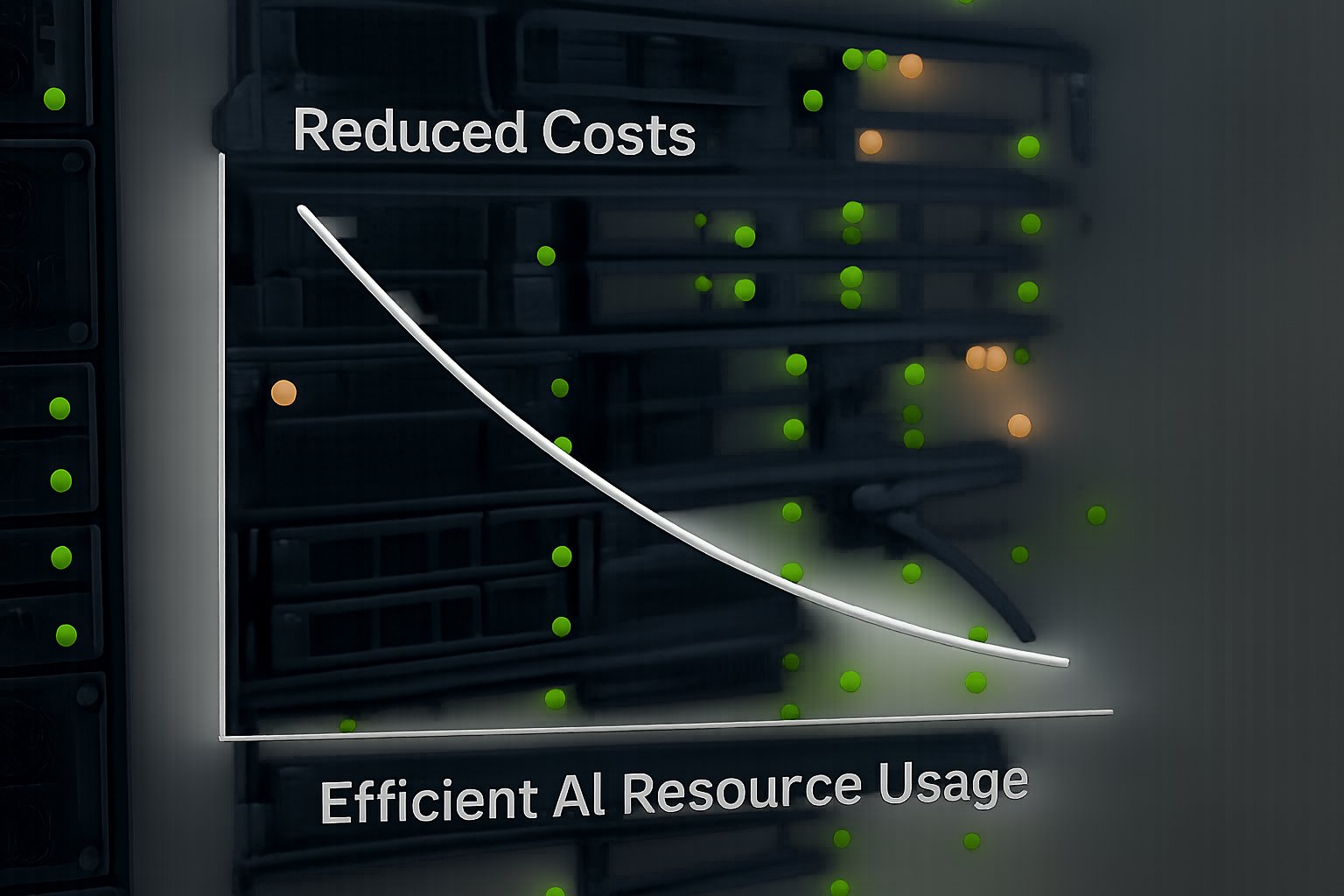
In this guide, we map the journey. We blend Hybrid AI architecture tips with AdaptOps governance. By the end, you will own a step-by-step action plan.
First, we outline spend drivers plaguing new ai adoption efforts. Next, we explain technical levers like quantization and serverless GPUs. Finally, we connect each lever to hard finance metrics.
Hybrid And Cloud AI
Hybrid AI patterns now dominate enterprise roadmaps. They mix on-prem accelerators with hyperscaler instances to hedge risk. This approach also aligns data residency needs.
However, fragmentation hides true costs. Cloud AI line items appear in both IaaS and SaaS invoices. Consequently, leadership misjudges total spend.
Adoptify’s AdaptOps control plane centralizes telemetry across hybrid zones. Therefore, finance receives token, GPU, and seat data in one dashboard. Unified visibility underpins every later optimization.
Key takeaway: start with unified measurement before touching code. With clarity, Hybrid AI and Cloud AI budgets stop ballooning.
Hybrid AI creates flexibility yet demands governance. Clear dashboards convert that flexibility into savings. Next, we expose hidden spend drivers hampering most teams.
Unmask Cloud Spend Drivers
Industry surveys show 84 percent struggle with visibility. Idle clusters, oversized GPUs, and orphaned volumes drain cash. Moreover, shadow projects accelerate the leak.
AdaptOps audits quantify waste fast. During a 30-day Discover phase, teams map token paths to minutes saved. Consequently, baseline savings of 10 percent appear without engineering work.
The audit also surfaces cost optimization in cloud ai opportunities. Typical findings include idle inference endpoints, abandoned notebooks, and underused licenses. Each finding feeds the later playbook.
Reserved instance misalignment hurts as well. Many teams commit at launch then forget ongoing rightsizing. AdoptOps dashboards flag usage drift monthly.
Key takeaway: measurement exposes quick wins worth immediate action. Now, we align FinOps and AdaptOps to lock gains.
FinOps And AdaptOps Synergy
FinOps frameworks drive unit economics. AdaptOps injects role-based guardrails and in-app nudges. Together, they create an accountability loop around every query.
However, process alone seldom endures. Therefore, platforms must automate chargeback and rightsizing. Adoptify triggers reclamation workflows when seats or GPUs idle for seven days.
This closed loop tackles ai adoption accountability. Meanwhile, finance gains predictive forecasts from the AI Adoption Cost Estimator. Stakeholders now debate outcomes, not estimates.
Chargeback statements must reach business leaders weekly. Consequently, product owners feel real accountability. Rapid feedback loops encourage continuous improvements.
Key takeaway: embed governance in the workflow, not a spreadsheet. Next, we attack runtime costs through smarter scaling.
Autoscaling And Scheduler Wins
Always-on Cloud AI GPUs are budget killers. Serverless offerings now spin to zero between requests. Consequently, many teams cut inference bills by 15 percent.
Furthermore, token-level schedulers batch small prompts across pooled cards. Alibaba reported 82 percent GPU reduction using this method. Enterprises with spiky traffic benefit most.
Implementing these levers requires SLO clarity. Therefore, Adoptify dashboards overlay latency and cost in real time. Engineers then tune autoscalers without fear.
Spot or preemptible GPUs complement autoscaling. They drop training costs when paired with resilient checkpointing. Therefore, batch jobs finish cheaper without risking failure.
Key takeaway: scale-to-zero and smart schedulers slash runtime waste. Next, we explore model-level optimization.
Model Optimization Playbook Essentials
Quantization shrinks memory by up to 75 percent. LoRA and QLoRA skip full fine-tunes while preserving accuracy. Moreover, small adapters load instantly on cheaper instances.
A routing layer now chooses model size per request. Low-stakes prompts hit a distilled engine. Meanwhile, critical prompts escalate to a larger backbone.
This tactic reduces token volume and supports cost optimization in cloud ai goals.
Parameter-efficient fine-tuning also speeds releases. Teams iterate weekly instead of monthly. Moreover, smaller diffs simplify compliance reviews.
Key takeaway: smart model selection and compression multiply autoscaling gains. Next, we harden telemetry and licensing hygiene.
Telemetry And Licensing Hygiene
Observability data can rival training costs. Therefore, filter, sample, and aggregate aggressively. Chronosphere claims up to 80 percent telemetry reduction.
Similarly, seat audits free unused SaaS licenses. AdaptOps bots reclaim or reassign within hours. Consequently, support spend and ticket queues shrink.
Each saved seat supports broader ai adoption without new cash. Moreover, cleaner telemetry fuels more precise forecasting. Finance finally trusts the numbers.
Data retention policies add another lever. Keep high-value traces 30 days; archive the rest. Consequently, storage spend drops sharply.
Key takeaway: hygiene unlocks sustainable savings and confidence. Now, let’s combine every lever into a concrete roadmap.
Roadmap To Forty Percent
The table below shows how combined actions stack toward 40 percent savings.
Follow this phased roadmap:
- Phase 1: Discover baseline and spotlight cost optimization in cloud ai (5-10% saved).
- Phase 2: Deploy autoscaling and serverless GPU pools (5-15%).
- Phase 3: Roll quantization, LoRA, and routing (10-20%).
- Phase 4: Lock in commitments and license hygiene (10-15%).
- Phase 5: Continuous telemetry refinement and seat audits (5-10%).
Executed together, cumulative savings often cross 40 percent. Results vary, yet evidence driven pilots protect service levels.
Consequently, leadership gains confidence to reinvest in further Cloud AI innovation. We now conclude with next steps.
Reducing Cloud AI costs hinges on accurate telemetry, aggressive scaling, and disciplined governance. However, tools alone cannot seal the deal.
Adoptify AI solves that execution gap. Its AI-powered digital adoption platform embeds interactive in-app guidance directly inside every workflow. Consequently, employees master new features faster, and intelligent user analytics surface blockers instantly. Automated workflow support reroutes routine tasks, delivering higher productivity with fewer tickets. Meanwhile, enterprise-grade scalability and security keep risk contained. Therefore, Cloud AI programs reach value faster with sustained savings.
Ready to accelerate? Explore Adoptify AI today at Adoptify.ai.
Frequently Asked Questions
- How does Adoptify AI help reduce cloud AI costs?
Adoptify AI offers unified measurement dashboards and automated right-sizing. Its digital workflow support enables up to 40% cost reductions using in-app guidance and intelligent user analytics. - What benefits do unified AdaptOps and FinOps frameworks provide?
They centralize telemetry and automate financial controls, offering real-time GPU tracking and proactive savings while delivering interactive in-app guidance and automated license management. - How do autoscaling and serverless GPU usage impact cloud AI expenses?
Autoscaling shifts to zero during idle periods and serverless GPU pools reduce runtime costs. This approach minimizes inference bills and enhances efficiency with real-time performance dashboards. - How does digital adoption enhance workflow efficiency?
Interactive in-app guidance and automated support help employees quickly master new features, reduce support tickets, and integrate cost savings within scalable, secure workflows.
FEATURED
7 Reasons To Embrace AI-Native Architecture
March 2, 2026
FEATURED
Hybrid AI FAQ: Strategy, Governance, and ROI
March 2, 2026
FEATURED
Agentic AI Integration Playbook for Enterprises
March 2, 2026
FEATURED
7 Ways AI Integration Redefines Business Automation
March 2, 2026
FEATURED
Agentic AI: Automating Finance Operations With Governance
March 2, 2026