AI Adoption and the Fate of the Billable Hour
Consultants, lawyers, and SaaS implementers ask a charged question today: does AI adoption kill the billable hour? The answer matters because revenue, talent models, and client trust are on the line. However, data shows a slower evolution rather than a cliff dive. This article examines the numbers, industry voices, and proven AdaptOps practices that separate hype from strategy.
Billing Model Shifts Ahead
McKinsey reports nearly 80% of firms already use AI in one function. Yet only a few capture enterprise profit impact. Consequently, hours remain a convenient metric, even when task time drops. Meanwhile, AI-native startups flaunt subscription or outcome pricing, pressuring incumbents to respond.
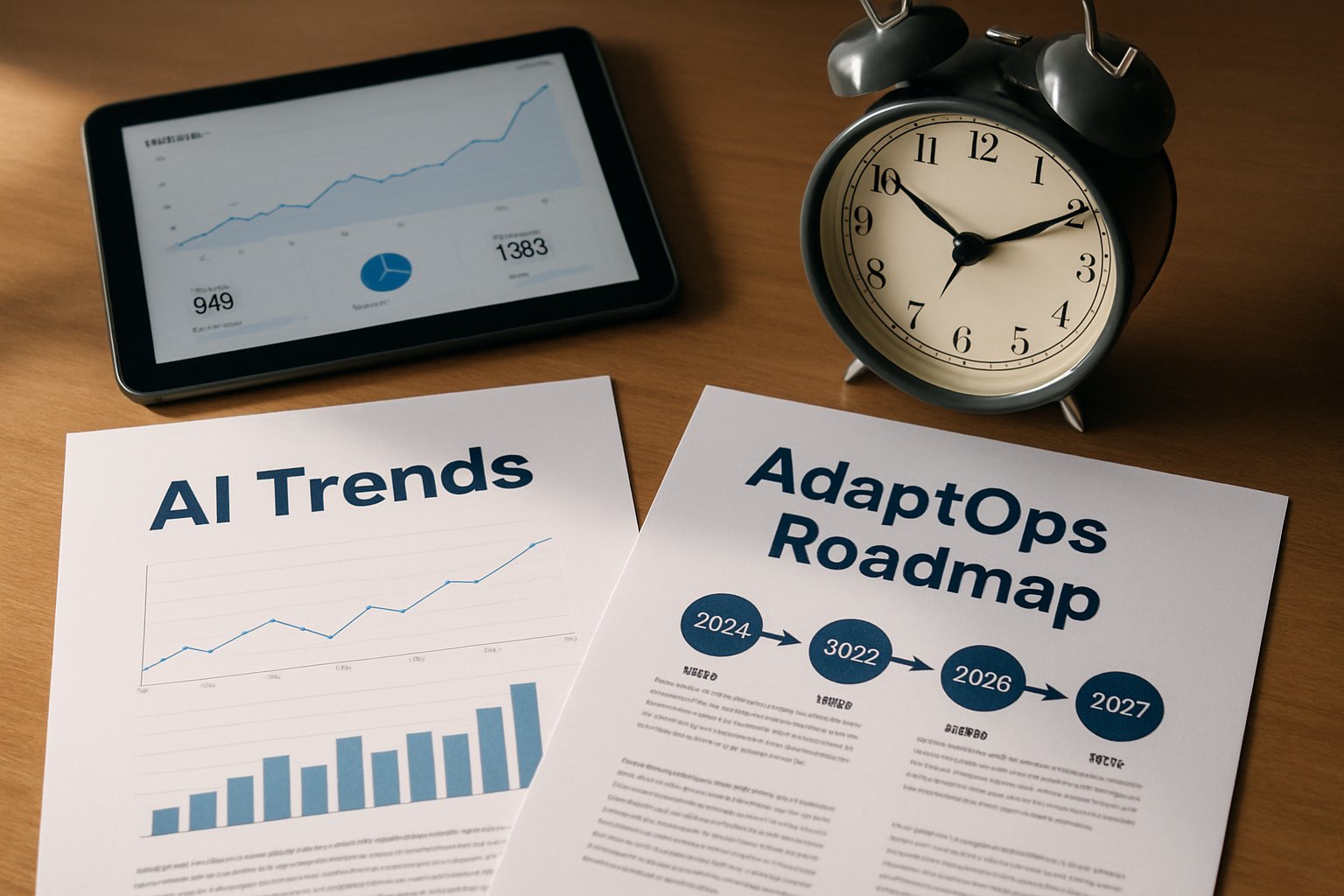
Key takeaway: The billable hour weakens where work is predictable and automatable. Firms must test fresh models before margins erode further. Therefore, proactive experimentation beats reactive discounting.
Productivity Math Reality Check
Gartner surveys show many roles save about 1.5 hours daily with AI tools. Clio’s legal data suggests up to 74% of classic hourly tasks face automation exposure. Furthermore, Adoptify benchmarks claim 59% of enterprises cannot measure those gains. Without numbers, leaders struggle to reprice.
Consider this simple equation:
- Old revenue: hours × rate = income.
- AI future: (hours − saved time) × rate + outcome fees = income.
Key takeaway: Time savings shrink traditional revenue unless offset by outcome or product income. Firms need dashboards that model both sides. Consequently, measurement becomes the first critical step.
Client Pressure Escalates Rapidly
Legal clients now ask which tasks a Copilot handled and demand discounts when automation helped. Consulting buyers mirror that stance, expecting transparent efficiency sharing. Moreover, conference panels predict hybrid pricing dominance within five years.
Firms that resist transparency risk audit, reputation damage, and lost renewals. In contrast, those sharing usage data build credibility and cross-sell new services.
Key takeaway: Client expectations accelerate pricing change faster than internal planning. Therefore, disclosure frameworks and value metrics must mature quickly.
Talent Model Reinvention Path
Junior professionals once learned by billing low-complexity tasks. Automation removes that scaffold. Nevertheless, forward firms protect learning time and reward AI fluency. They create role-based certifications, rotation programs, and clear career ladders detached from logged hours.
Adoptify’s AdaptOps engagements embed certification paths directly into enablement sprints. Consequently, employees gain structured skills while the firm captures productivity.
Key takeaway: Skills, not hours, drive future compensation. Thus, firms should invest in explicit learning budgets and fluency metrics.
Operating Metrics And Governance
Many pilots stall because leaders cannot prove quality, risk, or ROI. A governance-first design solves that gap. Adoptify’s starter kits, for example, define human-in-the-loop checks, accuracy thresholds, and audit trails from day one.
Recommended dashboard KPIs include:
- Time saved per deliverable.
- Error rate after AI assistance.
- Client satisfaction score changes.
- Margin shift under alternative-fee scenarios.
Key takeaway: Robust governance converts anecdotal wins into board-level evidence. Subsequently, finance teams support scaling.
Pricing Transformation Playbook Tactics
Successful firms follow a repeatable playbook.
Step 1: Map tasks into automatable, AI-augmented, and premium judgment categories. Step 2: Model unit economics with AI adoption time data. Step 3: Pilot alternative fees on high-volume, low-variance matters. Step 4: Publish before/after metrics to clients. Step 5: Iterate contracts and expand.
Case example: A regional consultancy packaged its proposal generator as a subscription add-on. Hours dropped 40%, yet revenue grew 18% due to new recurring income. Moreover, clients appreciated fixed monthly budgeting.
Key takeaway: Productization and AFAs protect margins while rewarding efficiency. Hence, leaders should start with one high-volume service line.
AdaptOps Roadmap Forward Journey
Adoptify’s AdaptOps model offers three engagement levels. Quick Starts deliver use-case mapping in four weeks. Acceleration pilots promise ROI in 90 days, complete with dashboards. Enterprise programs scale certifications and governance across functions.
This staged roadmap aligns people, process, and platform changes. Importantly, it embeds AI adoption metrics from discovery through rollout. That alignment ensures pricing innovations rest on reliable data, not gut feel.
Key takeaway: A phased, governance-led program derisks transformation. Therefore, executives should anchor billing reforms within an AdaptOps framework.
Subsequently, firms can expand outcome pricing with confidence.
Summary Insights Recap
• The billable hour persists but shrinks where tasks become predictable.
• Measurement and governance unlock credible pricing change.
• Talent, client expectations, and competitive pressure all favor transparent outcome models.
• AdaptOps provides the structure to pilot, prove, and scale those models.
The journey demands discipline, yet rewards include higher margins, happier clients, and differentiated market positioning.
Conclusion
Does AI adoption kill the billable hour? Not overnight. However, automation erodes time-based revenue wherever work is routine. Firms that measure gains, govern responsibly, and reprice around outcomes will thrive.
Why Adoptify AI? Adoptify AI pairs AI adoption with in-app guidance, intelligent analytics, and automated workflows. Enterprises achieve faster onboarding, higher productivity, and scalable security. Explore how AdaptOps turns data into margin by visiting Adoptify.ai today.
Frequently Asked Questions
- How does AI adoption affect the traditional billable hour?
AI adoption gradually reduces reliance on the traditional billable hour by automating routine tasks, prompting firms to shift to outcome-based pricing. Adoptify AI supports this transition with in-app guidance and automated support. - How can enterprises measure productivity gains from AI tools?
Enterprises can track productivity gains with key dashboards that monitor time saved and client satisfaction. Adoptify AI’s intelligent analytics delivers actionable insights and automated support for continuous performance measurement. - What role does governance play in AI adoption and pricing transformation?
Robust governance ensures quality and transparent pricing by defining audit trails and performance metrics. With Adoptify AI’s AdaptOps framework and in-app guidance, firms manage risk while transitioning to data-driven, outcome-based pricing. - How does Adoptify AI support digital adoption and workflow transformation?
Adoptify AI accelerates digital adoption by providing seamless in-app guidance, user analytics, and automated workflows that streamline processes and enhance team capabilities, ensuring faster onboarding and scalable security.

FEATURED
Artificial intelligence adoption: Copilot consulting ROI math
February 4, 2026
FEATURED
Microsoft Copilot Consulting: Bulletproof Security Configuration
February 4, 2026
FEATURED
Where Microsoft Copilot Consulting Safeguards Data
February 4, 2026
FEATURED
Microsoft Copilot Consulting: Automate Executive Presentations
February 4, 2026
FEATURED
Microsoft Copilot Consulting Slashes 15 Weekly Hours
February 4, 2026