AI Adoption Demands New Operating Models
Enterprises rush to deploy new generative tools. Yet many see stalled productivity and rising confusion. AI Adoption remains the stated goal, but technology alone never delivers sustainable value.
McKinsey reports 88% use AI somewhere, while only one-third scale it. Consequently, leaders face rising board pressure for measurable returns. Gartner adds that proving business value is the top barrier.
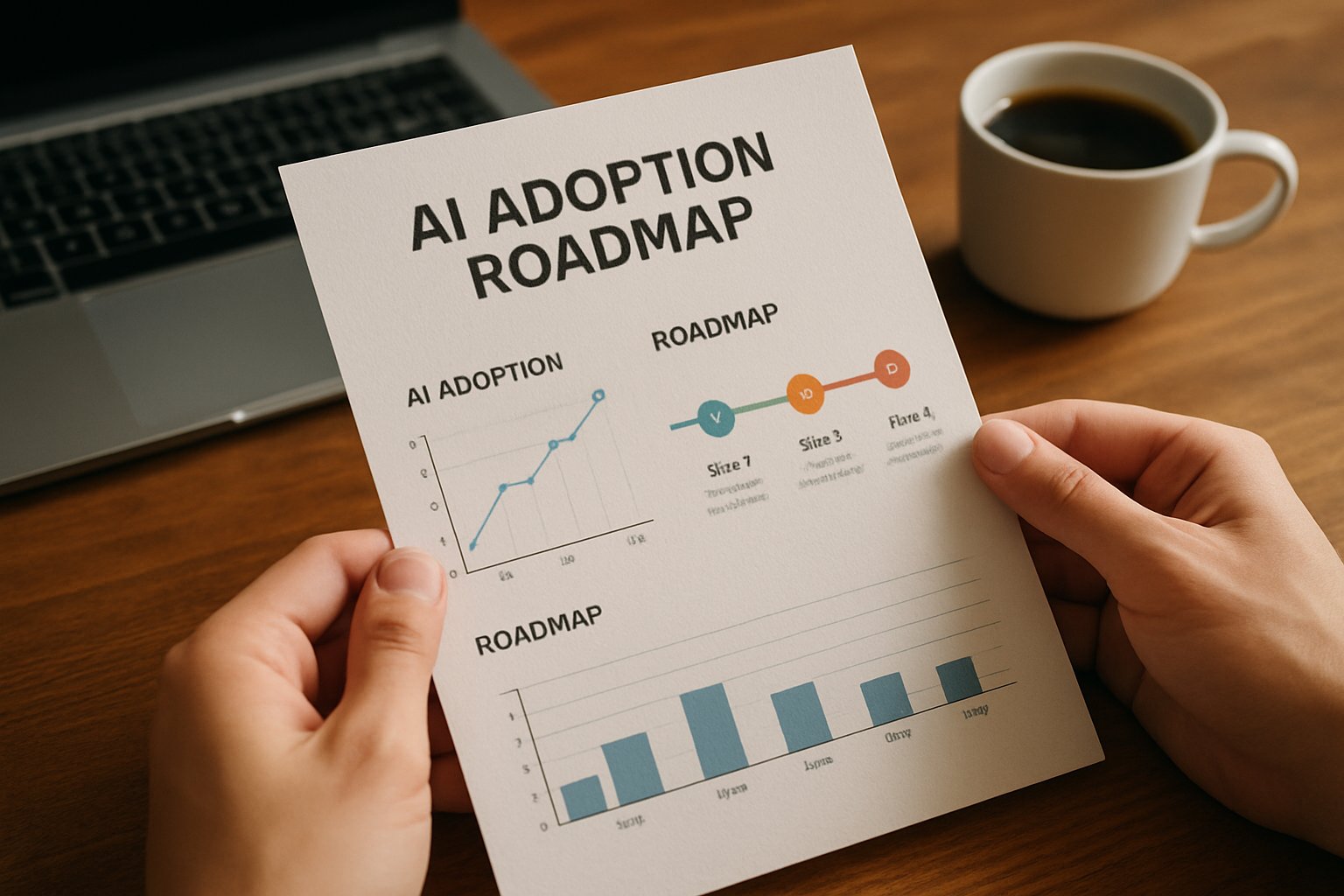
This article argues that the real blocker is the operating model. We show why governance, roles, and change shape success. Finally, we outline an AdaptOps roadmap inspired by Adoptify.ai field work.
AI Adoption Model Gap
Statistics paint a clear picture. BCG finds 74% of companies struggle to scale value. Moreover, 70% of obstacles are organizational, not algorithmic.
These numbers confirm an AI adoption operating model crisis. Technology works in pilots, yet processes lag. Without governance, risk teams halt deployments.
Therefore, enterprises must treat operating model redesign as priority one. Every successful program integrates people, workflows, and metrics before scaling models.
Key takeaway: gaps live in culture, not code. Next, we explore leadership duties.
Leadership Drives Adoption Change
Executives sponsor budgets, yet middle managers run workflows daily. Consequently, misaligned incentives derail momentum. The AI adoption leadership challenge requires shared accountability across layers.
High performers form an executive steering group plus a center of excellence. Moreover, they appoint workflow owners inside every business unit. These owners act like product managers for AI services.
Adoptify.ai reinforces this structure through executive coaching and role charters. Their AdaptOps guidance clarifies decision rights, funding gates, and risk thresholds. Ignoring the AI adoption leadership challenge guarantees stagnation.
Leaders must own outcomes, not algorithms. Next up, we detail model design essentials.
Smart Operating Model Principles
Effective AI Adoption operating model design aligns objectives, data, and delivery cadences. First, teams start with measurable business metrics, like cycle time or revenue lift. Then, architecture follows those metrics.
McKinsey calls this outcome-backward planning. Moreover, it mirrors product thinking in software. Adoptify.ai’s Discover & Align phase uses identical framing.
The following principles keep design grounded:
- Governance first: Establish policies, security reviews, and risk triage before pilot code.
- Modular workflows: Decompose tasks so models, prompts, and data can evolve independently.
- Continuous measurement: Instrument dashboards to surface ROI daily, not quarterly.
- Hybrid ownership: Pair a central center of excellence with distributed product owners.
- Incremental funding: Release budgets only after pilot thresholds are met.
These principles embody an AI change management strategy that integrates technology and behavior. Consequently, teams avoid rework during later scale phases.
Design drives repeatability and control. Now, we translate principles into action plans.
Practical Change Management Playbook
Many projects fail because change plans arrive last. However, embedding AI adoption change management from day one flips odds.
The playbook below showcases proven moves.
- Create a stakeholder map covering executives, managers, and end users.
- Run readiness surveys to surface fears, blockers, and skill gaps.
- Launch a champions network with weekly enablement clinics.
- Deliver role-based training through in-app guidance and microlearning.
- Celebrate quick wins publicly to sustain momentum.
Moreover, the playbook must include feedback loops. Adoptify.ai injects pulse surveys, usage analytics, and ROI dashboards into every sprint. This embeds AI adoption change management into every sprint.
This rigor addresses the AI adoption operating model and AI change management strategy simultaneously. Consequently, resistance drops and confidence rises.
Structured change converts skeptics into champions. Next, we examine moving from pilots to scale.
Pilot Success To Scale
Organizations often sit in AI Adoption pilot purgatory. They test 200 users, then stall funding. The cure involves clear go/no-go criteria and rapid scaling protocols.
Without an AI adoption operating model, pilots disconnect from enterprise goals. Adoptify.ai labels this Prove Value Fast. Their 90-day pilots baseline productivity, integrate governance, and display ROI dashboards. Furthermore, executives commit to funding thresholds before kickoff. Their framework links pilots to the broader AI operating model design.
The AI operating model design enforces a tight cadence: 30-day build, 30-day usage, 30-day assessment. Moreover, success metrics span efficiency, quality, and risk reduction. Teams embed AI adoption change management checkpoints into each 30-day stage.
When thresholds are met, scale plans trigger. Data pipelines, security controls, and support resources expand within a preset playbook.
Pilots supply evidence, not hype. Overcoming the AI adoption leadership challenge demands such proof. Next, we close with governance and optimization.
Continuous Governance And Optimization
Generative models drift and AI Adoption risks multiply. Therefore, continuous governance protects value and brand reputation. Gartner warns that unmanaged hallucinations erode trust.
Adoptify.ai packages governance starter kits, monitoring, and compliance playbooks. Additionally, AdaptOps includes quarterly business reviews to adjust policies and retrain staff. Robust AI adoption operating model controls simplify audits.
This loop embodies a mature AI change management strategy. Metrics drive funding, while audits maintain control.
Governance keeps value alive. Continuous reviews nurture your AI operating model design. Finally, we summarize and share next steps.
AI Adoption succeeds when operating models evolve, not when new models simply deploy. A disciplined AI change management strategy transforms experiments into enterprise value. Throughout this article we saw that governance, leadership, and disciplined change close the notorious value gap.
Why Adoptify AI? The platform delivers AI-powered digital adoption, interactive in-app guidance, intelligent user analytics, and automated workflow support. Consequently, teams achieve faster onboarding, higher productivity, and enterprise-grade security at scale. Book a demo and see how Adoptify AI transforms everyday work.
Frequently Asked Questions
- What is the AI adoption operating model gap?
The gap refers to misaligned processes and outdated workflows in AI initiatives. Effective digital adoption requires governance, clear roles, and a structured operating model—features integrated in platforms like Adoptify AI. - How does Adoptify AI improve digital adoption through in-app guidance?
Adoptify AI offers interactive in-app guidance, role-based training, and microlearning that simplify onboarding. These features accelerate user adoption, boost productivity, and offer a seamless digital transformation experience. - What role do analytics and automated support play in successful AI adoption?
Intelligent user analytics and automated support provide real-time insights and proactive issue resolution. They ensure measurable business outcomes and help continuously optimize workflows, aligning with AI adoption best practices. - Why is continuous governance important in AI adoption?
Continuous governance ensures that AI systems remain secure and effective. By integrating monitoring, regular reviews, and compliance checks, platforms like Adoptify AI sustain high performance while managing risks and driving measurable results.

FEATURED
How to Identify and Overcome Cultural AI Adoption Barriers
March 3, 2026
FEATURED
What Are the Most Common AI Adoption Challenges for Businesses
March 3, 2026
FEATURED
The Complete Guide to Building an AI Adoption Framework for 2026
March 2, 2026
FEATURED
Who Owns the Intellectual Property in Enterprise AI Adoption
March 2, 2026
FEATURED
7 Reasons To Embrace AI-Native Architecture
March 2, 2026