AI Adoption Demands Talent Transformation Excellence
GenAI hype is everywhere, yet productivity results remain uneven. Studies show the talent gap now blocks most corporate automation gains. However, executives often chase tools before preparing people. That mismatch erodes trust, slows pilots, and wastes precious budget. Consequently, a rigorous AI Adoption plan must start with talent transformation. This article unpacks why skills, governance, and measurement cannot wait. We draw on McKinsey, EY, Gartner, and Adoptify.ai field results. Moreover, you will get a practical operating model and action checklist. Readers include HR, L&D, IT, and digital transformation leaders seeking scalable outcomes. Let’s explore how workforce readiness turns experimental algorithms into hard ROI. Along the way, we show proven funding routes, micro-learning tactics, and retention safeguards. Finally, we link every insight to AdaptOps, Adoptify’s governance-first operating model.
AI Adoption Talent Gap
McKinsey reports 46% of leaders blame skill gaps for stalled deployments. EY warns firms could lose 40% of potential gains when talent lags. General Assembly adds that 75% of hiring managers say companies recruit specialists too quickly. Therefore, the conversation must pivot toward AI talent transformation and sustainable pipelines.
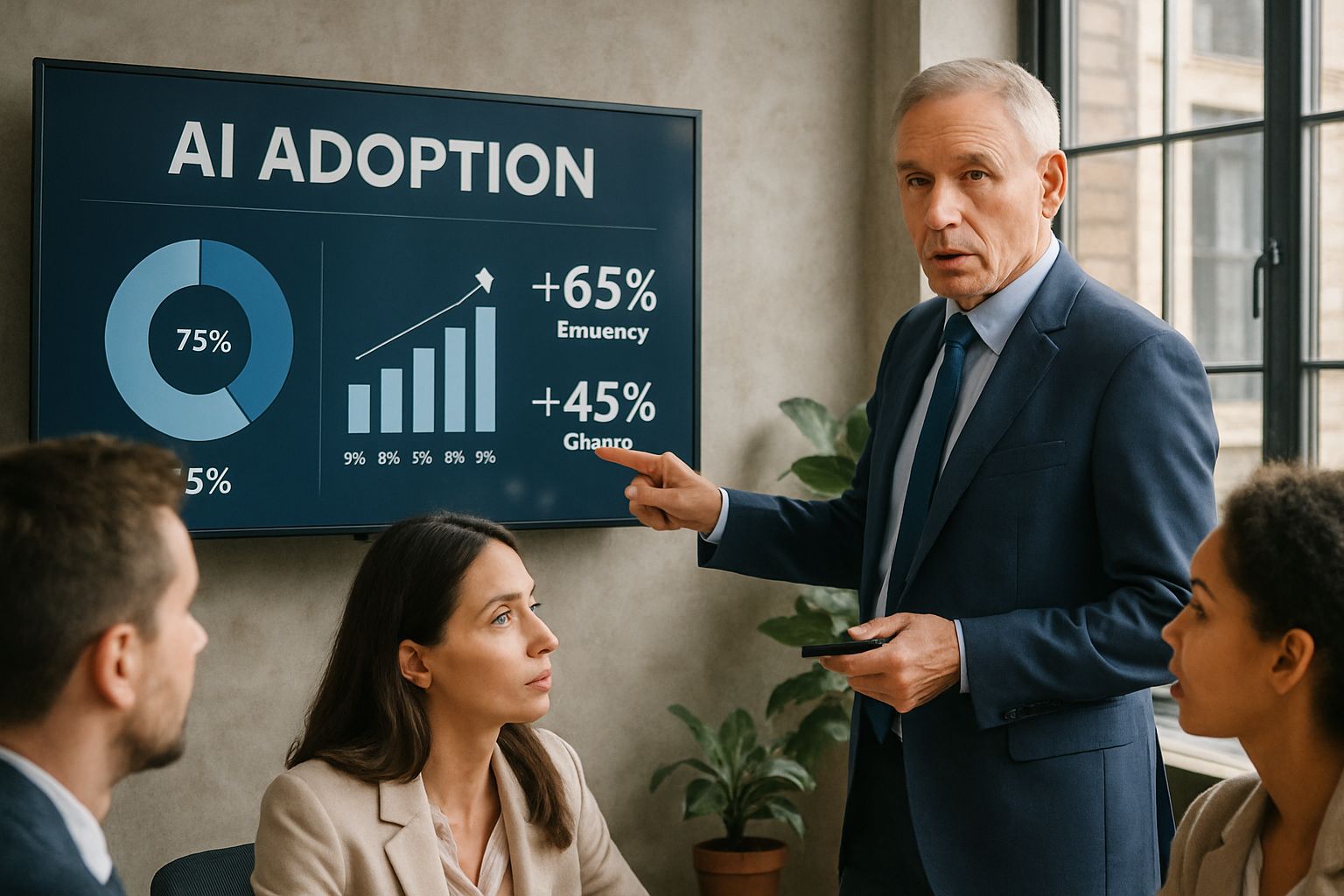
- Limited AI readiness of workforce restricts pilot scope and slows feedback loops.
- Scarce governance skills raise security, ethics, and compliance exposure.
- Fragmented learning paths prolong AI workforce transformation timelines.
In short, skills block scale more than algorithms do.
Next, we examine the business risks when leaders ignore this reality.
Business Risk Escalates Fast
Without coordinated AI workforce transformation, costs rise while competitive gaps widen. EY data shows unprepared teams capture only 60% of expected returns. Meanwhile, trained employees become recruitment targets, raising retention risk and hidden expenses. Consequently, AI Adoption without parallel learning invites three predictable failures.
- Pilots stall because users revert to legacy workflows.
- CISOs block projects due to unresolved governance questions.
- Executives cut funding after seeing weak ROI dashboards.
Each failure cascades, eroding stakeholder trust and undermining any AI adoption and talent strategy.
The next section introduces a model that curbs those risks.
Strategic Operating Model Blueprint
Adoptify.ai codifies AdaptOps to unify people, process, and platform for AI talent transformation. The model walks leaders from Discover to Embed using gated checkpoints and role metrics. Moreover, adoption becomes a continuous loop, not a one-off project milestone. Gartner urges HR and IT to co-own an AI Adoption and talent strategy. AdaptOps injects funding options like Microsoft’s ECIF to de-risk early learning investments.
This operating model links funding, governance, and skill gates in one roadmap.
Next, we zoom into the role-based learning tactics that fuel momentum.
Role-Based Skill Paths Matter
Every role feels AI differently, so training must align with daily tasks. Adoptify.ai starts with competency maps, then injects in-app micro-learning at the moment of need. Furthermore, certifications validate AI readiness of workforce and open transparent career ladders. Through this lens, AI Adoption shifts from optional to essential behavioral change.
Micro Learning Loop Design
Teams push task-level tips directly into apps, reinforcing new prompts within minutes. Consequently, AI upskilling and reskilling occur continuously, not annually.
Role specificity accelerates confidence and productivity.
We now address why governance must join the curriculum.
Governance First Mindset Wins
Security leaders often stall projects over data residency, tenant controls, or prompt leakage. Adoptify.ai embeds SOC-2, GDPR, and CISO sign-offs into early gates. Moreover, ethics modules become mandatory parts of AI upskilling and reskilling programs. With governance baked in, AI Adoption earns executive trust and funding continuity.
Governance paired with skills reduces risk while boosting velocity.
The next section shows how measurement keeps efforts honest.
Measurement Drives Scaling Success
Executives will not invest blindly; they ask for quantified business impact. AdaptOps surfaces ROI dashboards that track minutes saved, throughput, and error reduction. Additionally, learning analytics reveal which modules drive AI talent transformation and where gaps persist. Tie those insights to compensation, retention plans, and AI workforce transformation goals.
Data keeps everyone accountable and rewards progress.
Finally, let’s assemble an action checklist you can start tomorrow.
Implementation Action Plan Checklist
Use this quick sequence to operationalize ideas.
- Assess current AI readiness of workforce with surveys and task audits.
- Secure ECIF or similar funding for a 90-day pilot.
- Map each role to target outcomes and AI upskilling and reskilling modules, anchoring the AI adoption and talent strategy.
- Embed governance checkpoints and launch champion network early.
- Publish KPI dashboard weekly and refresh content based on gaps.
Consequently, momentum builds and scale follows.
These steps mirror the AdaptOps blueprint discussed earlier.
We now conclude with key lessons and next steps.
Effective AI Adoption hinges on synchronized technology, talent, governance, and measurement. Organizations embracing AI talent transformation, AI workforce transformation, and rigorous AI upskilling and reskilling outperform laggards. Adoptify 365 answers the execution challenge with an AI-powered digital adoption platform that accelerates every stage.
- Interactive in-app guidance embeds new behaviors within minutes.
- Intelligent user analytics spotlight friction and success instantly.
- Automated workflow support removes repetitive clicks across systems.
- Faster onboarding and higher productivity follow measurable paths.
- Enterprise scalability and security meet rigorous SOC-2 and GDPR needs.
Therefore, move from pilots to lasting value today.
Explore AdaptOps and unleash your workforce at Adoptify 365.
Frequently Asked Questions
- How does AI talent transformation influence digital adoption strategies?
AI talent transformation drives digital adoption by aligning skills, governance, and measurement. With in-app guidance and automated workflow support, Adoptify 365 ensures sustainable, scalable digital adoption. - What role does governance play in successful AI adoption?
Robust governance is vital for managing risks like compliance and data security. Adoptify 365 embeds SOC-2, GDPR checkpoints, and CISO sign-offs to build trust and support AI adoption. - How does the AdaptOps model enhance AI implementation?
AdaptOps unifies people, process, and platform using role-based learning and funding strategies. It offers measurable ROI, continuous upskilling, and automated support to accelerate AI adoption. - How does in-app micro-learning support continuous AI upskilling?
In-app micro-learning delivers timely, task-specific tips right within workflows, reinforcing behaviors and boosting productivity. This seamless support drives continuous AI upskilling and digital adoption.

FEATURED
Hybrid AI Safeguards Enterprise Data
March 2, 2026
FEATURED
Sovereign AI Readiness Checklist: 14 Essentials For Scale
March 2, 2026
FEATURED
7 Reasons Sovereign AI Drives Enterprise Scale
March 2, 2026
FEATURED
Decision Intelligence Powers Sovereign Logistics Success
March 2, 2026
FEATURED
Executive Guide to Domain-Specific Language Models and MCP
March 2, 2026