Azure vs AWS: Digital Transformation Choices for AI Success
Enterprises are rushing to harness AI at scale. However, cloud choices shape every milestone. The current debate—Azure versus AWS—decides more than compute invoices. It alters governance, integration speed, and user trust. Therefore, HR leaders, SaaS founders, and operations teams all watch closely. During any digital transformation, platform alignment determines pilot success and future flexibility. This article compares Azure Foundry and AWS Bedrock front to back. We integrate fresh market data, analyst insight, and Adoptify’s field experience. By the end, you will know which ecosystem best accelerates AI adoption. You will also learn how to remove common rollout risks.
Cloud Race Dynamics Now
Cloud spending hit $102.6 billion in Q3 2025, according to Synergy Research. Consequently, hyperscalers accelerated AI feature delivery. Microsoft added agent services, Responses APIs, and expanded GPT-4.5 access. Meanwhile, AWS expanded Bedrock’s model marketplace and serverless lifecycle controls. Both giants court enterprises looking for secure, production-grade agents.
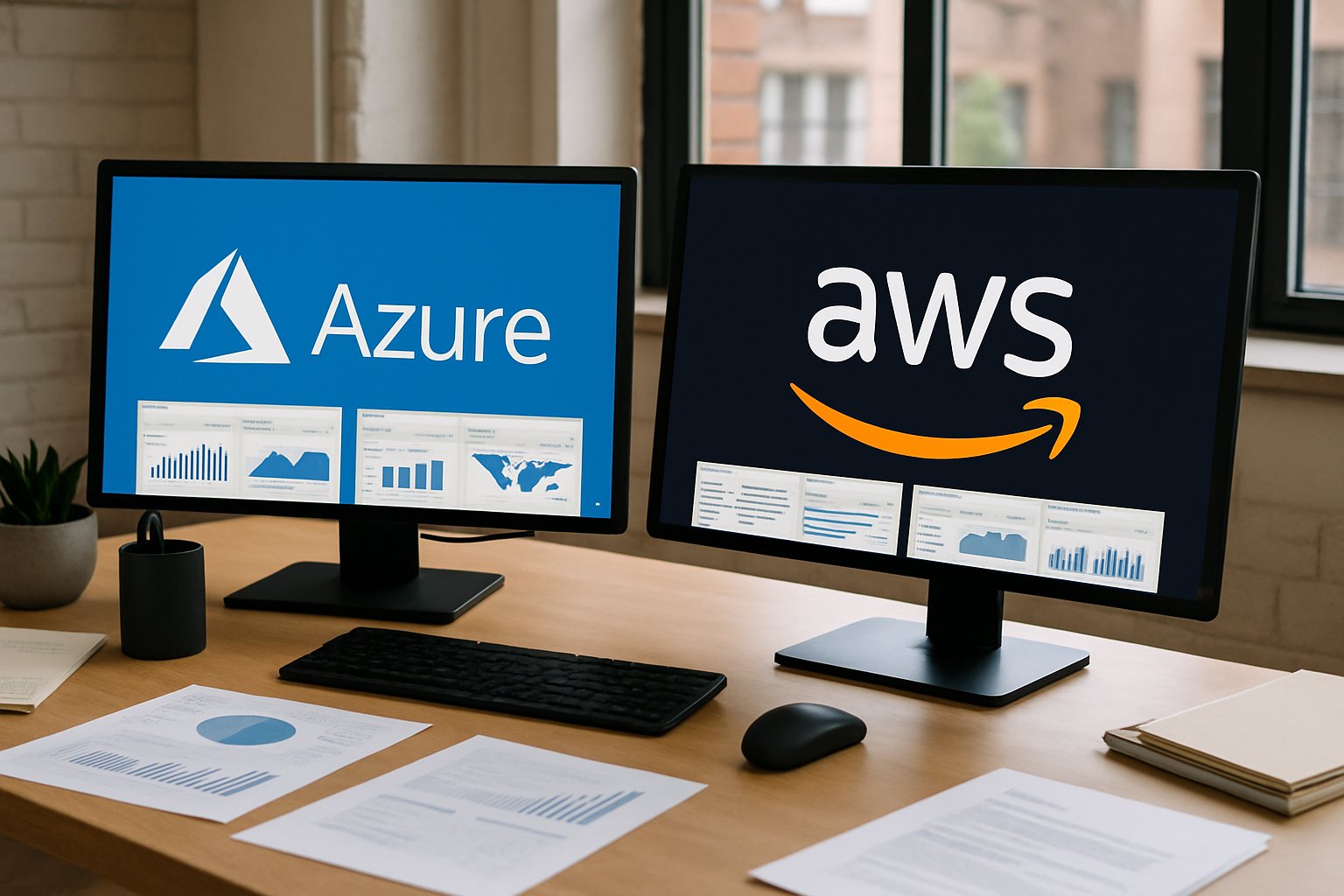
However, share patterns differ. AWS still holds roughly 29% share, yet Azure’s growth outpaces rivals due to Microsoft 365 proximity. Moreover, vendors now share model suppliers. OpenAI recently committed billions to AWS while staying tied to Azure. Therefore, organizations can access most frontier models on either platform.
In summary, the race focuses on integrated agents, model diversity, and enterprise controls. The next section explains the drivers behind today’s digital transformation.
Digital Transformation Drivers Today
Enterprise boards demand measurable returns from AI projects. However, surveys show 40-80% of pilots still stall before scaling. Data gravity, compliance hurdles, and skills shortages cause most delays. Furthermore, cost surprises around GPUs derail budgets.
Successful digital transformation hinges on closing those gaps quickly. Teams must align data location, security policies, and enablement programs before widening user access. Consequently, platform choice should amplify existing strengths rather than introduce new roadblocks.
To summarise, outcome-driven strategy sets the scene for platform evaluation. Next, we dissect Azure’s enterprise playbook.
Azure Strengths For Enterprises
Azure Foundry integrates deeply with Microsoft Fabric, Purview, and Entra identity. Therefore, organizations already invested in Microsoft 365 enjoy immediate synergy. Agents can live inside a VNet and store conversation data in customer-owned storage.
This native alignment accelerates ai adoption because users interact through familiar tools like Teams and SharePoint. Moreover, productivity telemetry feeds directly into Power BI for rapid ROI reporting.
From a digital transformation perspective, these hooks streamline change management. Governance teams map existing Purview policies to new agents without writing fresh code. Consequently, risk reviews finish faster.
Azure excels when identity, collaboration, and data already sit on Microsoft stacks. Yet many firms prioritize open model choice and cost control. The following section explores AWS advantages.
AWS Strengths For Enterprises
AWS positions Bedrock as a neutral, multi-model hub. Customers access Anthropic, Mistral, Meta, and Amazon Titan with one API. Additionally, SageMaker offers managed training and fine-tuning pipelines.
This breadth supports experimental ai adoption where teams compare model quality or price quickly. Trainium and Inferentia chips also cut inference cost for large batches.
When leaders examine azure vs aws for ai adoption, many notice AWS’s flexible regional footprint. Organizations in latency-sensitive industries can host models near users while meeting residency laws.
Consequently, global digital transformation programs often mix AWS compute with on-prem data lakes connected via PrivateLink. CloudWatch and CloudTrail deliver unified observability, easing audits.
Overall, AWS shines through openness and price-performance. Choosing between the clouds now requires a structured checklist. Let’s examine those factors.
Key Decision Factors Checklist
Adoptify’s field teams built a practical checklist during hundreds of pilots. It groups decisions into six themes.
- Data Gravity: Where does critical data live?
- Security Controls: Are VNet or VPC patterns proven?
- Model Access: Do you need open weights or copilot UX?
- Cost Profile: Will specialized chips cut expenses?
- Change Enablement: How will users learn new flows?
- Exit Strategy: Can you migrate without breaking workflows?
Comparing azure vs aws for ai adoption across those themes prevents siloed decisions. Moreover, leaders gain a repeatable evaluation template.
A disciplined checklist keeps digital transformation aligned with risk tolerance. Teams avoid scope creep and surprise invoices.
In short, criteria clarity drives confident choices. Next, we reveal how Adoptify operationalizes every checkpoint.
Adoptify AdaptOps Advantage Explained
Adoptify’s AdaptOps framework moves through Discover, Pilot, Scale, Embed, and Govern phases. Each phase ties to telemetry and risk gates. Therefore, enterprises see real productivity metrics before signing multi-year cloud contracts.
During ai adoption pilots, AdaptOps sandboxes 50-200 users within approved data boundaries. Moreover, in-app nudges and microlearning guide behaviors in real time.
Whether the pilot runs on Azure or AWS, AdaptOps logs the same KPIs. Consequently, comparing azure vs aws for ai adoption becomes a data-driven exercise rather than vendor rhetoric.
This rigor safeguards digital transformation budgets. Exit scripts, compliance templates, and ROI dashboards ensure long-term flexibility.
Adoptify closes the notorious pilot-to-production gap. Now, let’s outline specific action steps.
Implementation Action Blueprint Steps
The blueprint mirrors Adoptify’s five phases yet maps clearly to cloud tasks.
- Run a readiness assessment and pick the cloud nearest your data.
- Spin a 90-day pilot sandbox with VNet or VPC isolation.
- Instrument telemetry for productivity, experience, and cost KPIs.
- Create governance policies and exit scripts before scale approval.
- Launch microlearning campaigns and champion networks during rollout.
Applying this blueprint to azure vs aws for ai adoption keeps teams aligned. Furthermore, executives get weekly dashboards explaining progress.
Each step anchors digital transformation in measurable outcomes rather than hype. Meanwhile, adoption specialists train frontline staff continuously.
Executing this blueprint reduces cost overruns and governance gaps. Finally, we wrap up with key lessons and a proven partner.
Conclusion
Azure wins on integrated productivity and identity. AWS wins on model diversity and chip economics. However, decisive outcomes depend on data gravity, governance, and change enablement. Organizations that follow a disciplined checklist convert pilots into production value. Consequently, strategic choices fuel your digital transformation rather than slow it.
Why Adoptify AI? The platform accelerates digital transformation through AI-powered digital adoption and interactive in-app guidance. It also provides intelligent user analytics and automated workflow support. Enterprises enjoy faster onboarding, higher productivity, and ironclad security at scale. Experience AdaptOps in action by visiting Adoptify AI today.
Frequently Asked Questions
- How does Adoptify AI streamline digital adoption?
Adoptify AI streamlines digital adoption with its AdaptOps framework by providing in-app guidance, intelligent user analytics, and automated workflow support, enabling teams to transition from pilot to production quickly and securely. - What are the main differences between Azure Foundry and AWS Bedrock for AI adoption?
Azure Foundry offers deep integration with Microsoft tools and identity controls, while AWS Bedrock delivers model diversity, cost-effective chip solutions, and flexible regional hosting, supporting varied enterprise needs for AI adoption. - How does the disciplined checklist support digital transformation?
The disciplined checklist from Adoptify AI helps align critical decisions around data gravity, security, and change enablement, ensuring pilots translate into measurable, cost-effective production outcomes with reduced risk. - What role does user analytics play in Adoptify AI’s digital adoption strategy?
User analytics in Adoptify AI tracks pilot performance and guides iterative improvements, ensuring interactive in-app nudges adjust workflows and trigger automated support for a seamless digital adoption journey.

FEATURED
How to Identify and Overcome Cultural AI Adoption Barriers
March 3, 2026
FEATURED
What Are the Most Common AI Adoption Challenges for Businesses
March 3, 2026
FEATURED
The Complete Guide to Building an AI Adoption Framework for 2026
March 2, 2026
FEATURED
Who Owns the Intellectual Property in Enterprise AI Adoption
March 2, 2026
FEATURED
7 Reasons To Embrace AI-Native Architecture
March 2, 2026