Build an Iron-Clad Adoption Strategy RFP Checklist
AI budgets keep rising, yet scale still lags. Consequently, procurement teams face intense pressure to pick winners, not hype. Your adoption strategy must therefore begin before contracts get signed. This guide offers an evidence-driven roadmap that converts chaotic vendor pitches into governed, auditable deals.
We map each RFP clause to the AdaptOps lifecycle, real compliance standards, and measurable workforce impact. Throughout, we reference McKinsey, NIST, and Adoptify.ai research so every reader can act with confidence.
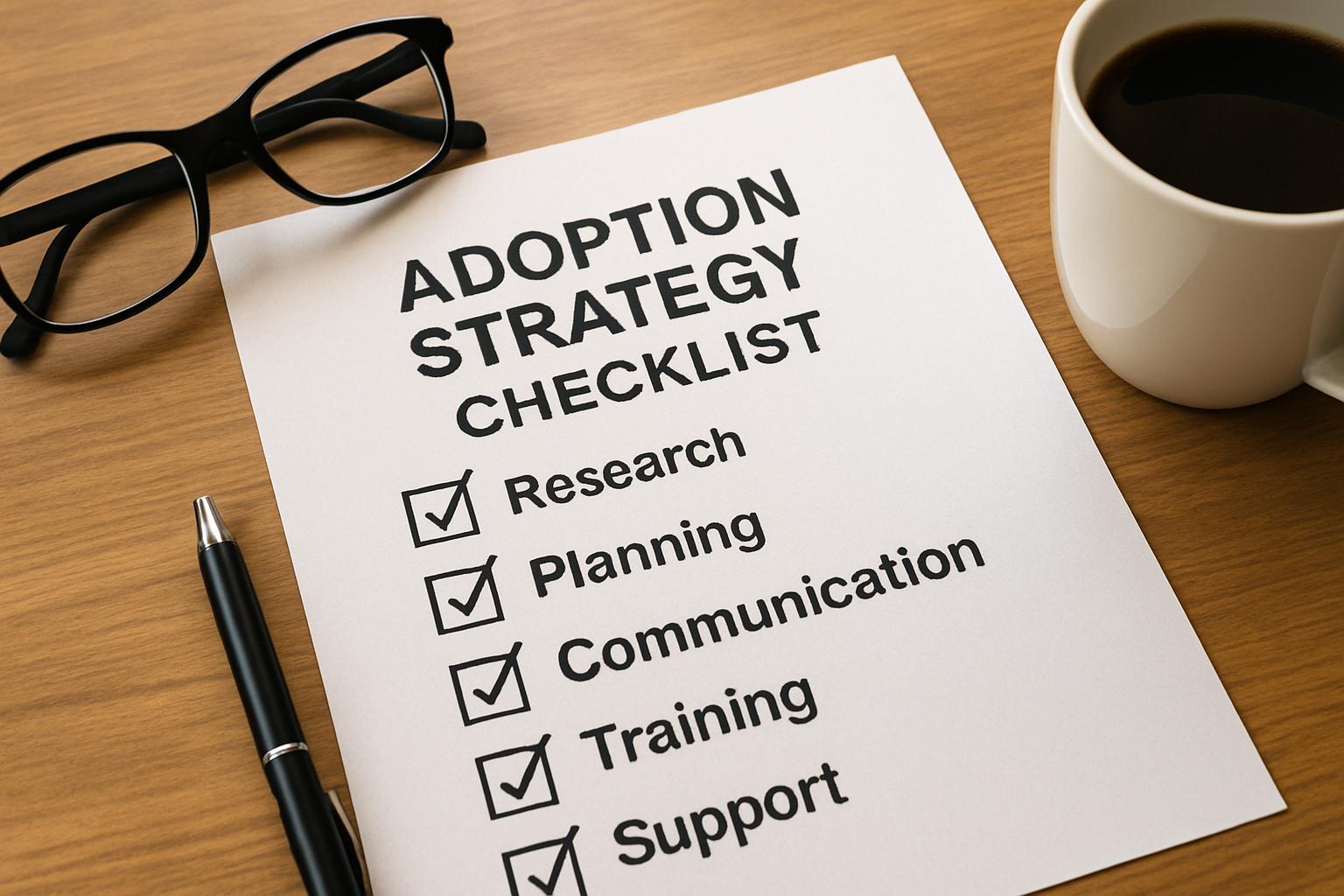
Why RFPs Evolve Now
Enterprises once chased features. However, regulators, CFOs, and auditors now demand proof. ISO/IEC 42001 and the EU AI Act require traceability, technical documentation, and post-market monitoring. Meanwhile, McKinsey shows only 38% of firms have scaled AI beyond pilots.
Therefore, modern RFPs must link governance, telemetry, and change management to commercial milestones. Vendors that lack repeatable evidence quickly fall from contention.
Key takeaway: Governance and ROI now sit at the center of procurement. Transitioning forward, we align those needs with strategic intent.
Align With Adoption Strategy
Every requirement should ladder up to the broader adoption strategy goals of productivity lift, risk control, and workforce enablement. Moreover, tie each RFP question to an AdaptOps phase—Discover, Pilot, Scale, Embed, or Govern—to ensure lifecycle continuity.
Include “ai adoption vendor rfp checklist” language in the RFP cover sheet so stakeholders instantly recognize purpose and scope. Furthermore, ask vendors to map their enablement playbooks to user personas defined by HR and L&D teams.
Key takeaway: Strategy alignment prevents checklist fatigue. Next, we design scorecards that convert alignment into numbers.
Design Scoring Frameworks Right
Weighted scorecards create transparency. Adoptify’s template covers six pillars: technical fit, security, operational governance, change management, commercial terms, and references. Assign pass/fail gates for SOC 2 Type II, “No-Training-Without-Consent,” and TEVV artifacts.
Use live dashboards so cross-functional reviewers see scores update in real time. This practice accelerates ai adoption decisions while documenting due diligence for auditors.
Key takeaway: Quantified criteria cut debate time. We now turn to the evidence vendors must supply.
Mandate Governance Evidence Fast
Ask for model cards, subprocessor lists, architecture diagrams, and weekly telemetry exports. Additionally, require drift detection runbooks and incident MTTR commitments. These asks echo NIST AI RMF guidance and the “ai adoption vendor rfp checklist” best practice playbooks.
Moreover, contractually bind vendors to deliver those artifacts before production usage fees begin. That clause aligns cost with compliance and strengthens your adoption strategy baseline.
Key takeaway: Evidence protects budgets and reputations. Data ownership is the next battleground.
Protect Data And Portability
Data must stay yours. Therefore, insist on exportable prompts, embeddings, logs, and outputs in an open format. Specify egress pricing up front. Meanwhile, add strict “No-Training-Without-Consent” language plus encryption and VPC deployment options.
Consequently, lock-in risk drops while regulators gain verifiable audit trails. This requirement also reinforces long-term ai adoption flexibility.
Key takeaway: Portability keeps leverage with buyers. After safeguards, you still must prove value quickly.
Pilot To Prove Value
Define a 30-90 day pilot with fixed datasets, objective accuracy thresholds, and cost ceilings. Furthermore, demand full telemetry hand-over at pilot end. Vendors unable to export logs should be disqualified.
Include acceptance metrics—latency, hallucination rate, minutes saved—so finance can project ROI. This step ensures the adoption strategy remains business-outcome driven.
Key takeaway: Structured pilots cut “demo glow.” The final lever is sustained workforce change.
Embed Change And Training
Contracts should bundle enablement assets: role-based microlearning, in-app guidance scripts, and adoption KPIs such as weekly active users. Moreover, link payment milestones to hitting those KPIs.
Below is a concise checklist for immediate insertion into your RFP annex:
- Model card + TEVV per version
- Subprocessor list with 24-hour updates
- Post-market monitoring plan
- Exit and portability playbook
- Role-based training curriculum
This bullet list echoes industry “ai adoption vendor rfp checklist” frameworks and positions your team for rapid ai adoption at scale.
Key takeaway: Enablement cements behavior change. Let’s pull the threads together.
Conclusion: A governance-first RFP anchors risk control, evidence, and workforce impact. Use the seven steps above to integrate compliance mandates, portability clauses, and measured pilots into one cohesive adoption strategy. Why Adoptify AI? Our AI-powered digital adoption platform delivers interactive in-app guidance, intelligent user analytics, and automated workflow support. Consequently, enterprises onboard faster, elevate productivity, and scale securely across regions. Adoptify AI turns any adoption strategy into measurable business outcomes. Explore how at Adoptify.ai.
Frequently Asked Questions
- What is an effective digital adoption strategy in an AI-driven landscape?
A strong digital adoption strategy integrates in-app guidance, user analytics, and automated support. It combines a structured pilot, compliance checks, and role-based training to drive measurable adoption outcomes using platforms like Adoptify AI. - How does governance evidence protect AI adoption budgets?
Collecting governance evidence such as model cards, telemetry exports, and drift detection runbooks safeguards budgets by linking cost with compliance and risk control, a practice central to Adoptify AI’s approach. - How do in-app guidance and user analytics improve adoption outcomes?
In-app guidance accelerates user onboarding while real-time user analytics track progress and pinpoint training gaps, ensuring seamless digital transformation and enhanced productivity with platforms like Adoptify AI. - Why is ensuring data portability and protection crucial for AI adoption?
Data portability and protection prevent vendor lock-in and secure sensitive information. Clear export rights and encryption clauses align with compliance mandates, echoing best practices promoted by Adoptify AI.
FEATURED
The Complete Guide to Building an AI Adoption Framework for 2026
March 2, 2026
FEATURED
Who Owns the Intellectual Property in Enterprise AI Adoption
March 2, 2026
FEATURED
7 Reasons To Embrace AI-Native Architecture
March 2, 2026
FEATURED
Hybrid AI FAQ: Strategy, Governance, and ROI
March 2, 2026
FEATURED
Agentic AI Integration Playbook for Enterprises
March 2, 2026