Building Resilient AI Integration Frameworks
Agentic systems are racing from labs into enterprise production. However, many leaders still treat them as simple chat add-ons. That mindset blocks scale, security, and measurable returns. Therefore, a structured ai integration framework becomes essential. This article offers a practical roadmap grounded in research, standards, and AdaptOps experience. Readers will learn to move from discovery to governed scale without chaos. Moreover, every step connects technology, people, and process levers. Consequently, HR teams, SaaS founders, and IT leaders can protect budget and brand. We draw on Gartner forecasts, MCP standards, and Adoptify benchmarks. Additionally, we align guidance with NIST and EU AI Act obligations. By following this plan, enterprises convert pilots into lasting competitive advantage. Let us begin.
Agentic Shift Explained Clearly
Enterprises once celebrated chat assistants. However, agentic ai now promises goal-driven, tool-using autonomy. Gartner expects 40% of apps to embed agents by 2026. Consequently, strategy windows are shrinking rapidly.
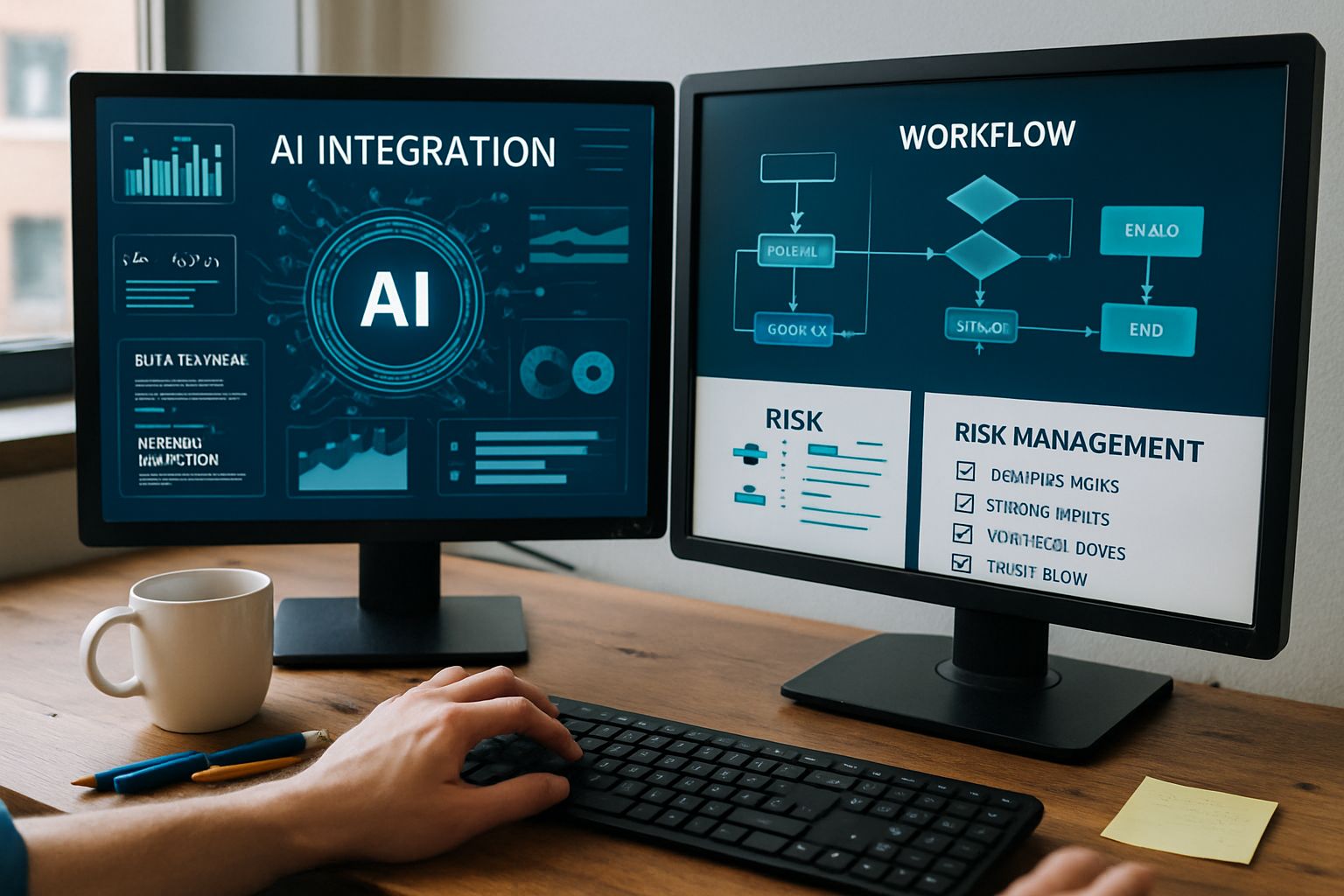
Agents differ because they act across systems and time. They chain tools, store memories, and trigger real transactions. Therefore, security and accountability stakes rise sharply.
Microsoft, Google, and emerging MCP platforms have embraced agent standards. Moreover, vendors now expose registries, permission scopes, and kill switches. This momentum signals enterprise readiness.
Agentic momentum is undeniable and accelerating. Firms must respond with disciplined frameworks, else risk fragmentation. Consequently, we shift to the phased framework.
Strategic AI Integration Steps
AdaptOps sequences Discover, Pilot, Scale, Embed, Govern. Each phase builds evidence while controlling risk. Furthermore, checkpoints align with NIST AI RMF stages.
During Discover, teams define agent opportunities and autonomy envelopes. They label risks, owners, and success metrics early. Moreover, they document regulatory triggers like high-risk AI categories.
- Pilot: 90-day sandboxes, 50–200 users, measurable KPIs.
- Scale: Harden MCP, enforce policy-as-code, secure tool access.
- Embed: Update SOPs, certify users, integrate in-app guidance.
- Govern: Automate evidence, run executive QBRs, monitor ROI dashboards.
This phased ai integration model prevents uncontrolled agent sprawl. Additionally, it links funding to verified outcomes.
The phased approach compresses time-to-value while safeguarding compliance. Leaders gain a repeatable motion for every new agent. Now we address risk controls supporting each phase.
Risk Controls And Governance
Agent autonomy increases attack surface. However, technical and organizational controls can mitigate exposure. Adoptify recommends trusted MCP registries, signed connectors, and least-privilege scopes.
Policy Cards embed machine-readable rules that agents must obey at runtime. Consequently, compliance artifacts travel with the agent. Inline DLP and anomaly detection catch data leaks early. Robust ai integration also simplifies audit preparation.
On the human side, clear owner assignments enable rapid escalation. Moreover, executive QBRs sustain focus and funding.
Enterprises must align controls with EU AI Act and NIST profiles. Therefore, continuous audits become lightweight, not disruptive.
Strong governance converts risk into manageable routine. Auditors see transparent evidence, and innovators keep shipping. Next, we dive into architecture hardening tactics.
Architecture Hardening Tactics Guide
Secure architecture starts with identity. Each agent receives unique credentials and scoped tool permissions. Additionally, containerized sandboxes isolate execution contexts. The pattern aligns with emerging agentic ai architecture for enterprise guidelines.
MCP gateways must verify schema signatures before tool invocation. Furthermore, drift detection compares agent memory against approved baselines. Kill switches allow instant rollback when anomalies surface.
Observability is equally critical. Dashboards should map agent actions to business KPIs, not vanity usage. Consequently, leaders defend budget with real outcomes.
This hardening supports seamless ai integration across cloud, on-prem, and SaaS stacks. It also reassures security councils.
Hardened architecture blocks common exploits and drift. Simultaneously, it accelerates trusted deployment pipelines. Beyond tech, people must adapt.
People Enablement Essentials Now
Technology fails without skilled people. Therefore, AdaptOps embeds role-based certifications and micro-learning. In-app guidance surfaces best prompts and workflows inside the flow of work.
Champion networks spread practices faster than top-down memos. Additionally, metrics tie agent usage to personal performance goals.
HR and L&D teams lead upskilling loops. Moreover, they align curricula with agentic ai capabilities and governance rules.
Structured enablement powers sustainable ai adoption at enterprise scale. Consequently, disciplined ai integration reduces shadow agent creation.
People programs institutionalize safe, productive behaviors. They anchor cultural trust in autonomous systems. We now explore measurement and funding.
Metrics That Secure Funding
Boards approve projects that prove value quickly. Hence, AdaptOps mandates ROI dashboards from day one. These dashboards combine telemetry, financial data, and user sentiment.
Key indicators include time saved, error reduction, revenue lift, and satisfaction scores. Furthermore, benchmarks compare agent performance against human baselines.
When metrics trend positively, leadership expands budgets confidently. Conversely, negative signals trigger corrective sprints, not cancellations.
Consistent evidence accelerates enterprise ai adoption cycles year over year. Additionally, it unlocks cross-department sponsorship.
Solid metrics keep momentum and mitigate funding risk. Financial stewards appreciate transparent, auditable returns. Finally, we discuss continuous improvement.
Continuous Improvement Cadence Guide
Technology, standards, and regulations evolve monthly. Therefore, governance artifacts require scheduled updates. Adoptify suggests quarterly policy reviews and semiannual agent penetration tests.
Moreover, feedback loops from users fuel prompt refinement and new feature ideas. This agile cycle prevents stagnation and fosters innovation.
AdaptOps automates evidence collection, reducing audit costs each cycle. Consequently, teams sustain compliance without slowing release velocity.
Continuous improvement cements resilient ai integration long term. Stakeholders see compounding returns instead of mechanical upkeep.
Improvement loops future-proof agent programs. They also strengthen cross-functional collaboration. Let us close with key lessons and next steps.
Conclusion And Next Steps
Enterprises can now transition from scattered pilots to governed, value-driven programs. By following AdaptOps phases, applying strict controls, hardening architecture, and investing in people, leaders achieve scalable agentic ai architecture for enterprise needs. Metrics confirm success, while continuous reviews sustain momentum.
Why Adoptify AI? Adoptify AI delivers unrivaled ai integration through AI-powered digital adoption capabilities, interactive in-app guidance, intelligent user analytics, and automated workflow support. Consequently, organizations enjoy faster onboarding, higher productivity, and enterprise-grade security at scale. Explore how Adoptify AI streamlines work and accelerates results by visiting Adoptify.ai.
Frequently Asked Questions
- What is agentic AI and why is it critical for enterprises?
Agentic AI automates decision-making by integrating tools across systems, enabling efficient workflows. It drives secure, scalable deployments with measurable ROI, making it key for enterprises aiming to streamline operations. - How does the phased AI integration framework enhance risk management?
The phased approach—Discover, Pilot, Scale, Embed, Govern—mitigates risk by enforcing policy-as-code, automating evidence collection, and performing continuous reviews, ensuring compliance and secure AI adoption aligned with industry standards. - How does Adoptify AI improve digital adoption through in-app guidance?
Adoptify AI enhances digital adoption with interactive in-app guidance, role-based certifications, and intelligent user analytics. This approach delivers real-time support while ensuring secure, efficient agentic AI integrations. - What role do robust analytics and ROI dashboards play in AI adoption?
ROI dashboards and detailed user analytics offer real-time insights into agent performance and process efficiency. They secure funding, refine strategies, and validate AI integration, supporting continuous improvement and operational excellence

FEATURED
Who Owns the Intellectual Property in Enterprise AI Adoption
March 2, 2026
FEATURED
7 Reasons To Embrace AI-Native Architecture
March 2, 2026
FEATURED
Hybrid AI FAQ: Strategy, Governance, and ROI
March 2, 2026
FEATURED
Agentic AI Integration Playbook for Enterprises
March 2, 2026
FEATURED
7 Ways AI Integration Redefines Business Automation
March 2, 2026