Centralizing AI Adoption for Scalable Enterprise Value
Generative AI exploded across enterprises last year, yet impact remains uneven. Teams launch disconnected pilots without shared guardrails or metrics. Leaders then grapple with limited scale and scattered risk decisions. Therefore, many initiatives stall before delivering enterprise returns.
A clear AI Adoption playbook changes that story. By centralizing governance, telemetry, and enablement, organizations unlock repeatable value. This article outlines a practical path, grounded in recent research and Adoptify field data. You will see how a governance-first hub powers pilots, learning, and scale. Examples focus on HR, IT, and SaaS onboarding teams. Let us begin.
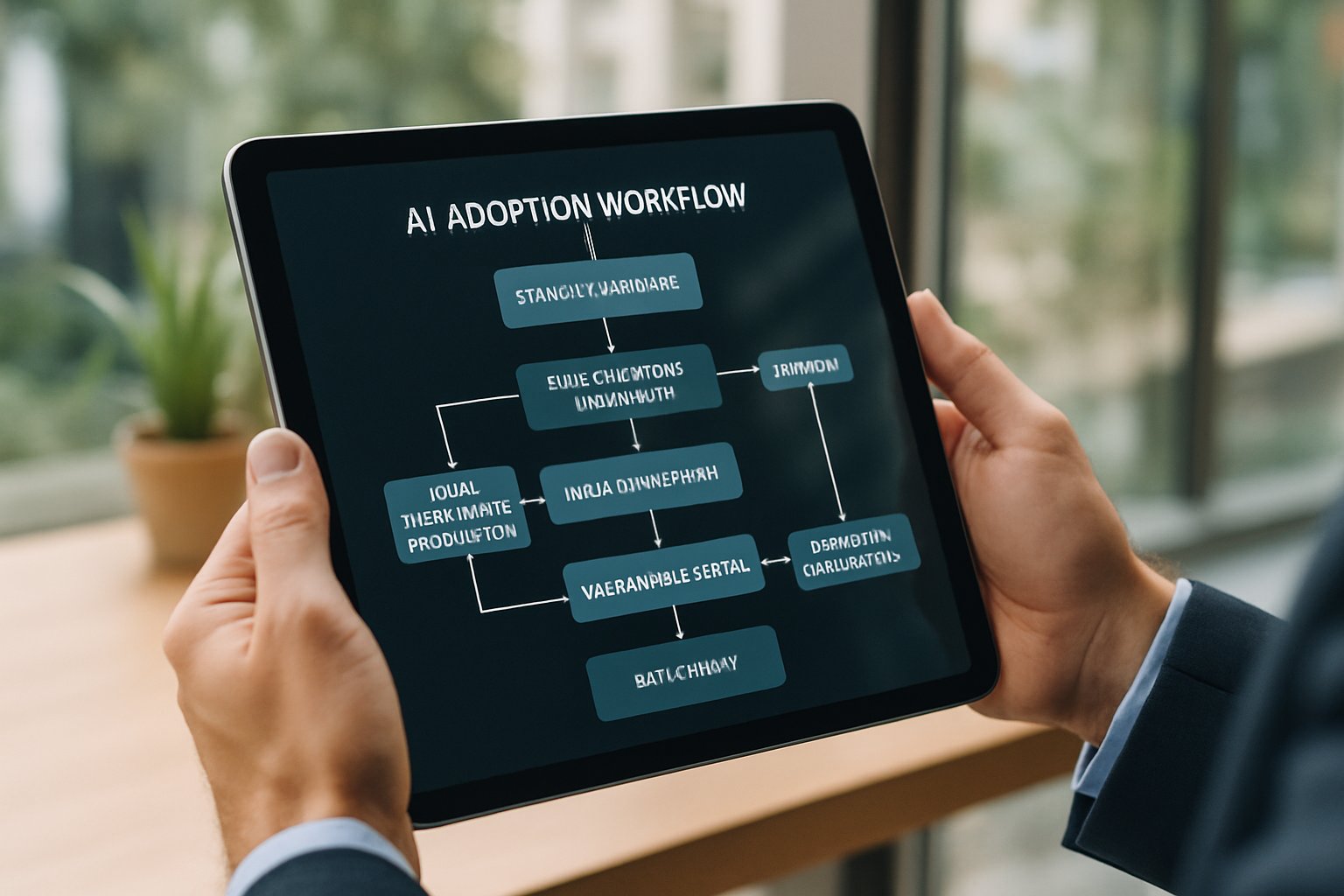
First, we examine why strategies stall. Next, we map a concrete AI adoption framework using AdaptOps principles. Finally, we share measurement tactics that secure executive funding. Follow the steps to accelerate enterprise impact within one fiscal quarter. Throughout, we reference global analyst data and Adoptify 365 success patterns.
Why Strategies Often Stall
Research from McKinsey shows 88% of firms use AI somewhere. However, only 39% report material profit gains. Fragmented pilots top the blame list. Each department experiments alone, duplicating governance and wasting funds.
Analysts label this problem pilot purgatory. Without a shared AI adoption framework, teams lack consistent security reviews. Consequently, legal and risk officers slow approvals. Funding dries up before momentum builds.
Leaders also face cultural headwinds. Employees fear replacement and resist new workflows. Moreover, measurement gaps hide early wins. Executives cannot justify expansion without clear telemetry.
Fragmented pilots, missing governance, and poor metrics stall progress. Central oversight and shared playbooks resolve these blockers. Next, we outline how to build that oversight hub.
Craft A Governance Core
Successful organizations start with a governance nucleus, often an AI Center of Excellence. This hub owns policy, risk matrices, and architecture templates. AdaptOps within Adoptify 365 embodies this model. It offers tiered controls, DLP simulations, and rapid approval workflows. A disciplined AI Adoption office must lead the hub.
Governance must stay pragmatic, not theoretical. Therefore, anchor standards on three to six high-value use cases. This approach creates reusable assets and speeds audits. It also aligns with every Enterprise AI strategy suggested by IDC. Document the evolving AI adoption framework inside a central wiki.
Complement policy with role clarity. Who approves models, who trains staff, and who monitors misuse? Clear RACI sheets prevent confusion during tense reviews. Consequently, scaling decisions happen faster.
A governance core standardizes risk controls and speeds decisions. Use pragmatic scope and defined roles for quick wins. With governance ready, companies can pilot real workflows safely.
Pilot Cohorts, Prove Value
Governance alone never convinces CFOs. Pilot evidence does. Leaders should launch 50–200 user cohorts with clear KPIs. Track minutes saved, error reductions, and throughput lifts from day one.
Adoptify AI simplifies this step using Microsoft-funded accelerators. The platform auto-instruments telemetry, feeding executive ROI dashboards. Moreover, in-app prompts guide testers through approved prompts. Results appear inside AdaptOps within hours.
Key pilot checkpoints:
- Security and DLP simulation passed
- Productivity uplift above 15%
- User satisfaction rating over 4.2/5
- Governance audit logged and signed
Meeting these gates unlocks automatic funding for stage two. Therefore, pilots morph into production without fresh paperwork. This workflow aligns with any AI readiness strategy demanded by risk committees. It also supports a broader AI strategy for business by proving financial value. Every pilot cements the company’s AI Adoption story with evidence.
Small, measurable pilots translate ambition into CFO-trusted numbers. Combine telemetry, guardrails, and user coaching for rapid payback. Next, we discuss how in-flow learning removes friction during scale.
Embed Digital Adoption Layer
Scaling fails when users lack timely help. Digital Adoption Platforms solve this gap by guiding actions inside the app. Adoptify 365 integrates DAP capabilities, injecting microlearning and safe-use warnings. Consequently, new hires reach proficiency days, not months, faster.
In-app analytics reveal which prompts cause confusion. Teams adjust content within hours, rather than scheduling classroom sessions. Furthermore, the data feeds the wider Enterprise AI strategy metrics pack. Executives watch usage curves climb from their AdaptOps dashboard.
Digital guidance also reduces AI adoption challenges linked to misuse. Users see policy-based reminders before submitting sensitive data. Therefore, compliance risk drops while experience improves. The cycle reinforces the AI readiness strategy across roles. In short, embedded help accelerates AI Adoption at scale.
In-flow guidance speeds learning and reduces compliance errors. Telemetry loops improve content and feed executive dashboards. Yet, even strong guidance needs continuous measurement to stay effective.
Measure, Optimize, Scale Fast
Metrics translate technical success into boardroom confidence. Therefore, build automated pipelines from usage logs to ROI views. Adoptify 365 captures minutes saved, prompt risk, and cost per agent. Dashboards update nightly, enabling quick governance retros.
Leaders should revisit metrics quarterly. Consequently, they redeploy licenses, retrain lagging roles, and retire low-value bots. This loop reinforces the broader AI strategy for business. It also matures the underlying AI adoption framework by adding benchmarks.
Publish highlights in town halls to boost culture. Celebrate champions earning the AdaptOps Foundation credential. Meanwhile, finance teams see real payback curves. Support continues without lengthy business cases. Consistent data keeps AI Adoption efforts funded and visible.
Automated insight cycles turn pilots into continuous improvement engines. Visible ROI sustains executive enthusiasm and budget. Finally, we tackle lingering AI adoption challenges head-on.
Overcome AI Adoption Challenges
Even strong programs hit resistance. Common blockers include talent gaps, data silos, and regulatory shifts. Address talent first through layered enablement pathways. Offer microlearning, mentorship, and role-based certifications.
Next, modernize data access with governed lakehouse patterns. This step supports any Enterprise AI strategy requiring trustworthy inputs. Moreover, align updates with the org’s AI readiness strategy roadmap. Regular compliance scans maintain audit readiness.
Finally, stay ahead of regulations. Create a monitoring squad that tracks regional laws weekly. Consequently, product teams adjust prompts before fines emerge. This discipline reduces chronic AI adoption challenges across markets. These actions safeguard the AI strategy for business and reputation.
People, data, and regulation create recurring friction points. Structured enablement and monitoring neutralize them. We can now close with actionable next steps and a trusted platform.
Conclusion And Next Steps
Centralized governance, evidence-based pilots, and in-flow coaching unlock enterprise AI Adoption at scale. A living AI adoption framework, linked to an Enterprise AI strategy, keeps efforts aligned. Continuous metrics, talent pathways, and governance reviews sustain momentum.
Why Adoptify 365? Because its AI-powered digital adoption capabilities deliver interactive in-app guidance and intelligent user analytics. Automated workflow support accelerates onboarding, boosts productivity, and preserves security at enterprise scale. Therefore, organizations modernize faster while maintaining robust controls. Start your AI Adoption journey with Adoptify AI today. Visit Adoptify.ai to schedule a pilot.
Frequently Asked Questions
- How does Adoptify AI accelerate enterprise AI adoption?
Adoptify AI accelerates enterprise AI adoption by centralizing governance and leveraging in-app guidance. Automated workflows paired with real-time telemetry and user analytics enable quick pilot validations and consistent scalability while ensuring robust security and compliance. - What role does digital adoption play in scaling AI initiatives?
Digital adoption platforms like Adoptify AI deliver interactive in-app guidance and microlearning prompts that accelerate user proficiency. This reduces onboarding time and compliance risks while boosting overall productivity and ensuring scalable, secure AI workflows. - Why is centralized governance crucial for successful AI pilots?
Centralized governance establishes uniform security controls and risk reviews, preventing fragmented pilots. Adoptify AI’s framework, with built-in approval workflows and predefined templates, ensures faster, compliant pilot execution and paves the way for enterprise-scale AI adoption. - How do metrics and user analytics drive continued AI adoption success?
Real-time metrics and user analytics transform usage logs into ROI dashboards. With Adoptify AI, insights enable continuous optimization, driving productivity and informed decisions that support scaling AI initiatives and enhancing digital adoption strategies.
FEATURED
The Complete Guide to Building an AI Adoption Framework for 2026
March 2, 2026
FEATURED
Who Owns the Intellectual Property in Enterprise AI Adoption
March 2, 2026
FEATURED
7 Reasons To Embrace AI-Native Architecture
March 2, 2026
FEATURED
Hybrid AI FAQ: Strategy, Governance, and ROI
March 2, 2026
FEATURED
Agentic AI Integration Playbook for Enterprises
March 2, 2026