Decision Intelligence Powers Sovereign Logistics Success
Global logistics sits at a tipping point. Capacity shocks, volatile demand, and tight margins increase daily pressure. Consequently, leaders seek faster, smarter, and more trustworthy decisions. Decision intelligence promises a unified fabric that converts scattered data into high-value routing, allocation, and recovery actions. However, success depends on more than smart algorithms. Enterprises must align strategy, governance, and user enablement to move pilots into scaled outcomes. This article unpacks how sovereign AI, AdaptOps, and disciplined AI adoption frameworks elevate worldwide logistics performance. Readers will gain a clear playbook for deployment, measurement, and rapid value creation.
We synthesize fresh market data, proven AdaptOps practices, and emerging sovereign-cloud mandates. Furthermore, we outline real-world examples for HR, L&D, IT onboarding, and SaaS teams charged with continuous upskilling. By the end, you will know where to start, how to de-risk compliance, and how to unlock continuous improvements at enterprise scale.
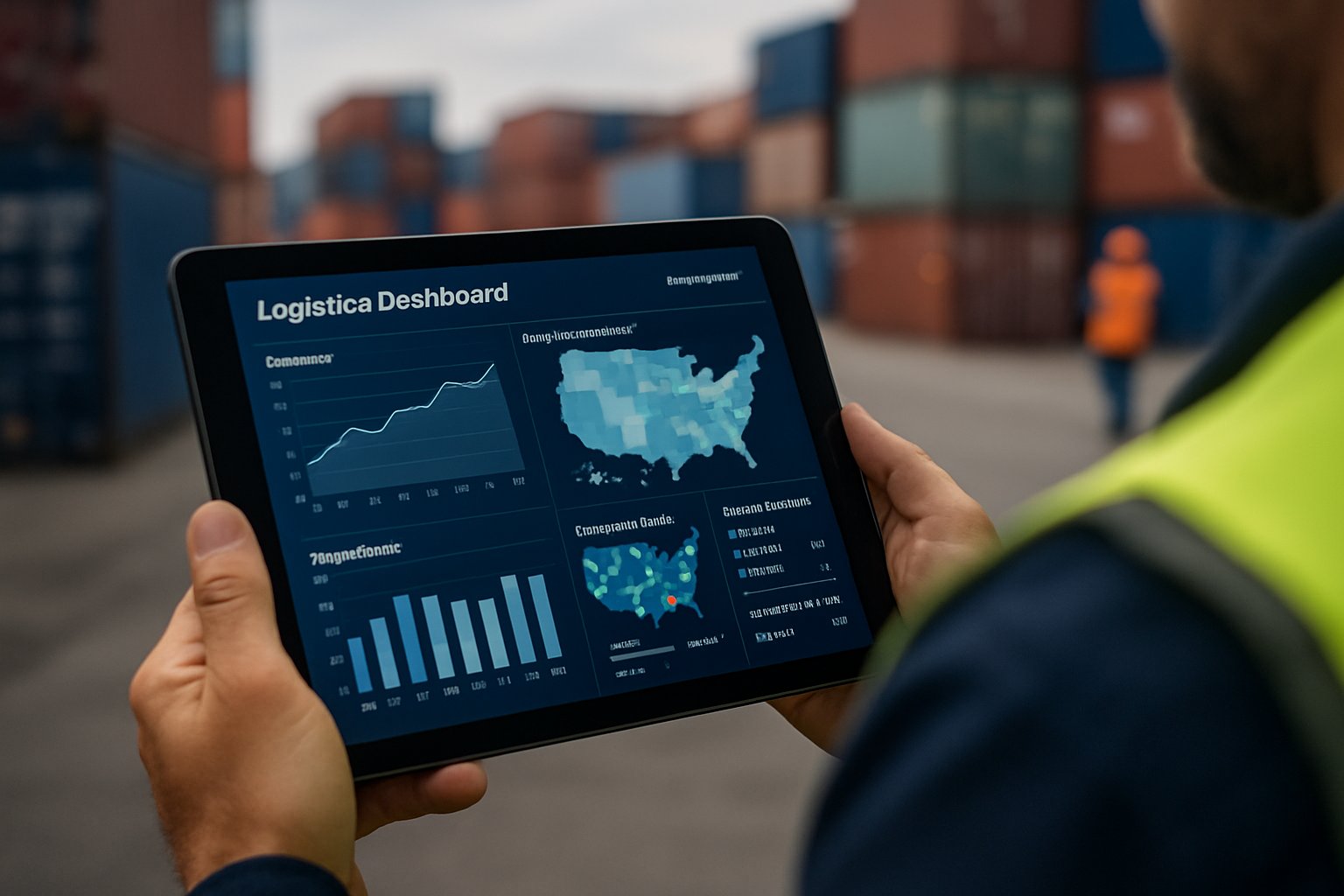
Decision Intelligence Essentials Guide
Why Contextual Decisions Matter
Decision making in logistics involves thousands of micro choices each hour. Missed signals compound cost and service risk. Decision intelligence stitches predictive models, business rules, and human oversight into a closed loop. Moreover, it feeds new outcomes back into models for continuous learning. AdaptOps applies this loop across Discover, Pilot, Scale, and Embed stages.
McKinsey reports that 54% of large shippers already run at least five digital use cases. Nevertheless, only a third scale them. The gap stems from fragmented data, limited operator trust, and unclear ROI paths. AdaptOps addresses these hurdles with readiness assessments, telemetry schemas, and 90-day ROI dashboards.
Key takeaway: A structured operating model converts early experiments into durable advantages. Therefore, start by mapping high-value decision nodes and related KPIs.
Next, we examine market forces accelerating urgency.
Market Momentum Signals Now
Consolidating Vendor Landscape Trends
Gartner plans a Magic Quadrant for decision intelligence platforms. Consequently, vendors like Aera, o9, and Palantir rush to showcase explainability features. Enterprises gain choice yet face integration complexity. AdaptOps orchestrates these platforms through standardized governance gates and connectors.
Meanwhile, logistics leaders double digital use cases within three years. Reverse logistics alone hides a $200 B recovery prize. Demand planning, dynamic routing, and returns disposition top investment lists. Decision intelligence in supply chain ranks among the fastest funded domains.
Funding momentum also fuels sovereign AI offerings. New entrants promise air-gapped graphs and provenance logging for defense and regulated flows.
Summary: Market maturity lowers technology risk but elevates orchestration needs. The next section explores sovereignty pressures shaping architectures.
Transitioning now to regulatory dynamics.
Sovereign Requirements Rising Fast
Data Residency Pressures Today
EUCS, Gaia-X, and national mandates force data to stay within borders. Consequently, global logistics providers must prove key custody and decision traceability. Sovereign ai patterns answer these demands with on-prem or federated deployments, cryptographic controls, and detailed provenance.
Adoptify’s governance-first playbook embeds these controls during pilot design. The platform provisions lifecycle gates, bias tests, and telemetry schemas that satisfy auditors. Moreover, its Quick Start assessments surface cross-border data gaps within two weeks.
Decision intelligence in supply chain must respect varying jurisdictional rules. Failure invites fines and service disruption. Therefore, aligning architecture with sovereignty from day one is critical.
Takeaway: Sovereignty is not a bolt-on feature; it shapes data pipelines, model hosting, and human approval flows. Next, we outline a value-first pilot blueprint.
Moving to rapid validation approaches.
Value-First Pilot Playbook Blueprint
Ninety-Day Success Pattern Model
Adoptify recommends a 90-day sprint to prove value. Teams first pick a measurable decision, such as returns disposition. They then baseline metrics like minutes per case and recovery rate. Subsequently, they deploy a small control tower with sovereign AI components and decision intelligence algorithms.
- Define one measurable decision point.
- Baseline current cycle time and cost.
- Deploy sovereign AI components with guardrails.
- Monitor telemetry and user feedback weekly.
- Publish ROI dashboard in week twelve.
During weeks four to eight, telemetry captures operator usage and outcome variance. Dashboards translate time saved into dollar impact. In week twelve, leadership receives a go-no-go report tied to EBIT targets.
This playbook accelerates ai adoption while containing risk. It also keeps stakeholder enthusiasm high by delivering visible wins. Decision intelligence in supply chain benefits from clear exit criteria because logistics cycles move fast.
Key takeaway: Timeboxed pilots with ROI dashboards cut through analysis paralysis. Up next, we show governance practices that sustain momentum.
Let’s dive into governance bridges.
Governance Bridges Technology Gaps
Controls Telemetry Assurance Practices
Governance often decides success more than algorithms. AdaptOps injects governance gates at each lifecycle stage. For example, bias tests run before scale approvals. Furthermore, provenance logs attach to every automated recommendation, supporting audit requests within minutes.
Sovereign ai patterns layer additional safeguards. Knowledge graphs enforce policy boundaries, while refusal semantics prevent hallucination. Decision intelligence outputs therefore gain operator trust and regulatory acceptance.
Leader dashboards align technical metrics with financial KPIs. Consequently, executives can fund expansion with confidence. The approach appears five times more credible when linked to P&L signals, according to McKinsey high performer studies.
Summary: Strong governance bridges technology and business value. Our next section focuses on human adoption factors.
Transitioning to operator enablement.
Operator Trust Building Steps
Training Explainability Champion Network
Algorithms fail when users ignore them. Therefore, AdaptOps pairs role-based microlearning with in-app guidance. Operators see decision traces, rules, and confidence scores before acting. Moreover, adoption champions in each region reinforce best practices and collect feedback.
HR and L&D teams track progress through certification dashboards. Consequently, skills gaps surface early. Ai adoption succeeds when learning moments happen inside daily workflows, not in detached classrooms.
Decision intelligence in supply chain gains credibility when frontline staff understand why a route changed or why a return moves to recycling. Transparent insights cut resistance and speed cycle times.
Key takeaway: Culture and skills multiply technology ROI. Finally, we explore how to scale initial wins.
Proceeding to expansion strategy.
Scaling Beyond Initial Wins
Embed Iterate Expand Strategy
Once pilots hit targets, expansion should follow a disciplined roadmap. Teams embed the decision service into existing TMS and ERP systems. Subsequently, they iterate models monthly and add new decision domains, such as carrier selection or yard management.
Sovereign ai guardrails persist throughout scale. Data residency checks and key management remain automated. Furthermore, ai adoption metrics like active user percentage and minutes saved per user stay on leadership scorecards.
Use a rolling backlog prioritized by margin impact. A two-tier portfolio balances quick wins with strategic bets. This capability powers cross-function alignment by surfacing trade-offs visually.
Takeaway: Controlled, metric-driven scale unlocks compounding value. We now close with final insights and a path forward.
Conclusion
Global logistics leaders face rising complexity, sovereignty mandates, and ROI pressure. Decision intelligence offers the framework to turn fragmented signals into auditable, high-value actions. By pairing sovereign ai architectures, robust governance, and intentional ai adoption practices, enterprises can unlock rapid gains in routing, returns, and resource use.
Why Adoptify AI? The platform embeds decision intelligence within interactive in-app guidance, intelligent user analytics, and automated workflow support. Consequently, organizations achieve faster onboarding, higher productivity, and secure enterprise scalability. Explore how our AI-powered digital adoption capabilities accelerate every logistics workflow at Adoptify AI
Frequently Asked Questions
- What is decision intelligence and how does it enhance global logistics?
Decision intelligence integrates data, predictive models, and human oversight to optimize routing, allocation, and returns. Adoptify AI leverages in-app guidance, user analytics, and automated support for faster, smarter decisions. - How does Adoptify AI support digital adoption in enterprise workflows?
Adoptify AI accelerates digital adoption by embedding interactive in-app guidance and monitoring user analytics while automating workflows, ensuring seamless onboarding, measurable ROI, and robust compliance. - How do sovereign AI and governance measures help mitigate operational risks?
Sovereign AI ensures data residency and decision traceability, while governance protocols provide automated controls and telemetry. This approach minimizes compliance risks and builds operator trust in enterprise environments. - How can a 90-day pilot accelerate AI adoption in logistics?
A 90-day pilot sets measurable decision metrics, collects real-time feedback, and delivers ROI dashboards, combining in-app guidance and intelligent analytics to validate and scale AI initiatives efficiently.

FEATURED
7 Reasons To Embrace AI-Native Architecture
March 2, 2026
FEATURED
Hybrid AI FAQ: Strategy, Governance, and ROI
March 2, 2026
FEATURED
Agentic AI Integration Playbook for Enterprises
March 2, 2026
FEATURED
7 Ways AI Integration Redefines Business Automation
March 2, 2026
FEATURED
Agentic AI: Automating Finance Operations With Governance
March 2, 2026