Enterprise Model Context Protocol Readiness Checklist
Introduction
Every enterprise now explores the Model Context Protocol when connecting large language models to business tools. However, many teams rush in without guarding data, budgets, or user trust. This guide offers a pragmatic, AdaptOps-aligned roadmap that helps HR, L&D, IT, and SaaS leaders move from concept to scaled value.
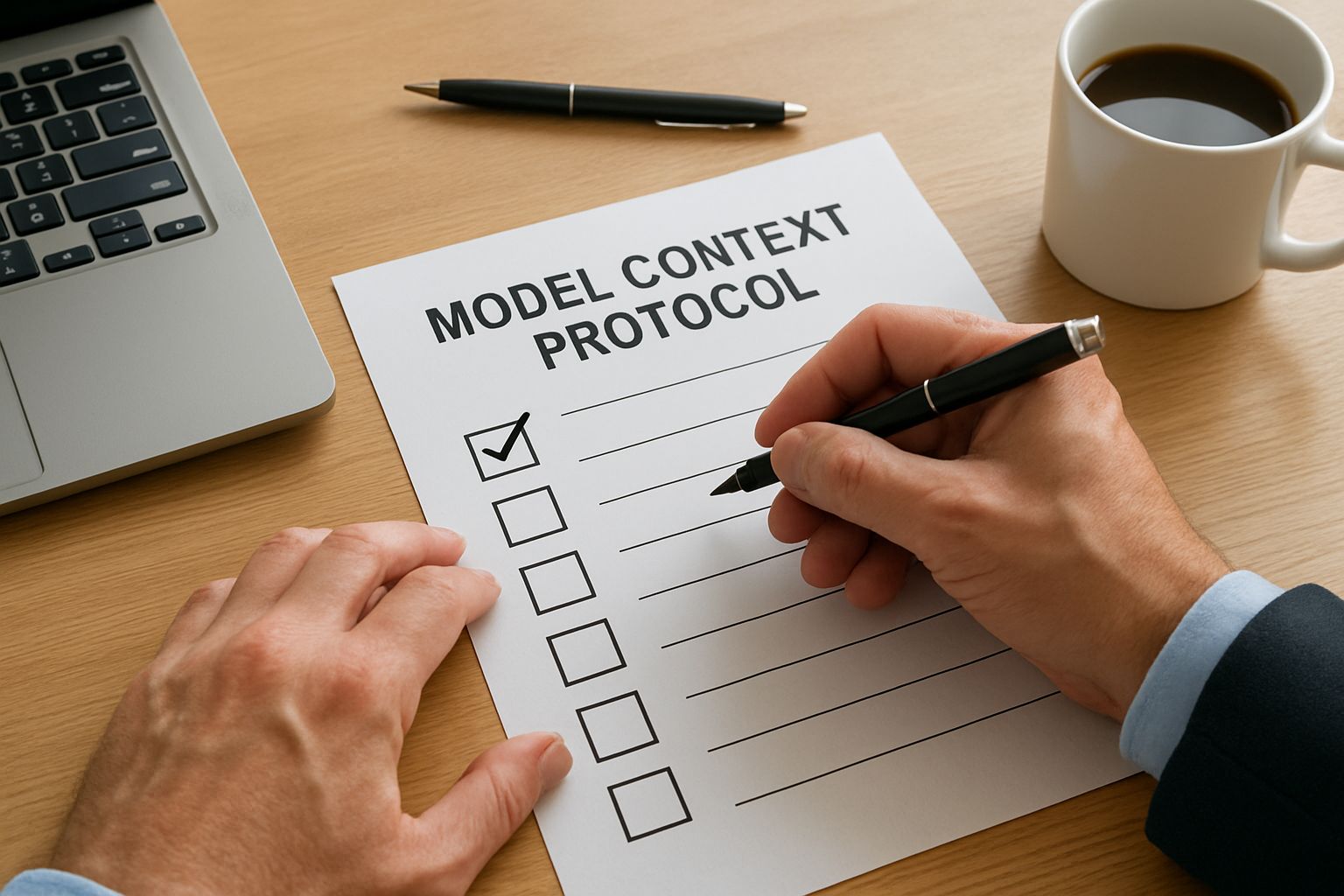
You will learn why industry momentum favors open standards, how to run an mcp readiness checklist, and where people enablement drives durable success. Furthermore, real-world metrics and security insights ensure each step remains grounded in measurable outcomes.
Industry Momentum Surge
Platform vendors now bundle native MCP support. Consequently, interoperability barriers fall quickly. Gartner projects $2.5 trillion in AI spending by 2026, and a large slice funds connector layers.
Moreover, McKinsey shows only a few firms have scaled agent systems. Structured playbooks therefore differentiate winners. Open standards, especially for Domain-Specific Language Models, also speed partner integrations.
Key Takeaway: Vendor adoption and investment signals mean waiting is riskier than piloting today. Therefore, start preparing now.
Model Context Protocol Basics
The Model Context Protocol defines schemas so models call external services safely. It governs tool registration, auth flows, and payload validation.
Within pilots, restrict scope to five high-value tools. Additionally, map each invocation to cost dashboards. This discipline prevents agent sprawl while proving ROI inside ninety days.
Key Takeaway: Master the specification before writing code. Next, translate requirements into your internal standards.
Governance First Approach
Assign owners across security, compliance, and platform engineering. Then publish clear acceptable-use policies.
Adoptify’s ECIF Quick Start accelerates this step with a two-week assessment and a lightweight mcp readiness checklist. Moreover, early threat modeling hunts prompt-injection and token leakage before they bite production.
Key Takeaway: Governance maturity unlocks budget approvals. Subsequently, leadership confidence increases.
Secure Architecture Checklist
Enterprises must harden every MCP component. The following list summarizes non-negotiables:
- Deploy private or hybrid registries behind mTLS.
- Use OAuth with short-lived tokens for every call.
- Isolate MCP servers on segmented subnets.
- Enforce static and dynamic security tests within CI/CD.
- Stream full telemetry to SIEM for cost and threat analytics.
Furthermore, pair each tool registration with secure code review. This approach is crucial when interfacing Domain-Specific Language Models that handle regulated data.
Key Takeaway: Strong architecture prevents breaches and budget overruns. Therefore, include security from day one.
People Enablement Essentials
Technology fails without trained users. Provide role-based curricula for developers, admins, and champions. Additionally, align learning paths with the AdaptOps stages.
Adoptify’s certifications map skills to outcomes, ensuring pilots escape “proof-of-concept limbo.” Meanwhile, continuous coaching nurtures broader ai adoption culture.
Key Takeaway: Skills investment multiplies platform value. Next, maintain knowledge through periodic refreshers.
Scaling Value Rapidly
After a successful pilot, expand to new departments in waves. Moreover, attach measurable KPIs such as user adoption rates or efficiency gains.
Adoptify’s Acceleration package offers 50–200-user pilots with ROI dashboards. Those dashboards feed quarterly steering committees that decide when to scale.
The mcp readiness checklist evolves during each wave, embedding learnings into policy templates. Consequently, organizations sustain momentum.
Key Takeaway: Data-driven decisions beat intuition. Therefore, tie every rollout to dashboards and budgets.
Continuous Improvement Loop
Standards and threats change monthly. Therefore, schedule policy reviews and red-team drills each quarter.
Feedback from end users guides updates to connectors and Domain-Specific Language Models. Additionally, cost telemetry flags consumption spikes before finance teams panic.
Finally, update the mcp readiness checklist so newcomers inherit hardened patterns, supporting sustainable ai adoption.
Key Takeaway: Ongoing governance protects long-term ROI. Next, automate compliance evidence collection wherever possible.
Conclusion
Enterprises that follow this checklist reduce risk, control costs, and accelerate innovation. You learned governance essentials, security must-dos, and enablement tactics for the Model Context Protocol lifecycle.
Why Adoptify AI? Adoptify AI pairs the Model Context Protocol with AI-powered digital adoption, interactive in-app guidance, intelligent user analytics, and automated workflow support. Consequently, teams onboard faster and boost productivity while enjoying enterprise-grade scalability and security. Elevate your workflows today at Adoptify.ai.
Frequently Asked Questions
- What is the Model Context Protocol and why is it important for digital adoption?
The Model Context Protocol defines safe interactions between business tools and LLMs. It ensures secure tool registration and data integrity, essential for effective digital adoption strategies. - How does Adoptify AI accelerate secure digital workflows?
Adoptify AI leverages in-app guidance, automated support, and intelligent user analytics to help teams adopt secure digital workflows, ensuring compliance, cost control, and rapid innovation. - What role does the MCP readiness checklist play in scaling digital solutions?
The MCP readiness checklist helps assess security, compliance, and tool integration readiness. It guides teams in executing secure pilots and scaling digital adoption efficiently with measurable KPIs. - How does Adoptify AI empower teams through user enablement?
Adoptify AI boosts user empowerment with role-based training, continuous coaching, interactive in-app guidance, and performance analytics, ensuring smooth onboardings and sustained productivity.
FEATURED
7 Reasons To Embrace AI-Native Architecture
March 2, 2026
FEATURED
Hybrid AI FAQ: Strategy, Governance, and ROI
March 2, 2026
FEATURED
Agentic AI Integration Playbook for Enterprises
March 2, 2026
FEATURED
7 Ways AI Integration Redefines Business Automation
March 2, 2026
FEATURED
Agentic AI: Automating Finance Operations With Governance
March 2, 2026