Ethical AI Implementation Services for Regulated Enterprises
Ethical AI implementation now determines whether enterprises scale innovation or face costly regulatory setbacks. Consequently, digital leaders must align governance, measurement, and change management from day one. Moreover, regulators demand evidence that models remain fair, secure, and explainable across their lifecycle. Therefore, AdaptOps from Adoptify.ai positions governance, ROI, and human oversight at the program’s core.
AI Adoption Reality Check
Surveys show 88% of firms use AI somewhere, yet only a minority see EBIT impact. Meanwhile, McKinsey warns of “pilot purgatory,” where proofs stall due to weak controls. Furthermore, BCG finds just 5% of companies capture large-scale value. These figures underscore the execution gap plaguing regulated industries.
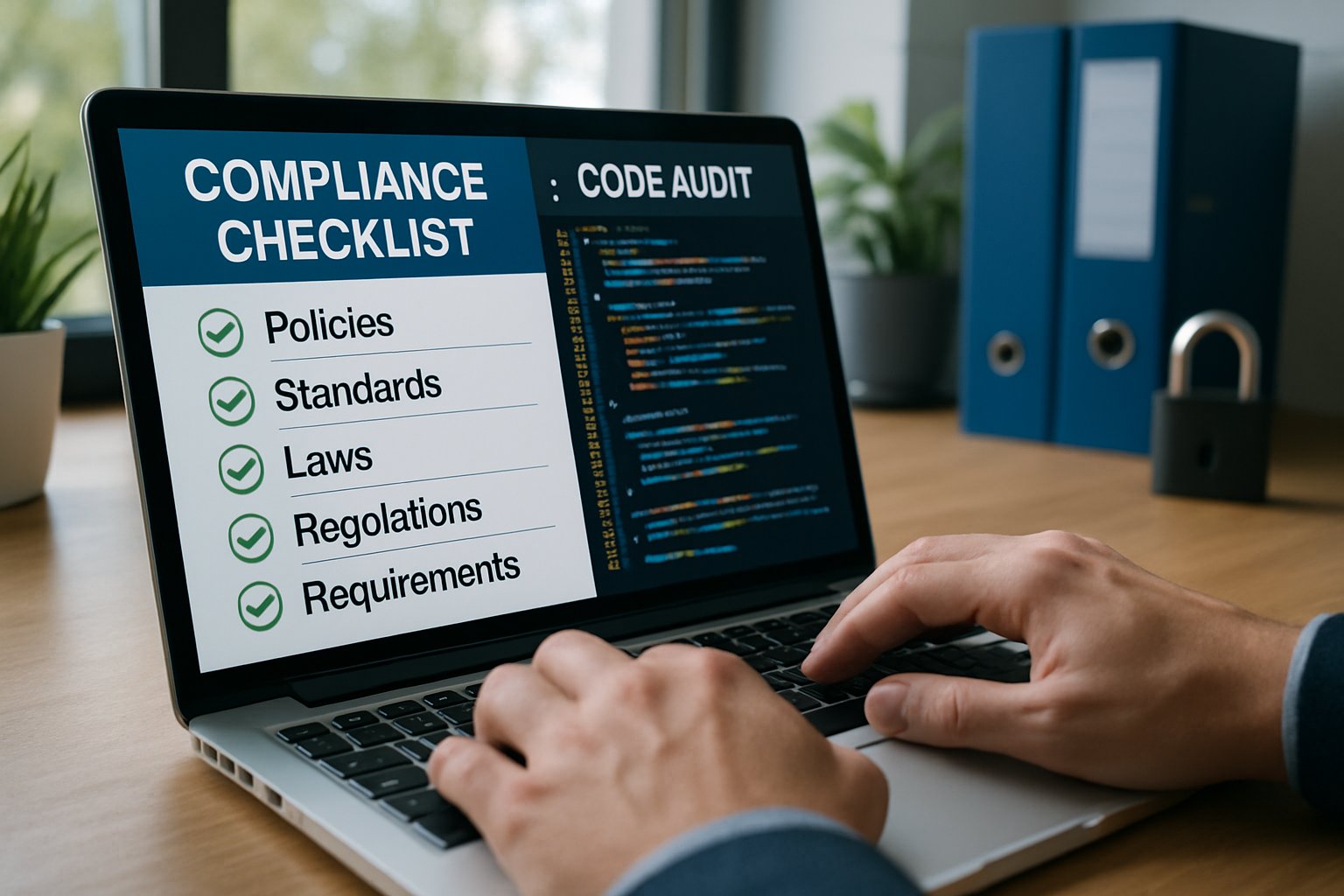
Regulated enterprises grapple with additional layers of complexity. They must prove fairness, data protection, and change-control discipline before expansion. Consequently, many teams freeze projects once compliance teams intervene.
Key takeaway: Adoption momentum alone does not equal scaled value. Clear governance gates and ROI metrics convert experiments into production gains. Next, we examine looming regulations.
Regulation Deadlines Loom Large
The EU AI Act enters force in August 2024 and binds high-risk systems by 2026. Likewise, U.S. sector regulators reference the NIST AI RMF for trustworthy deployments. Additionally, ISO/IEC 42001 now offers certifiable management-system guidance.
Penalties carry weight. Fines may hit millions of euros or percentage turnover for severe violations. Therefore, enterprises must inventory systems, classify risk, and maintain technical documentation today.
Key takeaway: Compliance clocks already tick. Forward-looking teams pre-build evidence packages that map to upcoming audits. With deadlines clear, the next step involves structured execution.
Ethical AI Implementation Steps
Adoptify.ai condenses best practice into a four-gate lifecycle: Discover → Pilot → Scale → Embed. Each gate requires artifacts, including risk matrices, test results, and rollback triggers. Moreover, no training proceeds without user consent, limiting sensitive data exposure.
Successful ethical AI implementation also demands cross-functional accountability. Accordingly, product, risk, and HR leaders agree on a RACI before pilots begin. Subsequently, human-in-the-loop checkpoints ensure fairness reviews before every release.
- Gate 1 – Discover: Inventory use cases, classify risk, draft success metrics.
- Gate 2 – Pilot: Run 50-200 user tests, capture ROI baselines, simulate DLP controls.
- Gate 3 – Scale: Automate drift detectors, integrate audit trails, finalize PCCP-style change plans.
- Gate 4 – Embed: Certify roles, publish dashboards, schedule quarterly control reviews.
Key takeaway: Structured gates transform ambitious ideas into governed releases. Next, we explore how AdaptOps automates these controls.
AdaptOps Governance Control Model
AdaptOps embeds policy checks directly into release pipelines. Consequently, developers cannot progress without completing tests, documenting evidence, and capturing approvals. Real-time dashboards link usage metrics with risk scores, creating shared visibility across teams.
Furthermore, AdaptOps harnesses Purview simulations to surface potential data-leakage paths before deployment. Drift detectors alert owners when model performance or behavior changes. When anomalies appear, automated canaries trigger rollback workflows within minutes.
This approach reinforces ethical AI implementation by tying governance tasks to measurable business outcomes. Teams track minutes saved, false-positive rates, and mitigation speed within the same pane.
Key takeaway: Embedding controls inside workflows reduces friction and audit anxiety. Now, let’s quantify the business case.
Proving ROI And Compliance
ROI metrics must match regulatory KPIs. AdaptOps surfaces productivity gains, cost avoidance, and risk-incident counts together. Moreover, evidence bundles export as push-button packages for regulators.
Enterprises that follow this model report faster audit preparation and reduced remediation cycles. Consequently, budgets flow toward initiatives with clear value proof, avoiding stalled pilots.
Ethical AI implementation thereby becomes a revenue-protecting investment, not a compliance tax.
Key takeaway: Integrated dashboards convert compliance data into persuasive value stories. Attention then shifts to people enablement.
Human Oversight And Training
Regulators insist on documented human decision points. Adoptify delivers microlearning and in-app guidance that certify each role before accessing high-risk features. Additionally, no automatic action proceeds on payroll, benefits, or clinical outputs without explicit sign-off.
Short, embedded lessons improve knowledge retention while minimizing disruption. Consequently, support tickets fall, and adoption rates climb. This people-centric layer cements ethical AI implementation across daily workflows.
Key takeaway: Empowered users close the governance loop. With people ready, scaling becomes the logical conclusion.
Next Steps To Scale
Enterprises should start with a 90-day AdaptOps pilot covering 50-200 users. Within that window, teams generate baseline ROI, collect evidence, and refine control thresholds. Subsequently, broader rollout leverages reusable artifacts and proven guardrails.
Meanwhile, leadership reviews standardized dashboards monthly, aligning budgets with risk-adjusted impact. Therefore, scaling progresses confidently toward enterprise-wide transformation.
Key takeaway: A disciplined pilot accelerates enterprise scaling while satisfying regulators. Finally, let’s summarize the journey.
Five-Point Success Framework
1. Inventory AI assets and classify risk.
2. Design governance-first pilots with clear ROI metrics.
3. Automate controls using AdaptOps release gates.
4. Train roles through in-app microlearning and oversight checkpoints.
5. Continuously measure business and risk KPIs.
This framework embeds ethical AI implementation into standard operations, ensuring security, value, and trust.
Frequently Asked Questions
- How does Adoptify AI ensure ethical AI implementation?
Adoptify AI uses in-app guidance, automated support, and user analytics to integrate policy checks and risk management into every release, ensuring fair, secure, and compliant ethical AI deployment. - What are the key steps in scaling digital adoption with ethical AI?
Adoptify AI employs a four-gate lifecycle—Discover, Pilot, Scale, Embed—integrating risk assessments, automation, and user training to streamline digital adoption and ensure ethical AI practices. - How can businesses prepare for upcoming AI regulations using AdaptOps?
Businesses can leverage AdaptOps to create automated audit evidence, monitor risk via real-time dashboards, and utilize drift detectors to meet EU, U.S., and ISO compliance requirements effectively. - What role does human oversight play in ethical AI and workflow intelligence?
Human oversight is key; in-app microlearning certifies roles before high-risk actions, ensuring informed decision-making and enhanced workflow intelligence while upholding ethical AI standards.

FEATURED
Artificial intelligence adoption: Copilot consulting ROI math
February 4, 2026
FEATURED
Microsoft Copilot Consulting: Bulletproof Security Configuration
February 4, 2026
FEATURED
Where Microsoft Copilot Consulting Safeguards Data
February 4, 2026
FEATURED
Microsoft Copilot Consulting: Automate Executive Presentations
February 4, 2026
FEATURED
Microsoft Copilot Consulting Slashes 15 Weekly Hours
February 4, 2026