Ethics-Driven Organizational Readiness for Enterprise AI
AI is flooding every enterprise workflow, yet ethics often lags behind excitement. Consequently, many pilots stall or spark headlines. Achieving organizational readiness demands that ethics and governance move to the front.
Meanwhile, regulators are sharpening rules, and investors now link responsible AI to enterprise value. Moreover, employees expect transparent safeguards around their data and decisions. This article outlines a practical, ethics-first AI adoption plan anchored in measurable outcomes. Global surveys warn that rushed ai adoption without ethics invites fines and lost trust. Readers will map their progress against an ai ethics readiness framework endorsed by NIST and Adoptify.
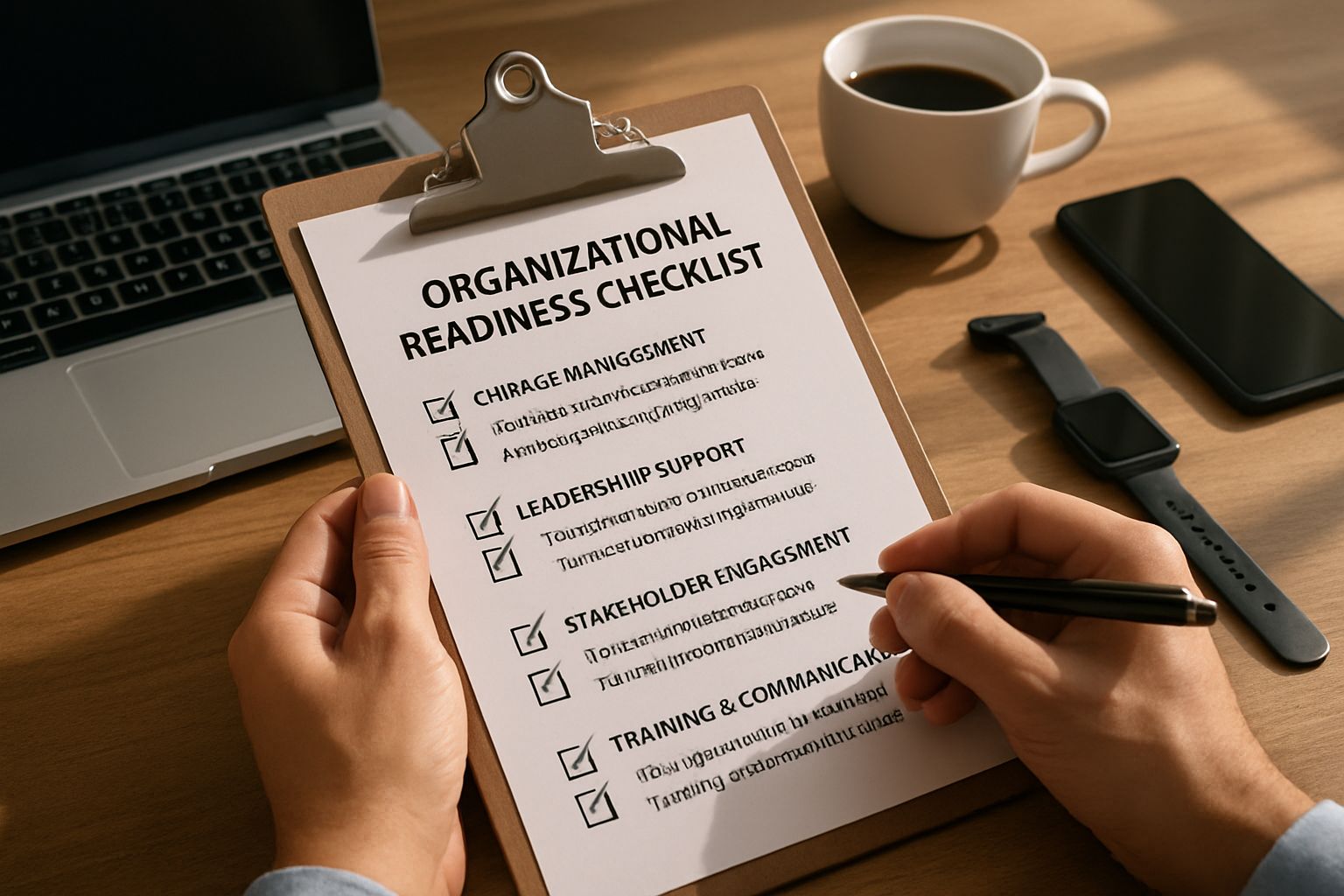
We draw on Adoptify.ai research and NIST frameworks. 2025 market data also informs each recommendation for HR, IT, and SaaS leaders. Consequently, you will learn how to inventory risks, embed controls, train users, and monitor performance without slowing innovation.
Each step aligns with the AdaptOps lifecycle of Discover, Pilot, Scale, Embed, and Govern. Therefore, the guidance works for early explorers and mature AI factories alike. Ultimately, integrating ethics upfront reduces incident costs, accelerates regulatory clearance, and boosts stakeholder trust. Read on to benchmark your organizational readiness score.
Ethics Shapes Organizational Readiness
Ethics is not a final polish; it is a structural beam. Furthermore, surveys show governance maturity predicts successful ai adoption and lower incident loss. The EU AI Act amplifies this urgency by imposing phased penalties.
Adoptify’s AdaptOps model embeds governance gates from day one. Consequently, organizations evaluate privacy, bias, and ROI before code reaches production. This proactive stance accelerates organizational readiness because teams learn compliance patterns early.
Ethics drives trust and acceleration. Early controls position teams for regulatory success. Now, classify every system by risk.
Map Risks, Classify Systems
Accurate inventories anchor any ai ethics readiness framework. Therefore, start by listing every internal, vendor, and shadow AI tool. Include model type, data sensitivity, and business impact for each entry.
Next, score each use case against NIST and EU AI Act tiers. Moreover, Adoptify’s risk dashboard auto-generates visual heat maps and evidentiary logs. These artifacts fast-track executive approvals and strengthen organizational readiness evidence.
- Catalog systems and owners.
- Classify risk and obligations.
- Document safeguards and gaps.
- Log decisions and evidence.
Clear inventories reveal compliance gaps. Risk heat maps guide funding decisions. With risks mapped, embed controls during pilots.
Embed Controls During Pilots
Many firms bolt ethics on after launch, raising remediation cost by 30% according to Infosys. Conversely, Adoptify’s pilot starter kit injects consent flows, human oversight, and rollback plans before user testing.
Furthermore, telemetry tracks hallucinations, bias, and security anomalies in real time. Executive gates pause the pilot if risk outpaces value. Such discipline supports safe ai adoption while maintaining delivery momentum.
Pilots become controlled experiments, not public experiments. Consequently, lessons scale with fewer surprises. Training the workforce amplifies those safeguards.
Train People, Measure KPIs
Tools fail when people improvise prompts or bypass policies. Therefore, Adoptify orchestrates role-based micro-learning within the workflow. Users earn AdaptOps Foundation badges after demonstrating procedural and ethical competence.
Moreover, KPI dashboards couple usage metrics with bias rates and incident counts. HR and L&D teams can pinpoint skill gaps by role. Consequently, organizational readiness scores improve alongside productivity.
- Adoption velocity per cohort
- Bias incidents per 1,000 queries
- Time to regulatory approval
- User satisfaction score
Skill-aligned learning reduces risky improvisation. Linked KPIs quantify culture change. Continuous monitoring then sustains gains.
Monitor Iterate Document Compliance
Agentic models drift as data, policies, and contexts evolve. Therefore, adopt automated drift detection plus scheduled TEVV cycles. Adoptify telemetry flags anomalies and triggers rollback within minutes. This loop preserves organizational readiness despite evolving threats.
Meanwhile, maintain a living compliance matrix tying each model to obligations and evidence. Moreover, export logs to auditors using SOC-2 templates. These habits prove continuous adherence to the ai ethics readiness framework.
Monitoring turns ethics into daily practice. Evidence trails shorten audit cycles. Finally, mature governance unlocks enterprise value.
Governance Maturity Accelerates Value
Cloud Security Alliance research confirms that high governance groups double their production deployments. Furthermore, McKinsey links governance leadership to higher EBIT impact from ai adoption. Investors now screen portfolios for responsible AI disclosures.
Therefore, investing in controls is not overhead; it is a growth multiplier. Organizational readiness metrics can support budget proposals, partner negotiations, and brand differentiation. Consequently, boards demand dashboards rather than slideware. Consistent dashboards keep organizational readiness visible to every stakeholder.
Governance leaders capture outsized returns. Readiness data secures executive confidence. Let us recap the journey and outline next steps.
Conclusion
Ethics, governance, and continuous learning transform bright ideas into dependable value. By inventorying risks, embedding controls, training roles, and monitoring drift, you lift organizational readiness to enterprise standards. Strong metrics then unlock budget support and regulatory confidence.
Why Adoptify AI? Adoptify AI delivers AI-powered digital adoption capabilities that plug into your existing stack. Interactive in-app guidance steers users step by step. Intelligent user analytics reveal bottlenecks instantly. Automated workflow support reduces clicks and errors. Consequently, onboarding finishes faster and productivity climbs. Enterprise scalability and security are built in through governance templates and SOC-2 controls. Start your journey toward organizational readiness today with Adoptify AI. Visit Adoptify.ai to schedule a pilot.
Frequently Asked Questions
- How does Adoptify AI support ethical AI adoption?
Adoptify AI integrates in-app guidance and risk dashboards to help organizations inventory, classify, and monitor AI systems ethically. Its real-time telemetry and automated support ensure compliance and boost organizational readiness. - What benefits are achieved by embedding controls during AI pilot phases?
Embedding controls during pilots ensures early risk detection with human oversight and automated rollback plans. Adoptify AI’s consent flows and real-time analytics maintain compliance and streamline safe AI deployment. - How does digital adoption enhance workflow efficiency and compliance?
Digital adoption with Adoptify AI simplifies onboarding using interactive in-app guidance and intelligent user analytics. Continuous monitoring and KPI dashboards support compliance, reduce errors, and accelerate productivity. - How does role-based training improve AI ethics and performance?
Adoptify AI’s micro-learning modules and AdaptOps badges equip users with ethical AI practices. This role-based training minimizes risks, ensures compliance, and improves performance with measurable learning outcomes.

FEATURED
How to Identify and Overcome Cultural AI Adoption Barriers
March 3, 2026
FEATURED
What Are the Most Common AI Adoption Challenges for Businesses
March 3, 2026
FEATURED
The Complete Guide to Building an AI Adoption Framework for 2026
March 2, 2026
FEATURED
Who Owns the Intellectual Property in Enterprise AI Adoption
March 2, 2026
FEATURED
7 Reasons To Embrace AI-Native Architecture
March 2, 2026