Five Steps To Embed AI Innovation Culture At Scale
Executives see generative AI everywhere. Yet turning prototypes into profit remains elusive. Surveys show 88% experiment with AI, while only 33% scale programs. The gap signals a deeper issue: culture. An enterprise cannot bolt intelligence onto outdated work patterns. Instead, leaders must cultivate an AI innovation culture that rewards experimentation, measures outcomes, and governs risk. When that culture aligns strategy, skills, and systems, productivity gains arrive quickly. McKinsey estimates $4.4 trillion in annual value awaits such organizations. However, Deloitte warns most projects need two years for ROI without disciplined adoption. Meanwhile, employees stay optimistic and ready to learn. HR and IT therefore share a mandate to redesign work, enable skills, and prove value fast. This article presents a practical roadmap. It draws on Adoptify.ai AdaptOps experience to guide AI transformation culture across HR, SaaS, and operations.
AI Innovation Culture Drivers
Vision initiates change. Executives set clear, measurable goals for AI programs. Without direction, energy dissipates. Therefore, culture work starts with intent.
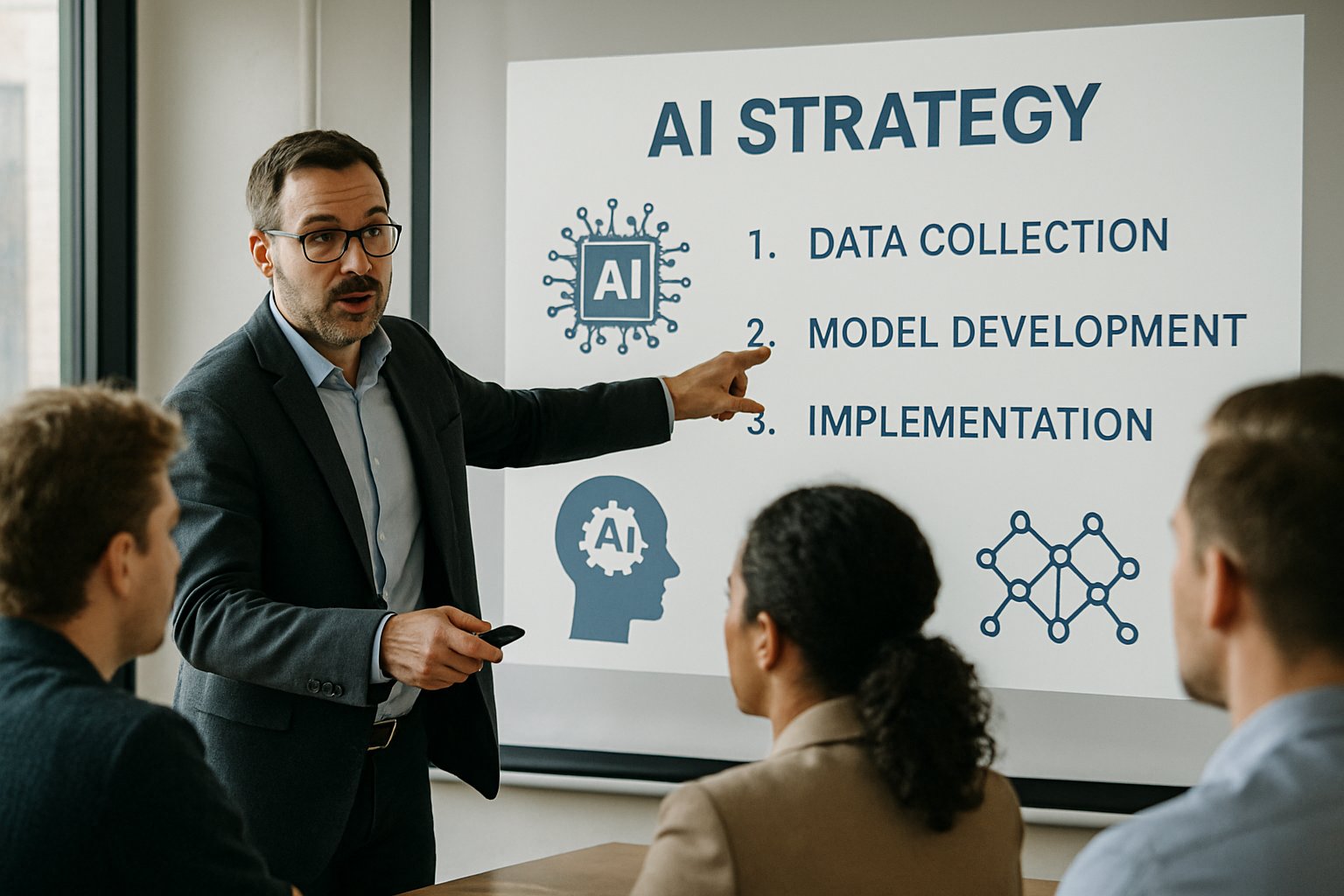
Research shows leadership support doubles the odds of scaled success. McKinsey notes that high performers feature active CEOs, CHROs, and CIOs. Moreover, Gartner highlights CHRO ownership of work redesign as a revenue multiplier.
However, vision alone fails if HR, IT, and business teams remain siloed. Cross-functional squads break barriers and accelerate learning. Consequently, collaboration becomes the second key driver.
These forces combine to form an AI innovation culture able to survive budget cycles.
- Clear executive sponsorship
- Cross-functional squads with ownership
- Outcome-linked communication
Consider a global retailer piloting AI for demand forecasting. Leadership framed success as a three percent inventory reduction within quarter. Cross-functional teams met weekly to review telemetry and adjust prompts. Within eight weeks, stockouts dropped and executive trust soared.
Executive intent and collaboration ignite change. Together they lay a durable foundation for scale. Next, governance keeps that foundation stable.
Governance Anchors Rapid Scale
Policy without telemetry equals guesswork. Mature programs define owners, guardrails, and rollback playbooks before launch. Consequently, risks decrease and confidence rises.
Adoptify.ai AdaptOps embeds governance gates in every stage. Automated policy simulation surfaces issues early. Furthermore, telemetry dashboards track usage, bias, and drift.
Regulated industries demand such rigor. Banks, insurers, and hospitals cannot risk unverified outputs. Therefore, governance becomes the flywheel that enables scale.
Gartner reports only one in five AI projects achieves measurable ROI. Programs with governance-first approaches double that success rate. Such findings reinforce the AI transformation culture imperative.
Effective audits strengthen the AI innovation culture by embedding responsibility into daily routines.
A regional bank adopted the same model for credit underwriting analysis. Governance gates required bias audits before any decision reached production. Because audits passed, regulators accepted the deployment without delays. Consequently, loan approvals accelerated by twelve percent.
Governance reduces risk and boosts trust. Trust accelerates enterprise scaling momentum. Upskilling then turns policies into action.
Upskilling Fuels Daily Adoption
No culture forms without capable people. Employees already show eagerness to use copilots and assistants. However, skill gaps block confident experimentation.
Adoptify.ai delivers in-app microlearning tailored to job roles. Interactive prompts guide workers while real tasks occur. Furthermore, champion networks inspire peer coaching and spread momentum quickly.
Work redesign workshops led by HR align new skills with updated accountabilities. Consequently, AI transformation culture embeds into performance systems. Incentives then reward measurable adoption.
- Role mapping and gap analysis
- Microlearning and certifications
- Peer champion mentoring
Upskilling also changed culture at a manufacturing firm. Operators learned to generate quality reports using voice prompts. Peer champions coached late adopters during shift handovers. Product defects fell by seven percent within three months. The result exemplifies scalable AI transformation culture in industrial settings.
Skills convert technology into productivity. Continuous learning cements behavior change. Metrics now reveal that change.
Metrics Link Effort ROI
Organizations cannot improve what they ignore. Therefore, measurement sits at the heart of performance. Adoptify.ai ROI dashboards unite adoption, cost, and revenue signals.
Executives watch daily active users, workflow completions, and cycle time reductions. Meanwhile, finance teams track EBIT lift per use case. Linking both sets drives accountability across teams.
Deloitte warns many projects need two years for payback. Hence, interim metrics protect patience and confirm momentum. Regular executive gates evaluate progress and decide scaling budgets.
- Adoption rate (% active users)
- Cycle time savings (hours)
- Error reduction (% defects)
- EBIT impact ($)
Transparent metrics reinforce an AI innovation culture by showing every role its contribution.
Executives love simple scorecards. Adoptify.ai surfaces colour-coded trends for rapid interpretation. Green means accelerate, amber means iterate, and red triggers rollback reviews. Therefore, decision latency shrinks and value flows sooner.
Metrics align incentives with strategy. Clear data speeds funding approvals. Operational discipline now meets speed.
AdaptOps Operational Flywheel Model
Strategy, governance, skills, and metrics converge in one operating loop. Adoptify.ai calls the pattern AdaptOps. Discover, Pilot, Scale, Embed, and Govern form sequential yet iterative phases.
Each phase has measurable gates, owners, and artifacts. Consequently, teams exit pilot purgatory. Rapid wins keep stakeholders engaged while risk stays controlled.
Below is the condensed AdaptOps checklist.
- Discover: assess readiness and value hypotheses
- Pilot: launch 50-200 users with dashboards
- Scale: expand, integrate, and automate workflows
- Embed: fold AI into SOPs and roles
- Govern: audit, retrain, and improve models
AdaptOps turns ambition into disciplined AI transformation culture across diverse functions. Therefore, the flywheel repeats and compounds value.
That loop continually reinforces the AI innovation culture across departments.
Timeboxes keep momentum high. AdaptOps pilots last six weeks with strict exit criteria. Scale phases follow only when KPIs hit predefined thresholds. Thus, resources shift toward winners, not noise.
AdaptOps operationalizes experimentation loops. Structured cycles lower cost and risk. Finally, planners need a roadmap.
Roadmap For Next Steps
Begin with a readiness assessment covering data, talent, and governance. Set three KPIs tied to revenue, cost, or customer outcomes. Launch a 90-day pilot using AdaptOps templates.
During the pilot, capture telemetry, champion stories, and quick productivity wins. Publish weekly dashboards to executives and frontline teams. Moreover, hold governance gates at weeks four and eight.
If ROI signals appear, prepare scale budget and embed workflows into SOPs. Otherwise, pivot or exit fast using rollback playbooks. That discipline prevents sunk cost spirals.
Following this roadmap nurtures an AI innovation culture without losing financial control. Firms then accelerate toward scaled value.
Remember to celebrate quick wins publicly. Recognition energizes teams and draws new champions. Moreover, success stories convince skeptical finance leaders. Soon momentum feeds on itself and transformation accelerates.
Small, measured steps drive scale. Clarity and cadence overcome inertia. We now close with key reflections.
Conclusion
A resilient AI innovation culture needs vision, governance, skills, metrics, and disciplined loops. Together, these pillars transform scattered experiments into measurable results.
Why Adoptify AI? The platform delivers AI-powered digital adoption, interactive in-app guidance, intelligent user analytics, and automated workflow support. Consequently, enterprises gain faster onboarding, higher productivity, and compliant scale.
Join the AI innovation culture leaders. Visit Adoptify AI to accelerate secure, enterprise-wide transformation today.
Frequently Asked Questions
- What is AI innovation culture and why is it important?
AI innovation culture integrates executive vision, cross-functional collaboration, and disciplined governance to drive digital adoption. It fosters rapid experimentation and measurable outcomes, using platforms like Adoptify AI to scale transformation quickly. - How does governance support AI transformation?
Governance secures AI initiatives using automated policy simulations and telemetry dashboards to monitor bias, usage, and risks while ensuring compliance. Platforms such as Adoptify AI embed these features to achieve measurable ROI and operational excellence. - How can upskilling drive daily adoption and improve productivity?
Upskilling drives digital adoption by combining in-app microlearning, role-based training, and peer coaching. This approach equips employees with essential skills, enhances productivity, and supports rapid implementation of AI-powered workflows through platforms like Adoptify AI. - What is Adoptify AI and how does it help organizations scale AI?
Adoptify AI empowers organizations to scale AI by integrating digital adoption tools like interactive in-app guidance, user analytics, and automated workflow support, facilitating faster onboarding, improved productivity, and secure, compliant digital transformation.

FEATURED
How to Identify and Overcome Cultural AI Adoption Barriers
March 3, 2026
FEATURED
What Are the Most Common AI Adoption Challenges for Businesses
March 3, 2026
FEATURED
The Complete Guide to Building an AI Adoption Framework for 2026
March 2, 2026
FEATURED
Who Owns the Intellectual Property in Enterprise AI Adoption
March 2, 2026
FEATURED
7 Reasons To Embrace AI-Native Architecture
March 2, 2026