Human-Centric Workforce Transition Playbook
Every boardroom now debates how quickly generative AI will reshape work.
Yet smart leaders know technology alone will not guarantee success.
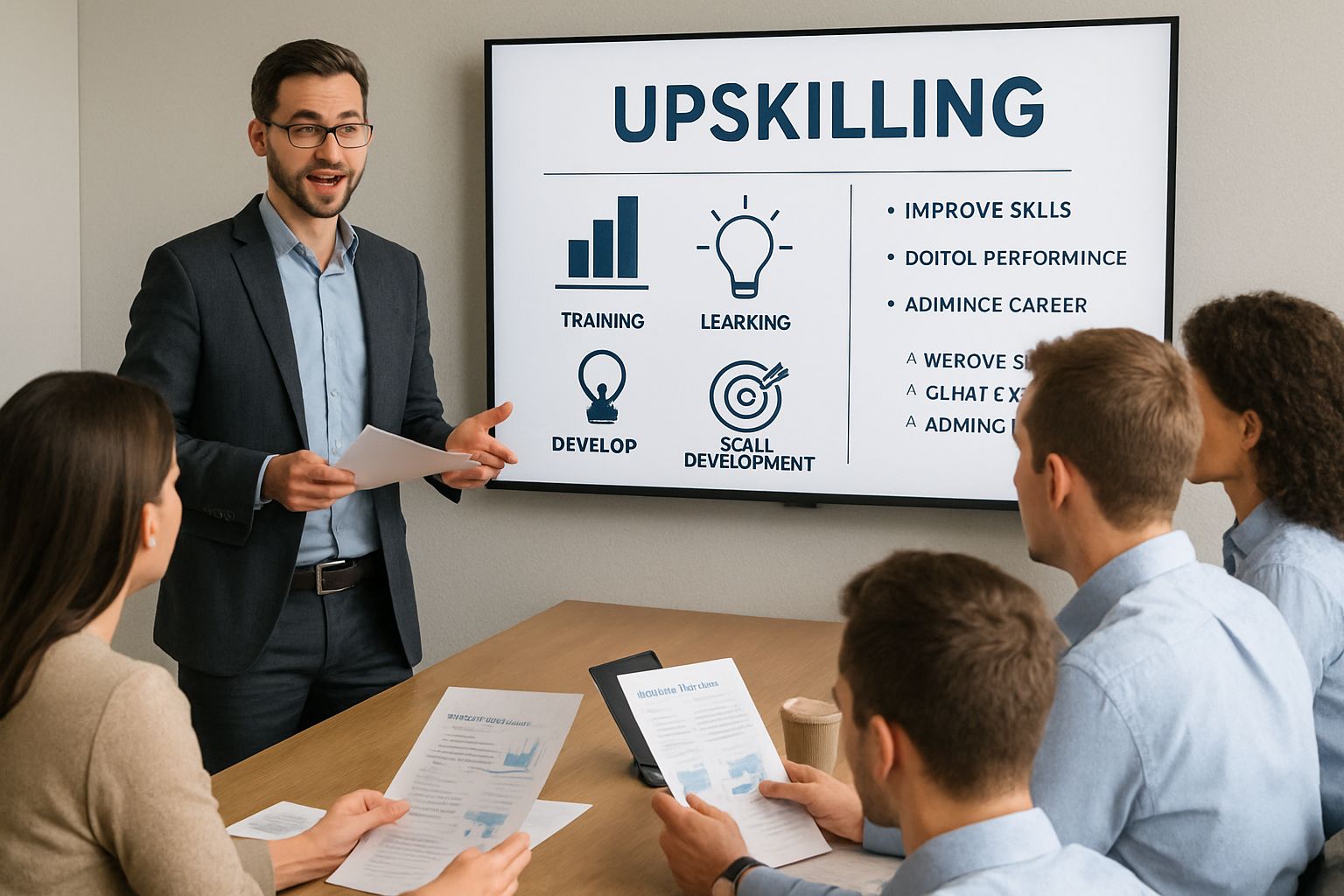
Instead, the decisive factor is a human-centric workforce transition that builds skills while calming fears.
Analysts predict up to 30% of tasks could automate by 2030, triggering massive role redesign.
Consequently, enterprises must pair rapid ai adoption with structured learning, governance, and transparent communication.
This article presents a pragmatic framework drawn from Adoptify’s AdaptOps practice, field research, and executive interviews.
Readers will learn how to de-risk scaling, energize employees, and unlock measurable productivity within 90 days.
Let’s explore why speed matters and how to guide teams through change without chaos.
Throughout, we highlight real metrics, proven playbooks, and next steps for your organisation.
Begin your journey armed with facts, not hype.
Why Speed Really Matters
Market evidence shows executives moving from pilot to production in months, not years.
McKinsey reports organisations that scale early capture productivity lifts of 15% or more.
Meanwhile, IBM found 47% of companies already see ROI from ai adoption within three years.
A clear workforce transition schedule keeps enthusiasm high.
Slow movers risk talent flight and a widening capability gap that punishes margins.
Speed therefore protects competitiveness and creates momentum.
We next examine concrete steps that keep velocity without losing control.
Guiding Workforce Transition Steps
Adoptify’s AdaptOps method splits change into five clear phases: Discover, Pilot, Scale, Embed, Govern.
Each gate aligns skills, telemetry, and policy before more users join.
Furthermore, executive dashboards display leading indicators such as prompt usage and time saved.
- Discover: Map tasks, risks, and opportunities.
- Pilot: Train 50-200 users, capture ROI weekly.
- Scale: Expand after meeting governance exit criteria.
- Embed: Bake prompts, nudges, and roles into daily workflows.
- Govern: Monitor compliance, refresh skills, and update models.
Consequently, managing workforce transition during ai adoption hinges on respecting these gates.
Skipping phases often strands projects in expensive pilot purgatory.
Structured gates shorten learning curves while reducing risk.
Next, we zoom into skill pathways that make change personal.
Human-Centric Skill Pathways Design
Task analysis comes first.
Teams list daily activities, mark what AI will automate, augment, or leave unchanged.
Moreover, they assign new supervisory or creative responsibilities to freed capacity.
Adoptify supplies 30-90 day roadmaps and prompt labs for every frontline role.
Role Mapping First Approach
HR partners, coaches, and team leads co-create skills matrices linked to career mobility.
Transitions feel supportive, not threatening, because employees see future salaries and badges.
Additionally, telemetry confirms practice adoption, rewarding champions with public recognition.
Individualised pathways cut confusion and build trust.
However, training alone fails without strong governance.
Governance-First Pilot Design Blueprint
Regulators now demand traceability, fairness, and privacy proof for enterprise AI.
Therefore, every pilot must embed policy controls from day one.
Adoptify simulates Purview DLP violations so learners practice safe prompting in realistic sandboxes.
Executive dashboards surface any risky behaviour immediately, enabling quick coaching.
Embed Learning Everywhere Always
Contextual microlearning appears inside Outlook, Teams, and Salesforce when users attempt specific tasks.
Subsequently, nudge cards suggest secure prompts and track downstream results.
The tight loop reinforces correct habits and accelerates ai adoption at scale.
Managing workforce transition during ai adoption also means measuring policy adherence, not only skill scores.
Governance metrics reassure legal teams and boost leadership confidence.
Governance-first pilots convert caution into controlled progress.
With controls locked, leaders focus on continuous value measurement.
Continuous Measurement Loops Framework
After embedding new workflows, companies must prove sustained benefit.
Consequently, Adoptify dashboards track prompt volume, time saved, ticket deflection, and revenue impact.
Metrics combine with HR data to update compensation, promotion, and hiring plans.
Meanwhile, managers compare cohorts, replicate wins, and sunset underperforming automations.
Continuous insight supports managing workforce transition during ai adoption because feedback loops stay open.
Mature ai adoption correlates strongly with telemetry coverage.
Regular reviews allocate new learning budgets where telemetry signals skill decay.
Without visible progress, any workforce transition risks stalling.
Measured progress turns skeptics into supporters.
We now wrap up key lessons.
Conclusion And Next Steps
A disciplined workforce transition delivers faster productivity, lower risk, and happier employees.
We reviewed why speed matters, how AdaptOps gates guide change, and why governance underpins trust.
We also showed skill pathways, microlearning, and continuous measurement that convert pilots into enterprise scale.
Adoptify AI supercharges every step with AI-powered digital adoption capabilities and interactive in-app guidance.
Furthermore, intelligent user analytics reveal real ROI while automated workflow support removes friction.
Consequently, teams onboard faster, retain knowledge, and sustain higher productivity across secure, scalable environments.
Start your next AI journey with Adoptify AI and see value within weeks.
Learn more at Adoptify.ai.
Frequently Asked Questions
- How does Adoptify AI accelerate digital adoption and drive productivity?
Adoptify AI accelerates digital adoption by combining in-app guidance, interactive dashboards, and automated workflow support. These features ensure rapid onboarding, strong governance, and measurable productivity improvements for teams transitioning to AI-enhanced processes. - What is the AdaptOps method and how does it benefit workforce transition?
The AdaptOps method organizes AI adoption into five phases: Discover, Pilot, Scale, Embed, and Govern, ensuring controlled change. It integrates skill development, telemetry, and policy adherence to transform workforce dynamics securely. - How does in-app guidance support employees during AI adoption?
In-app guidance in Adoptify AI delivers timely, contextual microlearning directly within applications like Outlook and Teams. This support simplifies tasks, encourages best practices, and boosts productivity through automated prompts and secure analytics. - How do continuous measurement and user analytics improve AI adoption?
Continuous measurement and user analytics provide real-time insights into AI adoption progress. Automated dashboards track performance metrics, compliance, and usage trends, ensuring ongoing improvements, risk mitigation, and secure integration during digital transformation.

FEATURED
Scaling Retail Operations Through Corporate AI Adoption
February 27, 2026
FEATURED
How Corporate AI Adoption Reduced Operational Costs by 40%
February 27, 2026
FEATURED
Boutique Enterprise AI Adoption vs Big Four Consulting
February 25, 2026
FEATURED
Security Audit for Corporate AI Adoption
February 25, 2026
FEATURED
What is the Average Investment for Enterprise AI Adoption
February 20, 2026