LLM Integration Playbook for Enterprise Operations
Generative AI has left the experimentation stage. Enterprises now race to embed it inside day-to-day workflows. Yet, many leaders still grapple with RAG design, model routing, security, and human change. Successful LLM integration demands a blueprint that aligns people, processes, and platforms. This playbook extracts field lessons from AdaptOps engagements and leading research to guide HR teams, SaaS vendors, and transformation leaders.
LLM Integration Governance First
Governance must precede any code push. AdaptOps introduces assessment gates that inspect data lineage, model access, and risk appetite. Consequently, pilots receive clear success criteria and rollback plans. Gartner warns that over 40 percent of agentic projects will fail without such controls. Therefore, create a steering committee that owns policy, funding, and escalation routes.
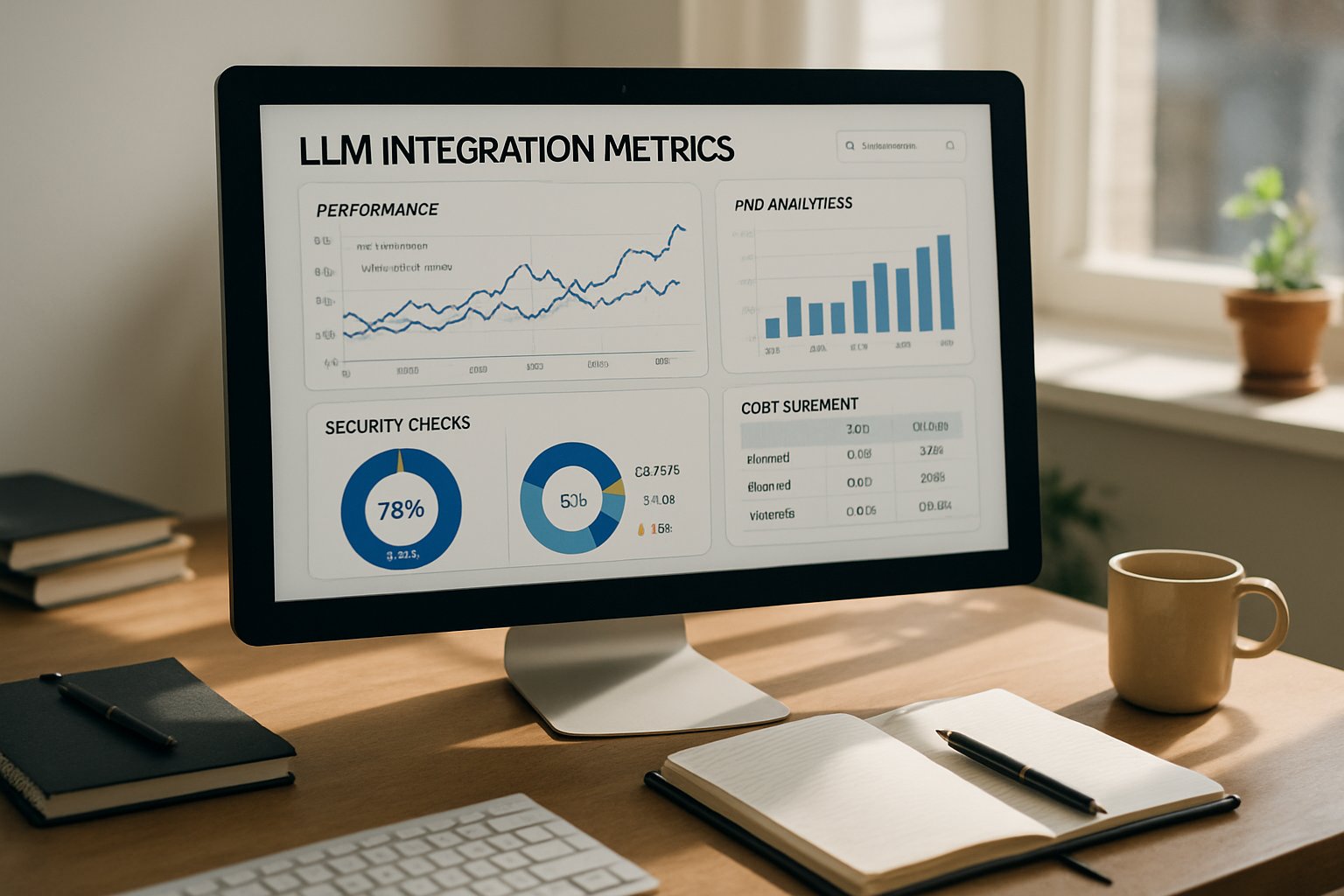
Key governance actions include:
- Define data zones, retention rules, and Purview labels before indexing.
- Map user roles to prompt libraries and Copilot permissions.
- Schedule quarterly business reviews to verify ROI dashboards.
These steps reduce audit surprises and keep compliance teams engaged. Two takeaways: start with policy, and tie every experiment to a measurable metric. Next, move to retrieval design.
Building Robust RAG Foundations
Retrieval-Augmented Generation remains the simplest path to trusted answers. Microsoft guidance stresses citations, metadata, and hybrid search. Additionally, vector stores like Weaviate provide blazing embeddings search, while lexical rerankers boost precision. For regulated content, attach access tags to each vector and filter queries in real time.
Enhance RAG pipelines with knowledge graph context and schema-enforced response formats. Moreover, log every candidate document and reranker score for audit. When latency matters, cache embeddings and tune chunk sizes. Summarizing this section: ground answers in governed data and collect evidence for every token. With retrieval stable, orchestration becomes the next hurdle.
Multi Model Orchestration Gates
Single-model pilots rarely satisfy production variability. Enterprises now route tasks across open and closed models to balance cost, latency, and sensitivity. AWS and Azure gateways inject policy interceptors that block disallowed content before generation. Furthermore, they enable automatic fallbacks when rate limits spike.
AdoptOps pilots implement routing rules based on task taxonomy, token budgets, and SLA tiers. For example, public marketing queries flow to cheaper models, while contract analysis uses high-accuracy endpoints. A two-line wrap-up: orchestration spreads risk and saves money; gateway metrics feed ROI dashboards. Moving forward, reliability engineering keeps these chains healthy.
LLMOPS For Production Reliability
LLMOps extends MLOps with prompt versioning, automated evaluations, and lineage tracking. LangChain, LlamaIndex, and orchestration.dev all support CI pipelines for embeddings and prompts. Moreover, red-team suites attack bias, toxicity, and jailbreak vectors nightly.
Define service level objectives for latency, accuracy, and safe-response rates. Subsequently, surface these SLOs in executive scorecards. Enterprises performing disciplined LLMOps report faster incident recovery and higher stakeholder trust. Key takeaway: treat prompts like code and monitor the entire chain. Next, focus on people and value capture.
Change Management And ROI
Technology alone does not shift behavior. AdaptOps embeds microlearning, adoption champions, and AI CERTs to drive continuous skill growth. Furthermore, ROI dashboards track leading indicators such as successful-session rate and time saved per ticket.
Analyst surveys reveal many pilots stall because business units skip KPI planning. Therefore, draft both baseline and stretch goals during the readiness assessment. A short summary: train users early and instrument outcomes everywhere. Transitioning now to security architecture.
Secure Integration Patterns Explained
Security teams fear data leakage and permission bypass. Centralized vector stores simplify retrieval but risk over-exposure. In contrast, agent gateways query source systems at run time, enforcing row-level controls. Hybrid patterns—secure RAG—blend both approaches.
Adoptify engineers insert token scanners, PII masking, and role-based filters before indexing. Additionally, deletion events propagate instantly to embeddings to uphold GDPR rights. Summing up: pick an architecture that honors existing controls, then automate enforcement. With controls defined, strategic sourcing choices remain.
Platform Strategy Buy Integrate
Build-everything projects often miss market windows. Gartner notes that 95 percent of DIY AI initiatives deliver zero ROI. Consequently, many leaders favor “buy + integrate” for core infra such as managed vector DBs and cloud gateways. AdoptOps accelerators deliver a 90-day value proof, then scale safely.
When choosing vendors, insist on open APIs, exportable embeddings, and multi-provider routing. Moreover, negotiate shared responsibility models that clarify incident ownership. Two closing thoughts: buy speed, integrate for differentiation, and always keep exit paths open. The stage is now set to summarise the journey.
Summary of Key Steps
- Governance gates establish policy and metrics.
- RAG anchors answers in trusted data.
- Orchestration routes tasks to optimal models.
- LLMOps enforces reliability and auditability.
- Change programs secure adoption and ROI.
- Security patterns protect data and access.
- Vendor strategy accelerates time-to-value.
Each layer reinforces the next, delivering a cohesive roadmap for enterprise LLM deployment. Consequently, organizations can move from pilot to pervasive impact.
Operational Readiness Checklist
Use this quick test before signing off any enterprise LLM deployment:
- Risk assessment and policy documented?
- Retrieval pipeline tested with citations?
- Model routing rules codified?
- Evaluation suite automated?
- KPIs and dashboards live?
- Role-based enablement scheduled?
If any item fails, pause the rollout and revisit the relevant AdaptOps gate.
Frequently Asked Questions
- What are the key benefits of establishing governance before LLM integration?
Implementing governance before code deployment ensures clear policies, measurable metrics, and secure data practices. This approach aligns with Adoptify AI’s in-app guidance and user analytics for effective digital adoption. - How does Retrieval-Augmented Generation (RAG) enhance digital workflows?
RAG anchors answers in trusted data using citations, metadata, and regulated filters. This supports digital adoption by ensuring secure, accurate responses, and complements automated support features offered by Adoptify AI. - How does multi-model orchestration reduce risks and optimize costs?
Multi-model orchestration routes tasks across specialized models, balancing cost, latency, and sensitivity. It minimizes risk and integrates automated support and user analytics, key for effective digital transformation. - What role does LLMOps play in maintaining enterprise reliability?
LLMOps enhances reliability through prompt versioning, automated evaluations, and incident recovery. These features, alongside Adoptify AI’s automated support, ensure continuous performance and secure digital workflow management.
FEATURED
The Complete Guide to Building an AI Adoption Framework for 2026
March 2, 2026
FEATURED
Who Owns the Intellectual Property in Enterprise AI Adoption
March 2, 2026
FEATURED
7 Reasons To Embrace AI-Native Architecture
March 2, 2026
FEATURED
Hybrid AI FAQ: Strategy, Governance, and ROI
March 2, 2026
FEATURED
Agentic AI Integration Playbook for Enterprises
March 2, 2026