Mastering Workforce Transition: In-House vs Outsourced Training
Generative AI budgets keep rising, yet many pilots still stall. Consequently, leaders face hard choices about workforce transition as they attempt rapid ai adoption. Should they build skills internally or lean on partners? The answer shapes costs, speed, and long-term advantage. This article compares in-house and outsourced vs internal ai training models, offers data-backed insights, and presents a pragmatic hybrid path.
Optimizing Enterprise Workforce Transition
Enterprises scale when people, process, and platforms align. Adoptify.ai highlights AdaptOps, an operating model that accelerates pilot-to-ROI within 90 days. However, not every capability must stay external forever. A planned workforce transition brings outsourced expertise inside, embeds governance, and protects IP.
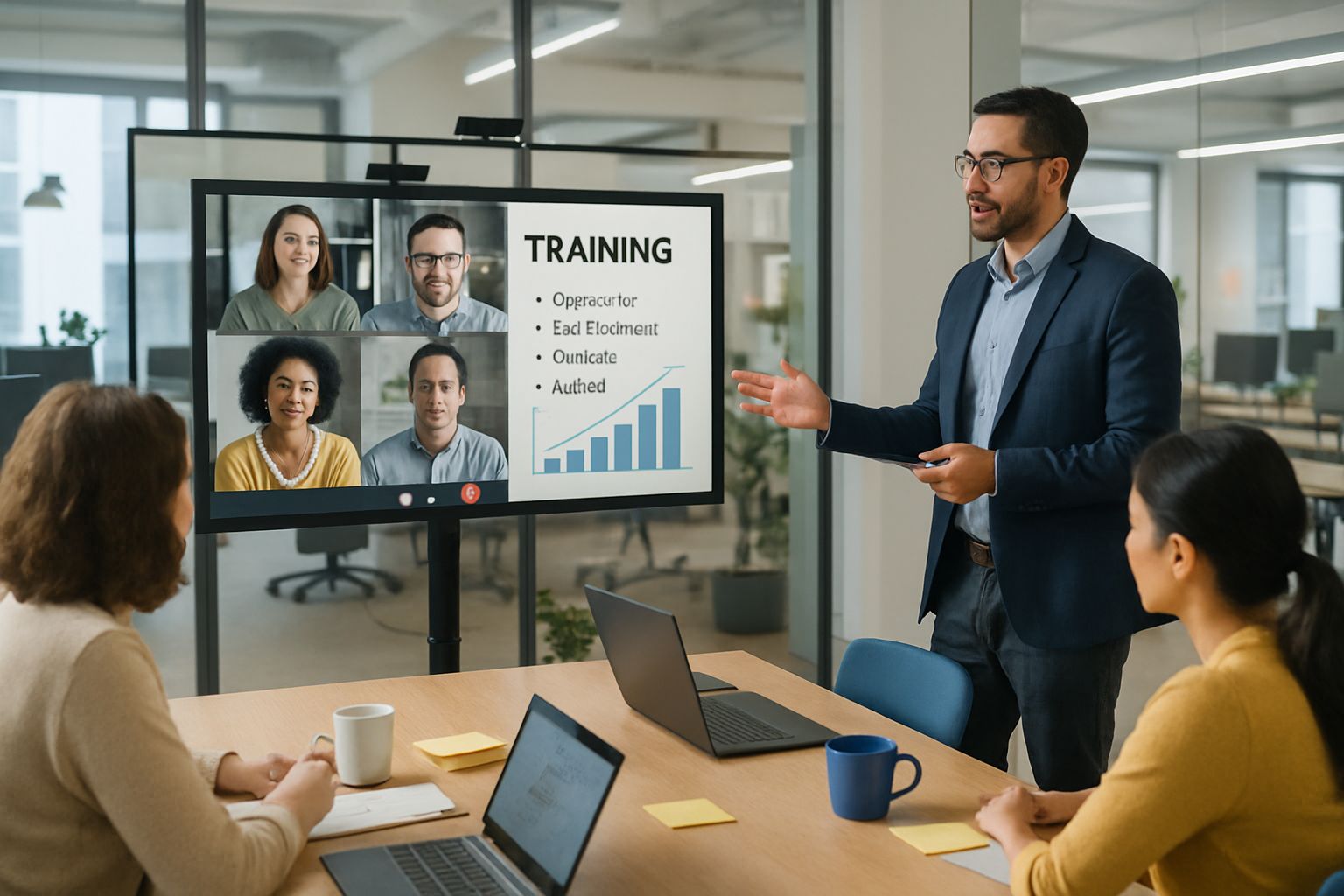
Deloitte reports 60% of staff now access approved AI tools, yet only a minority feel ready. Moreover, McKinsey notes firms that reskill employees outperform pure outsourcing peers. Therefore, start with readiness mapping. Identify strategic skills to insource and commodity skills to partner.
Summary: Align transition goals with business value and capability gaps. The next section explores speed and ownership.
Transitioning from vision to execution demands balanced decisions.
Speed And Ownership Tradeoff
Outsourcing delivers specialists quickly. Consequently, projects launch faster, and leadership sees early wins. Yet vendor lock-in looms if knowledge transfer stalls. Meanwhile, an internal academy builds institutional muscle but needs time and budget.
McKinsey’s data confirms hybrid leaders blend both approaches. They outsource initial pilots, capture playbooks, then pivot to insourced delivery. This deliberate workforce transition maximizes agility without sacrificing control.
Key pain points include inconsistent standards, hidden costs, and deferred governance. Address them with explicit transfer artifacts—playbooks, code samples, and AdaptOps certification paths.
Summary: Speed comes from partners; ownership grows through reskilling. A planned hand-off mitigates risk.
The following section shows how to measure success.
Measuring Training ROI Fast
Industry surveys reveal only a small share of AI projects reach broad ROI. Therefore, metrics must steer every engagement. Adoptify.ai embeds ROI dashboards tracking time-to-proficiency, productivity lift, and adoption curves.
Link commercial terms to those metrics. For example, require vendors to hit a 15% efficiency gain within 90 days. Consequently, training becomes outcome-based rather than an expense line.
This focus accelerates workforce transition by proving internal value. Additionally, it supports FinOps transparency demanded by CFOs.
Summary: KPIs protect budget and credibility. Continuous visibility guides next investment steps.
Governance now enters the spotlight.
Governance And Compliance First
AI policies evolve quickly. Meanwhile, outsourced teams may bypass local regulations if unchecked. Establish a governance starter kit covering data residency, audit trails, and responsible AI guidelines before ramp-up.
Adoptify’s playbook includes templates and compliance checkpoints. Consequently, internal teams inherit clear standards during workforce transition. Legal and security teams gain confidence, reducing project friction.
Summary: Governance frameworks de-risk scaling. Early alignment smooths future audits.
Next, we examine the hybrid model in action.
Hybrid Capability Model Steps
Top performers adopt a staged path:
- 1. Map use cases and decide insource vs partner roles.
- 2. Launch 60-day pilots with outcome SLAs.
- 3. Capture learning artifacts and ROI dashboards.
- 4. Transfer content into a Center of Excellence.
- 5. Embed microlearning and manager coaching.
- 6. Offer role-based certifications for career mobility.
This approach blends outsourced vs internal ai training strengths. Moreover, each stage builds momentum and documents repeatable processes.
Such structure accelerates ai adoption and shortens the workforce transition curve from months to weeks.
Summary: A staged hybrid path delivers speed, metrics, and sustainability.
Financial oversight completes the picture.
FinOps For Training Spend
Gartner predicts multi-trillion-dollar AI spending by 2026. Consequently, enterprises pursue AI FinOps to rein in waste. Tie vendor payments to measurable adoption and ROI milestones.
Chargebacks create visibility, while variance analysis detects under-utilized licenses. Therefore, finance and L&D share one dashboard, ensuring strategic alignment.
Cost clarity boosts ai adoption because sponsors see direct returns. Simultaneously, disciplined spend empowers faster workforce transition without budget shocks.
Summary: FinOps links strategy, finance, and learning for accountable growth.
Our final section details organizational anchoring.
Center Of Excellence Playbook
A Center of Excellence (CoE) codifies standards, tooling, and coaching. Adoptify.ai’s AdaptOps kit offers templates for pilot design, governance, and microlearning.
Moreover, the CoE becomes the nerve center that distributes best practices to product, HR, and IT squads. As a result, outsourced vs internal ai training debates subside because ownership is clear.
Summary: A strong CoE cements culture and capability.
We now conclude with key insights and a proven solution.
Conclusion And Next Steps
Leaders balance speed, ownership, governance, and cost. Outsourcing accelerates launches, yet insourcing secures lasting capability. A hybrid framework delivers both. Eight critical factors—governance, KPIs, FinOps, staged pilots, playbooks, certifications, CoE leadership, and clear workforce transition milestones—drive success.
Why Adoptify AI? The AI-powered platform streamlines workforce transition with interactive in-app guidance, intelligent user analytics, and automated workflow support. Consequently, teams enjoy faster onboarding and higher productivity. Adoptify AI scales securely across the enterprise, delivering measurable ROI on every AI initiative. Ready to elevate adoption? Explore Adoptify AI now.
Frequently Asked Questions
- How does a hybrid model benefit AI adoption?
A hybrid model combines rapid outsourcing with gradual insourcing. This approach leverages structured playbooks and role-based certifications, ensuring faster AI adoption, measurable ROI, and a smooth workforce transition. - What are the key factors in a successful workforce transition?
Key factors include structured playbooks, clear governance frameworks, measurable KPIs, and role-based certifications. Adoptify AI’s AdaptOps model ensures a balanced transition with both speed and long-term control. - How does Adoptify AI streamline digital adoption?
Adoptify AI accelerates digital adoption with in-app guidance, intelligent user analytics, and automated support. Its platform simplifies training, governance, and certification, driving faster onboarding and measurable AI integration. - How is ROI measured in AI training initiatives?
ROI is measured via dashboards that track time-to-proficiency, productivity lift, and adoption curves. Tying vendor payments to efficiency milestones ensures cost clarity and effective FinOps oversight in digital initiatives.
FEATURED
The Complete Guide to Building an AI Adoption Framework for 2026
March 2, 2026
FEATURED
Who Owns the Intellectual Property in Enterprise AI Adoption
March 2, 2026
FEATURED
7 Reasons To Embrace AI-Native Architecture
March 2, 2026
FEATURED
Hybrid AI FAQ: Strategy, Governance, and ROI
March 2, 2026
FEATURED
Agentic AI Integration Playbook for Enterprises
March 2, 2026