Microsoft Copilot Adoption: HR Safeguards for Expectant Workers
Microsoft Copilot Adoption now sits on every CHRO’s 2025 agenda. However, expectant and medically vulnerable employees raise fresh governance stakes. HR leaders must balance speed, compliance, and trust as they roll Copilots across sensitive workflows.
Consequently, this guide details concrete safeguards that anchor enterprise AI rollouts. We weave in AI Copilot HR governance insights, regulatory shifts, and AdaptOps best practices so teams can scale confidently.
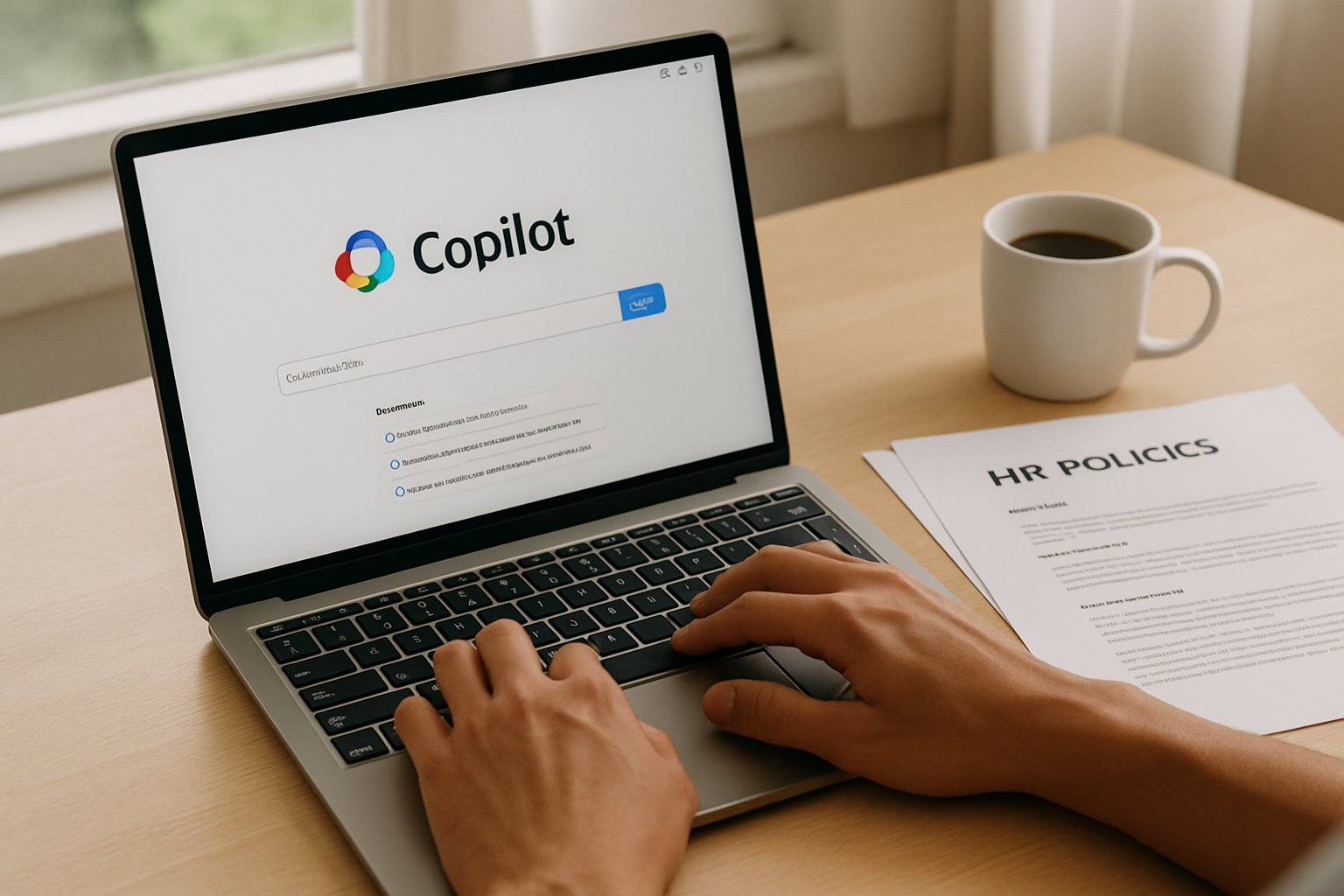
Secure Microsoft Copilot Adoption
Rapid deployment offers tempting productivity gains. Nevertheless, the EEOC’s Pregnant Workers Fairness Act ties mistakes to litigation risk. AI Copilot and vulnerable employees need rigorous protection from minute one.
Therefore, start with a written charter that names HR responsibility in AI adoption. Explicit ownership prevents later finger-pointing when audits arrive.
Additionally, publish a “no PHI” prompt policy. Clear boundaries stop accidental AI employee surveillance that might store pregnancy details in model logs.
Key takeaway: Charter, policy, and boundary rules form the first barrier against misuse. The next section explains legal triggers.
Urgent HR Compliance Steps
EEOC chair Charlotte Burrows warns that automated denials violate PWFA. Thus, Human-in-the-loop HR decisions remain mandatory. Copilots may triage, yet only trained staff approve accommodations.
Moreover, the EU AI Act labels many HR agents “high-risk.” Firms must document impact assessments, bias tests, and mitigation plans. Adoptify AI’s incident workflows align with these clauses.
- Map law references within each Copilot skill.
- Embed escalation buttons that route to human HR partners.
- Log every decision for six years.
Key takeaway: Legal alignment must precede configuration. Next, identify risky data flows.
Mapping Sensitive HR Workflows
First, inventory tasks that reveal pregnancy, fertility treatment, or disability. Examples include leave intake, lactation room booking, and return-to-work assessments.
Subsequently, classify each task under NIST AI RMF. High-risk items require stricter controls and constant monitoring.
Furthermore, consult unions and employee resource groups. Their feedback highlights hidden concerns around AI Copilot and vulnerable employees.
Key takeaway: Precise mapping drives correct control depth. Next comes building the pilot.
Governance Centric Pilot Design
An AdaptOps pilot runs 30–60 days and includes measurable exit criteria. During this phase, insert dummy data to model DLP responses and detect unintended AI employee surveillance.
In contrast, many firms skip measurement. Adoptify AI’s ROI dashboards solve this gap while respecting AI Copilot HR governance standards.
- Define baseline handle-time for accommodation tickets.
- Measure Copilot-assisted handle-time.
- Flag anomalies that disadvantage pregnant staff.
Key takeaway: Controlled pilots surface flaws cheaply. Training ensures lasting behavior change.
Role Based Training Essentials
Expectant employees fear surveillance. Therefore, teach them safe prompting and consent boundaries. Meanwhile, managers study HR responsibility in AI adoption modules that stress empathy.
Additionally, Adoptify AI champions certify power users. Graduates coach colleagues and monitor Human-in-the-loop HR decisions adherence.
Moreover, training materials must revisit scenarios where Copilot suggests forcing leave. Staff should override those suggestions instantly.
Key takeaway: Role clarity upgrades trust and skill. Testing prevents hidden bias.
Bias Testing And Monitoring
Before go-live, run disparate-impact simulations on scheduling, task assignment, and performance summaries. Track metrics by pregnancy status and disability.
Moreover, continuous monitors alert when outcomes shift beyond thresholds. Consequently, bias remediation occurs before harm spreads.
This cycle supports transparent AI Copilot HR governance and reduces regulator attention.
Key takeaway: Live monitoring guards vulnerable groups. Scaling now becomes safer.
Scaling Safely With AdaptOps
Once pilots meet gates, extend Copilots to broader HR tasks. However, maintain two-lane architecture: general Copilot for FAQs and private, auditable agents for medical leaves.
Furthermore, Adoptify AI’s tiered controls separate models by risk, cutting AI employee surveillance exposure.
Meanwhile, quarterly audits review documentation quality, alignment with Human-in-the-loop HR decisions, and new laws.
Key takeaway: AdaptOps marries speed and safety, closing the adoption-value gap.
Conclusion
Expectant and medically fragile staff require ironclad care throughout Microsoft Copilot Adoption. HR teams should map high-risk workflows, anchor governance, train roles, and monitor bias. These steps protect employees and sustain productivity.
Why Adoptify AI? The platform embeds AI-powered digital adoption, interactive in-app guidance, intelligent user analytics, and automated workflow support. Consequently, organizations enjoy faster onboarding, higher productivity, and secure, enterprise-scale Microsoft Copilot Adoption. Elevate your AdaptOps journey today at Adoptify.ai.
Frequently Asked Questions
- How does Microsoft Copilot Adoption affect HR governance and compliance?
Microsoft Copilot Adoption revolutionizes HR governance by imposing rigorous compliance steps, including human-in-the-loop decisions, documented impact assessments, and strict boundary policies that protect sensitive workflows and ensure regulatory adherence. - What key steps ensure safe AI Copilot integration in HR workflows?
By mapping sensitive workflows, drafting formal charters, enforcing “no PHI” policies, and implementing human-in-the-loop decisions, firms can effectively manage risk, drive compliance, and achieve secure AI Copilot HR governance. - How does Adoptify AI enhance digital adoption and workflow intelligence?
Adoptify AI elevates digital adoption with in-app guidance, intelligent user analytics, and automated workflow support, ensuring efficient onboarding, real-time insights, and secure integration of Microsoft Copilot, thereby optimizing HR productivity and governance. - How do bias testing and continuous monitoring safeguard vulnerable employees?
Bias testing paired with continuous monitoring identifies and mitigates adverse outcomes by analyzing key HR metrics, protecting vulnerable groups, and reinforcing adoption protocols through rapid bias remediation and improved oversight in automated support workflows.

FEATURED
How to Identify and Overcome Cultural AI Adoption Barriers
March 3, 2026
FEATURED
What Are the Most Common AI Adoption Challenges for Businesses
March 3, 2026
FEATURED
The Complete Guide to Building an AI Adoption Framework for 2026
March 2, 2026
FEATURED
Who Owns the Intellectual Property in Enterprise AI Adoption
March 2, 2026
FEATURED
7 Reasons To Embrace AI-Native Architecture
March 2, 2026