Microsoft Copilot Adoption: Why Rollouts Stall And Ways To Fix
Executives rushed to license Copilot. However, usage reports soon exposed a familiar problem: adoption lagged far behind expectations. Microsoft Copilot adoption looked simple on launch day, yet daily active users refuse to grow.
Leaders now face low adoption of Microsoft Copilot and mounting Microsoft 365 Copilot adoption issues. They also confront growing Microsoft Copilot privacy concerns from security teams. Meanwhile, employees experiment with consumer AI while ignoring the licensed assistant.
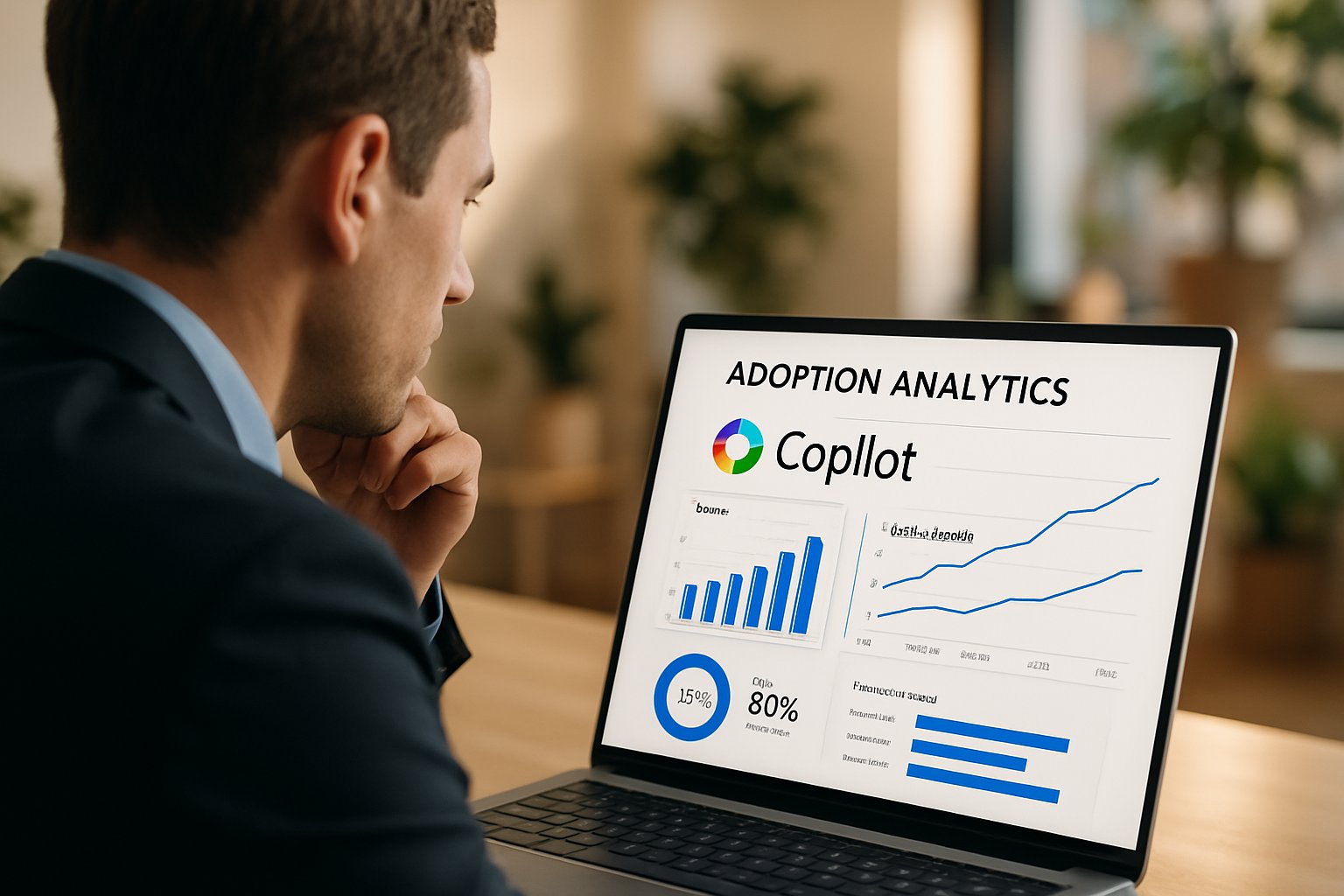
This article explains why adoption stalls. It shows how AdaptOps, Copilot governance best practices, Copilot onboarding best practices, and actionable Copilot adoption metrics unlock sustainable value. Each insight applies to HR, SaaS, and enterprise operations teams driving Copilot change management at scale.
Microsoft Copilot Adoption Stalls
Initial enthusiasm masked deeper challenges with Microsoft Copilot adoption inside large enterprises. Leadership assumed employees would naturally switch to the new assistant. In contrast, employees kept their old habits.
Studies confirm three root causes. First, low adoption of Microsoft Copilot appears when workflows remain unchanged. Second, Microsoft 365 Copilot adoption issues spike if data access is restricted. Third, Microsoft Copilot privacy concerns delay security clearance and erode trust.
Gartner warns that over 40% of agentic AI projects may fail before 2027 because organizations ignore these fundamentals. Nevertheless, effective Copilot change management reverses the trend when launched early.
Key takeaway: Adoption stalls when workflows, data, and trust barriers stay unresolved. Address them before scaling licenses.
Next, we explore governance gaps that block scale.
Governance Gaps Block Scale
Security, compliance, and finance teams demand proof before they approve broad AI rollouts. Consequently, Copilot governance best practices become the critical accelerator.
Organizations that simulate Purview and DLP policies during pilots cut approval time by 40%. Moreover, they reduce Microsoft Copilot privacy concerns because risk teams see concrete evidence.
Adoptify’s AdaptOps model codifies these steps into templates, identity tiers, and audit dashboards. Therefore, low adoption of Microsoft Copilot drops once security signs off and users gain confidence.
Governance also underpins Copilot adoption metrics. When prompts, sessions, and data flows are logged, leaders can map usage to business impact.
Key takeaway: Governance-first pilots soothe security fears and validate value. Approval speed directly drives scale.
With governance in place, measurement becomes the next hurdle.
Measurement Drives Executive Confidence
Many boards reject renewal budgets because they cannot see tangible outcomes. Reliable Copilot adoption metrics and Microsoft 365 Copilot adoption issues dashboards fix that gap.
Microsoft now ships Viva and Power BI templates that join telemetry with time saved, revenue influenced, and cycle time reduced. Additionally, AdaptOps teams track Successful Sessions Rate, a leading indicator of quality.
When SSR climbs above 75%, repeat usage grows. Consequently, low adoption of Microsoft Copilot fades as users witness consistent value.
Executives then receive weekly scorecards linking Copilot governance best practices with performance uplift. Numbers beat anecdotes.
Key takeaway: Measure from day one to build confidence and funding. Metrics convert skeptics into sponsors.
Next, we examine how skills and behavior unlock that performance.
Skills And Behavior Shift
The largest productivity gap stems from human behavior, not model quality. Targeted Copilot onboarding best practices close that gap.
Adoptify cohorts use microlearning, prompt libraries, and champion office hours. Furthermore, structured Copilot change management lifts usage by up to 40% in six weeks.
Role-based labs let HR and L&D teams embed prompting drills into daily apps. Hence, Microsoft 365 Copilot adoption issues drop as confidence rises.
Certification pathways create recognized expertise and reduce Microsoft Copilot privacy concerns by teaching data handling norms.
Key takeaway: Skills programs turn curious users into power users. Behavior change sustains gains.
With skills aligned, embedding Copilot into workflows cements habits.
Key Workflow Embedding Tactics
Teams unlock exponential value when Copilot meets users at the task surface. Consider these tactics:
- Insert meeting recap prompts directly into Teams chat threads.
- Publish Excel templates that preload formulas and Copilot tips.
- Launch Dynamics agents that draft CRM notes automatically.
- Automate SOP steps with AdaptOps integrated guidance.
Each tactic reflects Copilot onboarding best practices and Copilot governance best practices crafted for specific roles. Moreover, Copilot change management leaders iterate templates monthly using Copilot adoption metrics.
When workflows include a single click to invoke the assistant, Microsoft Copilot adoption doubles during the first month of scale.
Key takeaway: Embed Copilot where work happens to eliminate context switching. Embedded design drives habitual use.
The next loop focuses on moving from pilot to enterprise scale.
Pilot To Scale Loop
Effective programs start with 50–200 users and a clear baseline. After week four, teams review SSR, Copilot adoption metrics, and financial impact.
Governance checkpoints, skills refreshers, and workflow tweaks follow. Consequently, Microsoft Copilot adoption expands confidently to thousands of seats.
Leaders leverage ECIF funding to offset license costs and maintain momentum.
Key takeaway: A staged loop converts evidence into budget. Iteration prevents stagnation.
Finally, we revisit measurement to keep gains transparent.
Tracking Core Success Metrics
Dashboards should feature task-level time saved, revenue uplift, and error reduction. Moreover, low adoption of Microsoft Copilot becomes visible through heat maps.
Combine these visuals with Copilot change management retrospectives to design next actions.
When executives see gains weekly, Microsoft Copilot adoption remains a strategic priority rather than a budget line item.
Key takeaway: Transparent metrics lock in funding. Visibility fuels continuous improvement.
Let us close with the essential message for decision makers.
Conclusion
Governance, measurement, skills, and workflow embedding convert Microsoft Copilot adoption from hype to habit. Teams that follow Copilot governance best practices and Copilot onboarding best practices consistently beat peers.
Why Adoptify? Our AI-powered digital adoption platform delivers interactive in-app guidance, intelligent user analytics, and automated workflow support. Therefore, Microsoft Copilot adoption accelerates, onboarding speeds rise, and productivity soars. Enterprise scalability and security come baked in. Explore faster outcomes today at Adoptify.
Frequently Asked Questions
- What factors contribute to low Microsoft Copilot adoption in enterprises?
Low adoption often results from unchanged workflows, limited data access, and privacy concerns. Overcoming these issues with targeted governance and behavioral change, as seen with Adoptify, can significantly improve usage. - How do governance best practices improve Microsoft Copilot usage?
Implementing governance practices, such as pilot simulations of Purview and DLP policies, reduces privacy fears and builds trust. Adoptify’s AdaptOps model offers a structured way to streamline these processes for better adoption. - Why is measurement crucial for successful Copilot adoption?
Measuring core metrics like session success rates and time saved helps executives see tangible outcomes. Detailed dashboards and analytics, provided by platforms like Adoptify, support ongoing optimization and drive funding decisions. - How do onboarding and workflow embedding enhance digital adoption with Copilot?
Effective onboarding via microlearning and embedded prompts in everyday workflows boosts digital adoption. Using in-app guidance and automated support, as offered by Adoptify, empowers users to rapidly become proficient and productive.
FEATURED
The Complete Guide to Building an AI Adoption Framework for 2026
March 2, 2026
FEATURED
Who Owns the Intellectual Property in Enterprise AI Adoption
March 2, 2026
FEATURED
7 Reasons To Embrace AI-Native Architecture
March 2, 2026
FEATURED
Hybrid AI FAQ: Strategy, Governance, and ROI
March 2, 2026
FEATURED
Agentic AI Integration Playbook for Enterprises
March 2, 2026