Strategic AI Workflow Automation Consulting for Finance & HR
Introduction
Finance and HR leaders feel rising pressure to deliver faster closes, smoother hiring, and sharper insights. Consequently, many teams now explore AI workflow automation as a practical lever for speed and savings. However, adoption gaps, skill shortages, and governance risks still derail well-funded pilots. This article distills market evidence, enterprise pain points, and Adoptify.ai’s proven playbook for lasting value. Readers will gain concrete steps to align business goals, data readiness, and change programs that stick.
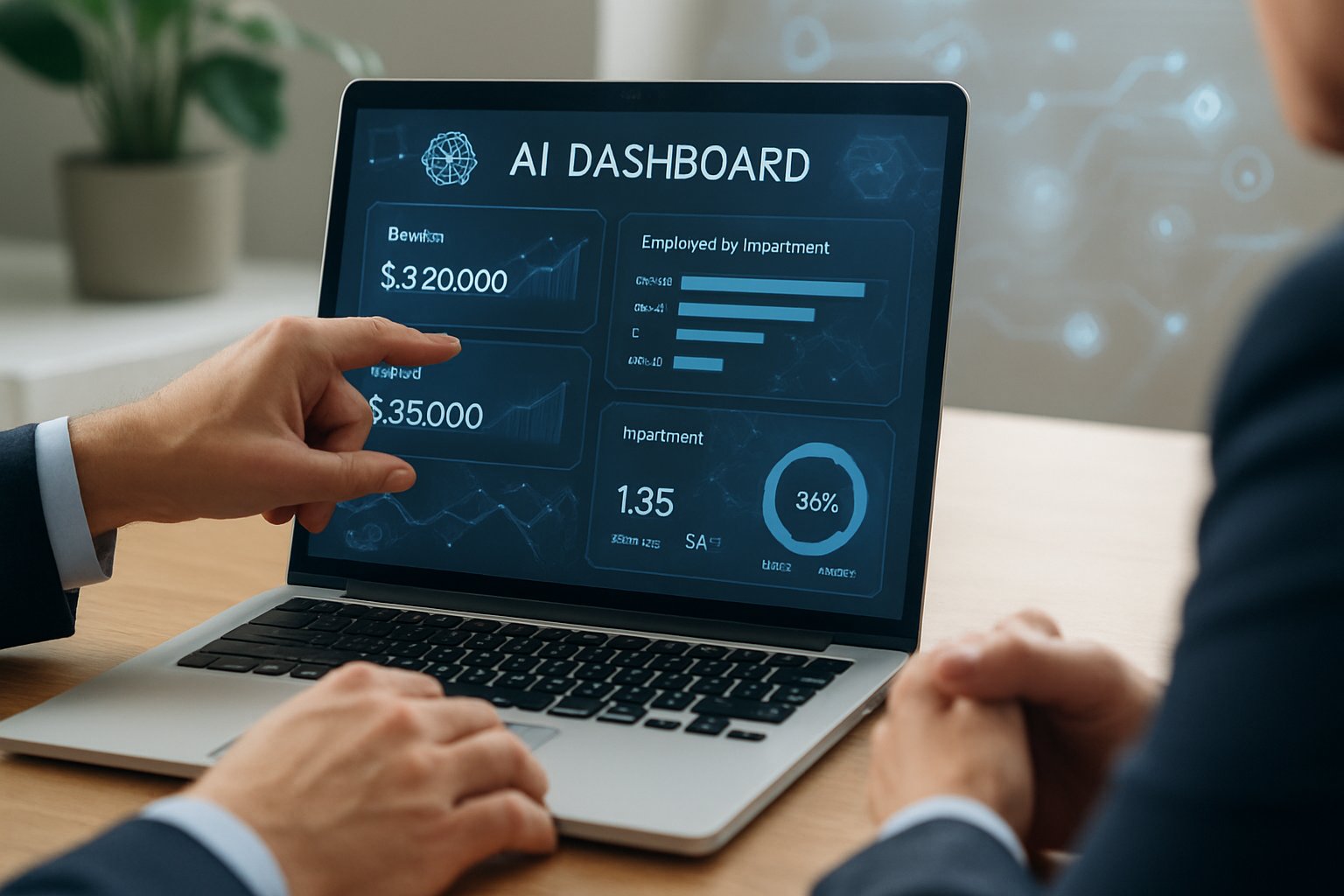
AI Workflow Automation Gains
Market signals point to clear upside. Gartner notes 58% of finance teams already deploy AI in reconciliation, yet many stop at prototypes. Meanwhile, SHRM reports 43% HR AI usage, mainly in recruiting and onboarding. Moreover, platform copilots from Microsoft now embed agents inside Excel, Dynamics, and Workday. As a result, practitioners can trigger journal entries, draft variance narratives, or launch onboarding tasks without leaving their familiar workspace.
When executed well, AI workflow automation cuts invoice costs by up to 80% and slashes hire ramp-up time by half. Furthermore, Grand View Research forecasts high-thirty percent CAGRs for enterprise GenAI, underscoring sustained investment momentum.
Section takeaway: The business case is proven, but scaling still requires disciplined execution. Next, we spotlight finance and HR specifics.
Finance And HR Shift
Finance chiefs chase faster closes, reduced days-payable-outstanding, and lean audit trails. Therefore, they prioritize AP automation, anomaly detection, and self-service forecasting as first moves. Conversely, HR directors focus on pre-boarding, learning paths, and service-desk deflection.
Both domains rely on structured data and repeatable approvals, making them fertile ground for business process AI. Yet, fragmented ERP or HCM stacks create integration headaches. Adoptify.ai counters this hurdle with standardized Power Automate, Workday, and ServiceNow connectors that surface AI steps directly inside role desks.
Section takeaway: Finance and HR share repeatable, measurable flows ideal for modernization. Still, several persistent barriers loom.
Top Adoption Barriers Today
Despite enthusiasm, three issues repeatedly stall momentum:
- Data readiness: Siloed ledgers and inconsistent employee records hinder model accuracy.
- Talent gaps: Dayforce found 71% of workers untrained on GenAI basics.
- Governance anxiety: CFOs fear regulatory fines from uncontrolled prompts or exposures.
Consequently, pilots linger in “purgatory” and CFOs shelve budgets. Furthermore, scattered change programs rarely address frontline behavior. Adoptify.ai’s consulting practice integrates business process AI design with in-app nudges, minimizing disruption.
Section takeaway: Clear data, skills, and risk plans are mandatory. The next section shows a proven rollout model.
AdaptOps Rollout Model
Adoptify’s AdaptOps model provides a four-stage guardrail:
- Discover: Benchmark unit costs and pick high-ROI tasks.
- Pilot: Launch minimal-viable flows with telemetry and policy checks.
- Scale: Template successes across entities and geographies.
- Embed: Sustain value via dashboards and continuous learning.
Each gate enforces exit criteria, risk approvals, and weekly KPI reviews. Therefore, finance agents that reconcile cash or HR bots that schedule interviews evolve safely from sandbox to production. Moreover, AI workflow automation references are cataloged for reuse, avoiding duplicate effort.
Section takeaway: Structured stages beat ad-hoc pilots every time. Yet humans still decide adoption success.
Human Centric Enablement
Technology alone cannot guarantee scale. Accordingly, Adoptify.ai embeds role-based microlearning, prompt libraries, and champion networks inside the live application. Employees practice on real forms while guardrails correct missteps. Consequently, exception rates fall and confidence climbs.
Interactive dashboards flag locations where usage lags. Afterwards, managers dispatch targeted coaching clips, closing the loop. This closed-loop approach transforms business process AI from abstract capability into daily habit.
Section takeaway: In-flow guidance accelerates mastery and audit safety. Security remains the final pillar.
Secure And Scalable Practices
Regulated data demands robust controls. Adoptify.ai enforces policy-as-code, role-based access, and automated red-team tests before new flows go live. Furthermore, embedded telemetry provides immutable audit trails for every model prompt and output.
Therefore, finance leaders prove compliance during close cycles, and HR can document bias checks in hiring bots. Additionally, continuous scans alert teams to drift, preventing silent failures. With these measures, AI workflow automation operates under the same rigor as core ERP processes.
Section takeaway: Security and governance must sit inside the workflow, not beside it. Now, let’s recap value and next steps.
Driving Value With Adoptify
Enterprises now possess the playbook to capture repeatable gains. They should start with measurable finance or HR tasks, follow AdaptOps gates, and pair automation with live learning. Moreover, they must embed security at every click. By doing so, organizations realize faster closes, lower invoice costs, and happier new hires.
Why Adoptify AI? The platform fuses AI workflow automation, interactive in-app guidance, intelligent user analytics, and automated workflow support. Consequently, companies achieve faster onboarding, higher productivity, and provable ROI—all with enterprise-grade security and scale. Experience the advantage at Adoptify.ai.
Frequently Asked Questions
- What is AI workflow automation and how does it impact finance and HR?
AI workflow automation streamlines finance and HR processes, enabling faster closes, reduced costs, and smoother onboarding. It leverages in-app guidance to improve productivity and digital adoption. - How does Adoptify AI’s AdaptOps model drive successful digital adoption?
The AdaptOps model guides digital adoption through four phases—Discover, Pilot, Scale, and Embed—ensuring disciplined execution, enhanced user analytics, and automated support for sustained operational benefits. - How does Adoptify AI address security and governance in business process AI?
Adoptify AI enforces policy-as-code, role-based access, and automated tests to ensure secure, compliant AI workflows. These robust controls protect sensitive data and reduce governance risks. - How does in-app guidance improve user engagement and reduce errors?
Interactive in-app guidance and role-based microlearning offer real-time support and coaching, effectively reducing errors and boosting user confidence while promoting efficient digital workflow adoption.
FEATURED
The Complete Guide to Building an AI Adoption Framework for 2026
March 2, 2026
FEATURED
Who Owns the Intellectual Property in Enterprise AI Adoption
March 2, 2026
FEATURED
7 Reasons To Embrace AI-Native Architecture
March 2, 2026
FEATURED
Hybrid AI FAQ: Strategy, Governance, and ROI
March 2, 2026
FEATURED
Agentic AI Integration Playbook for Enterprises
March 2, 2026