Structured AI Adoption Across Departments: AdaptOps Blueprint
Executives feel the urgency. Competitors already pilot large language models, yet results stall without structure. Effective AI adoption demands repeatable moves that align people, processes, and platforms. This article breaks down an AdaptOps-inspired playbook that guides HR, L&D, IT, and business teams from first use case to enterprise scale.
Cross Department AI Adoption
Many firms experiment in silos. McKinsey notes 88% use AI somewhere, yet few scale value. Consequently, boards now ask for durable scale, not isolated wins. A cross-functional council solves fragmentation by assigning intake owners, governance architects, and business sponsors for every initiative.
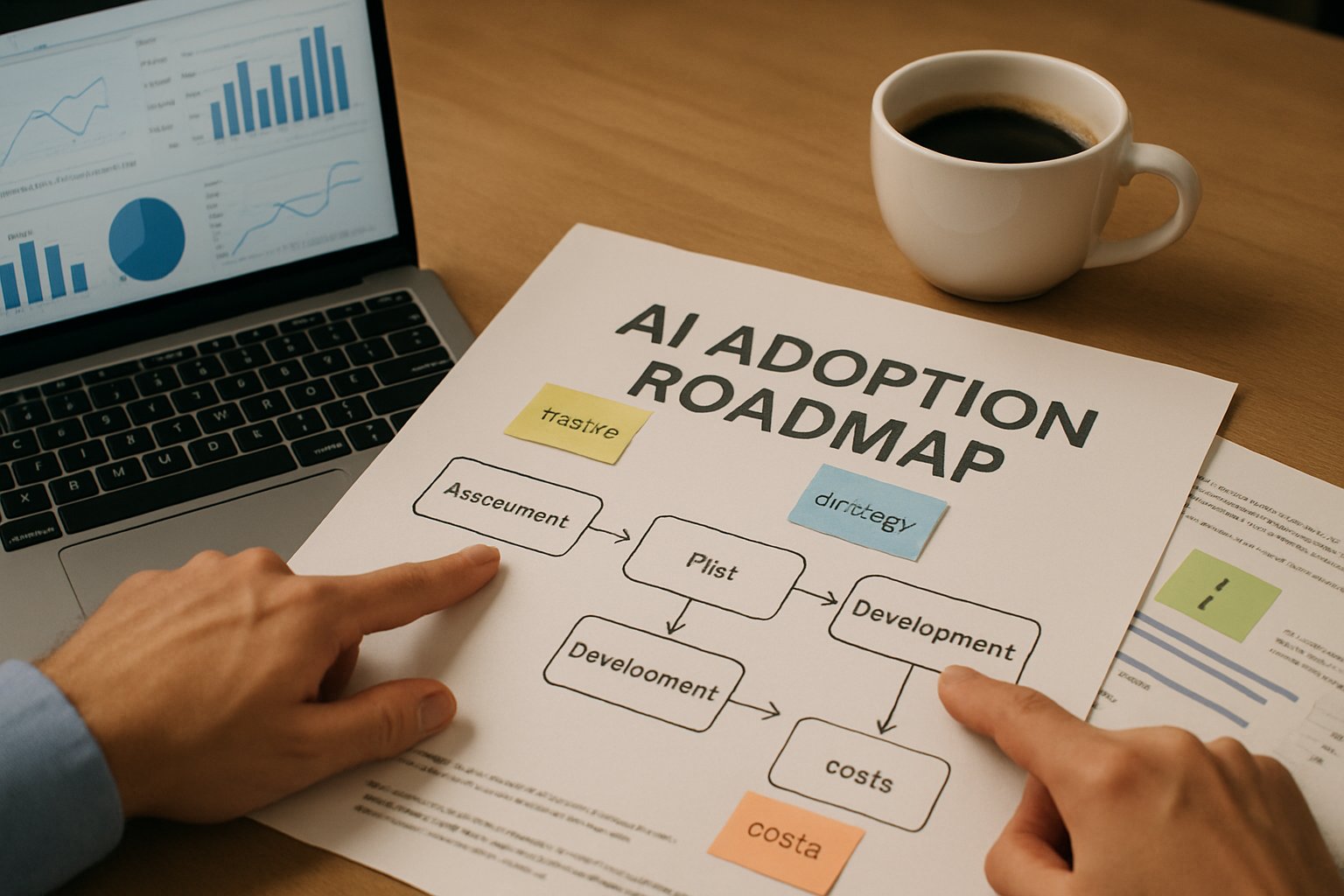
Moreover, the council sets release cadences and measures benefits in one dashboard. When Topsoe reached 85% Copilot uptake, leadership credited unified governance and weekly decision checkpoints. That success shows why structured collaboration accelerates progress.
Key takeaway: Shared governance plus shared metrics remove “pilot purgatory.” Therefore, every department can expand confidently.
Why Structure Truly Matters
Analyst data reveals severe friction. ModelOp found many generative projects need 6-18 months from intake to production. Meanwhile, Snowflake reports 92% ROI among early adopters who embed structure early. Structure shortens time-to-value by locking roles, rules, and funding triggers before writing any prompt.
Andrew Ng echoes the lesson: prioritize tasks, prototype quickly, then decide build versus buy. A formal intake checklist ensures every request follows that pathway. HR teams appreciate the clarity because it ties learning mandates directly to approved use cases.
Key takeaway: Clear guardrails boost speed and trust. Next, explore the AdaptOps loop.
AdaptOps Loop Core Steps
The AdaptOps loop follows four stages: Discover, Pilot, Scale, Embed. Discover lasts two weeks. Teams conduct readiness scans and shortlist twelve high-impact use cases. They also map data exposure risk per function.
During Pilot, 50-200 users test live copilots for six weeks. Governance gates require KPI dashboards measuring minutes saved and error reduction. Scale expands features to adjacent teams while enforcing role-based libraries and monthly cost reviews. Finally, Embed integrates AI outcomes into SOPs and performance goals.
Key takeaway: A time-boxed loop prevents aimless experiments. Next, review governance must-haves.
Governance First Always Essential
Gartner frames governance, trust, risk, and security management (TRiSM) as the prime blocker to enterprise AI. Organizations therefore build policy-as-code layers, prompt logging, and persona-based entitlements. Adoptify’s governance starter kits deliver those controls out-of-the-box.
Additionally, strict intake gates require data classification and legal sign-off before scaling any agent. That rigor explains why Sandvik achieved 30% productivity gains without regulatory setbacks.
Key takeaway: Governance is not bureaucracy; it is an accelerator. With controls set, data becomes the next hurdle.
Data Foundations Fuel Scale
Generative models need curated, contextual data. Snowflake research shows higher ROI when firms modernize data estates first. Enterprises now invest in lakehouse architectures and cross-department data contracts.
Consequently, data products move faster through AdaptOps gates. Microsoft Fabric customers often reach production in half the previous time because lineage and security are documented.
Key takeaway: Clean, governed data unlocks enterprise speed. However, people still decide success.
People Skills And Culture
Technology fails without skilled users. Leading firms run robust AI adoption framework workshops and create microlearning playlists for every role. They supplement these with champion networks and adaptive nudges inside apps.
Consider three proven talent levers:
- Executive literacy sprints for decision speed.
- AI upskilling programs for frontline fluency.
- Certified champions who host weekly office hours.
Moreover, HR embeds usage goals into performance reviews. That link reinforces behavior change.
Key takeaway: Culture work multiplies technology investment. Next, align funding with value.
Funding And ROI Discipline
Finance leaders demand dollar evidence. AdaptOps recommends early dollarization: convert minutes saved to FTE equivalents, then to EBIT impact. Snowflake’s study shows early adopters return $1.41 for every $1 spent.
Microsoft ECIF-funded pilots further de-risk budgets. Enterprises set stage-gate triggers; when a pilot meets KPI thresholds, new funding activates automatically. This model creates an enterprise AI adoption strategy everyone understands.
Key takeaway: Structured funding converts excitement into sustainable budgets. Finally, recap why structure wins.
Framework Summary Points
The table below condenses critical actions.
| Stage | Focus | Primary Metric |
|---|---|---|
| Discover | Use-case selection | Risk score |
| Pilot | Controlled test | Minutes saved |
| Scale | Playbook rollout | User coverage |
| Embed | SOP integration | Business KPI uplift |
Consequently, teams gain a clear north star.
Next Steps Checklist
Follow these actions within 90 days:
- Create a cross-functional AI council.
- Install a governance starter kit.
- Launch two funded pilots.
- Run targeted AI upskilling programs.
- Publish a unified ROI dashboard.
Therefore, momentum stays visible and measurable.
Leaders now grasp the repeatable path. The next section explains how Adoptify accelerates that journey.
Conclusion And Call-To-Action
Enterprises succeed when structure guides technology. A council aligns goals, governance guards trust, data readiness fuels scale, culture drives usage, and disciplined funding sustains progress. Together, these pillars support resilient organizational AI adoption.
Why Adoptify ? Our platform powers AI adoption with interactive in-app guidance, intelligent user analytics, automated workflow support, and enterprise-grade security. Consequently, clients enjoy faster onboarding and higher productivity across every function. Explore how Adoptify can streamline your workflows at Adoptify.ai.
Frequently Asked Questions
- What benefits does structured AI adoption offer?
Structured AI adoption with clearly defined roles, governance, and cross-functional collaboration accelerates the path to enterprise scale by shortening time-to-value and boosting decision speed. - How can Adoptify improve digital adoption efforts?
Adoptify enhances digital adoption by offering interactive in-app guidance, intelligent user analytics, and automated workflow support, streamlining onboarding and improving productivity across all departments. - What role does governance play in scaling AI initiatives?
Strong governance structures establish role-based controls and ensure data security by setting clear guidelines for funding and project alignment, reducing risk and driving efficient, scalable AI adoption. - Why is in-app guidance essential for organizational AI adoption?
In-app guidance is crucial as it offers users real-time support directly within the platform, boosting engagement, simplifying complex workflows, and accelerating learning for swift and sustainable AI adoption.
FEATURED
The Complete Guide to Building an AI Adoption Framework for 2026
March 2, 2026
FEATURED
Who Owns the Intellectual Property in Enterprise AI Adoption
March 2, 2026
FEATURED
7 Reasons To Embrace AI-Native Architecture
March 2, 2026
FEATURED
Hybrid AI FAQ: Strategy, Governance, and ROI
March 2, 2026
FEATURED
Agentic AI Integration Playbook for Enterprises
March 2, 2026