Healthcare systems worldwide are entering a transformative phase where artificial intelligence is moving from experimental research to frontline patient care. At the center of this transition is Clinical-Grade AI, a new category of AI systems designed to meet regulatory, safety, and operational standards required for clinical environments. Hospitals and healthcare providers are now integrating advanced AI capabilities into daily workflows, enabling improved diagnostics, faster documentation, and scalable patient management.
The rise of Clinical-Grade AI reflects the growing demand for efficiency and precision in healthcare delivery. Medical institutions are under pressure to address workforce shortages, rising patient volumes, and increasing administrative complexity. Technologies such as ambient scribes, electronic health record integration, virtual nursing platforms, and scalable AI deployments are becoming foundational components of modern healthcare infrastructure. This article explores how AI is reshaping clinical operations, the technologies driving this transformation, and the broader implications for healthcare scalability and patient outcomes.
Healthcare Enters the Era of AI-Driven Clinical Workflows
The adoption of Clinical-Grade AI signals a shift from manual and fragmented healthcare processes toward integrated and automated clinical workflows. Traditional healthcare environments rely heavily on manual documentation, administrative coordination, and clinician-led data interpretation. AI systems are now augmenting these processes by capturing clinical interactions, organizing patient records, and assisting medical professionals with decision support.
Hospitals deploying Clinical-Grade AI solutions are seeing improvements in operational efficiency and care consistency. AI systems analyze clinical data in real time, allowing physicians to focus more on patient engagement and less on administrative tasks. These capabilities are helping healthcare providers manage increasing patient loads while maintaining high standards of care.
In the next section, we will explore how ambient scribes are revolutionizing clinical documentation.
Ambient Scribes Reduce Documentation Burden
One of the most immediate applications of Clinical-Grade AI is the introduction of ambient scribes that automatically capture and document patient interactions. These AI systems listen to physician patient conversations and convert them into structured medical records.
Ambient scribes powered by Clinical-Grade AI help eliminate one of the largest sources of clinician burnout which is documentation workload. Physicians can now focus on diagnosis and patient care while AI handles real time note generation and record updates.
These tools also improve documentation accuracy by capturing detailed clinical information that might otherwise be missed during manual entry. Healthcare providers are increasingly viewing ambient scribes as essential tools for improving workflow efficiency and patient satisfaction.
In the next section, we will examine how integration with electronic health records is expanding AI impact across healthcare systems.
EHR Integration Enables Unified Patient Data Management
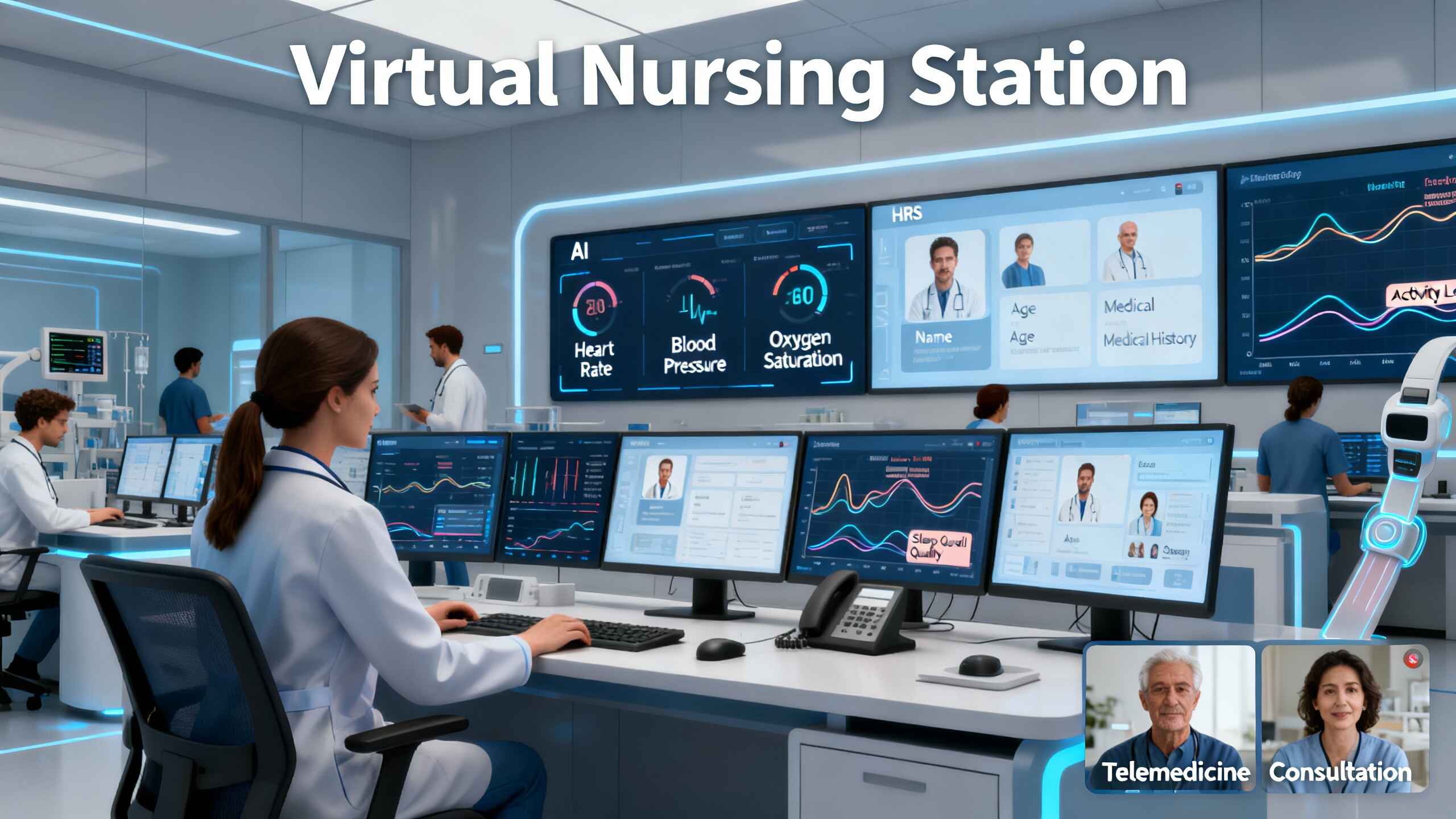
Virtual nursing platforms powered by AI are expanding healthcare capacity and improving patient monitoring.
Electronic health records are central to modern healthcare operations, and the integration of Clinical-Grade AI with EHR systems is unlocking new levels of clinical insight. AI platforms analyze large volumes of patient data, identifying patterns and supporting clinical decision making.
Healthcare organizations deploying Clinical-Grade AI within EHR environments are improving patient monitoring and care coordination. AI systems help clinicians access relevant patient data quickly, enabling faster diagnosis and treatment planning.
Enterprises seeking to implement AI-driven healthcare transformation are increasingly collaborating with platforms like Adoptify ai to streamline deployment and operational alignment. These platforms assist healthcare providers in evaluating infrastructure readiness, optimizing AI integration strategies, and managing long term scalability.
In the next section, we will explore how AI is enabling scalable healthcare delivery through virtual nursing.
Virtual Nursing Expands Patient Care Capacity
Virtual nursing solutions powered by Clinical-Grade AI are emerging as a critical response to global nursing shortages. These systems allow healthcare providers to monitor patients remotely, conduct virtual consultations, and support bedside staff through digital communication tools.
Hospitals using Clinical-Grade AI driven virtual nursing platforms are improving patient monitoring capabilities and reducing staff workload. AI systems can analyze patient data continuously, identifying early warning signs and alerting clinicians to potential complications.
Virtual nursing is also enabling healthcare providers to extend services to underserved regions. By combining telemedicine with AI-driven monitoring, healthcare systems are expanding access to specialized care.
In the next section, we will discuss how healthcare organizations are scaling AI across clinical operations.
Scaling AI Across Healthcare Systems
Scaling Clinical-Grade AI across healthcare networks requires careful infrastructure planning and operational integration. AI deployments must meet regulatory standards, ensure patient data security, and integrate seamlessly with clinical workflows.
Healthcare providers adopting Clinical-Grade AI are building centralized AI platforms that support multiple clinical functions including diagnostics, patient monitoring, and administrative automation. These platforms enable hospitals to deploy AI capabilities across departments while maintaining consistent performance and compliance.
Healthcare organizations working with Adoptify ai are improving AI adoption strategies by aligning technology investments with clinical goals. These partnerships help healthcare institutions overcome integration challenges and accelerate AI deployment timelines.
In the next section, we will analyze how AI is enhancing clinical decision support systems.
AI Enhances Diagnostic and Decision Support Capabilities
The expansion of Clinical-Grade AI is significantly improving diagnostic accuracy and clinical decision support. AI systems analyze imaging data, laboratory results, and patient histories to identify patterns that support physician decision making.
Hospitals deploying Clinical-Grade AI driven diagnostic tools are improving early disease detection and treatment outcomes. AI systems provide clinicians with predictive insights that support personalized treatment planning and risk assessment.
This capability is transforming how clinicians approach patient care. AI-assisted diagnosis reduces variability in clinical decisions and supports evidence based treatment strategies.
In the next section, we will examine the operational and workforce impact of AI in healthcare.
Workforce Transformation Through AI Integration
The adoption of Clinical-Grade AI is reshaping healthcare workforce dynamics by redefining roles and responsibilities. Rather than replacing medical professionals, AI is augmenting clinical capabilities and supporting staff productivity.
Healthcare institutions deploying Clinical-Grade AI are enabling clinicians to focus on complex patient interactions while AI systems manage routine administrative tasks. This shift is improving job satisfaction and reducing burnout among healthcare professionals.
Training and workforce development programs are becoming essential as healthcare staff learn to collaborate with AI systems. Organizations are investing in AI literacy programs to ensure successful adoption across clinical teams.
In the next section, we will explore the regulatory and ethical considerations shaping AI deployment in healthcare.
Regulatory and Ethical Considerations in Clinical AI
The deployment of Clinical-Grade AI requires adherence to strict regulatory frameworks and ethical guidelines. Healthcare AI systems must meet clinical validation standards and ensure patient data privacy.
Healthcare providers implementing Clinical-Grade AI are establishing governance frameworks that monitor system performance and ensure compliance with medical regulations. Transparency in AI decision making is becoming a critical requirement for maintaining patient trust.
Ethical considerations such as bias mitigation, patient consent, and accountability are shaping how AI systems are developed and deployed. Healthcare organizations are prioritizing responsible AI practices to ensure safe and equitable patient care.
In the next section, we will look at future trends shaping AI driven healthcare innovation.
Future Outlook for AI Driven Clinical Healthcare
The future of Clinical-Grade AI will be defined by deeper integration with healthcare infrastructure and expanded clinical applications. Advances in predictive analytics, personalized medicine, and automated care coordination will continue to drive innovation.
Healthcare providers adopting Clinical-Grade AI will gain competitive advantages through improved patient outcomes and operational efficiency. As AI technologies mature, healthcare systems will increasingly rely on AI to manage complex clinical environments.
The transformation of healthcare through AI represents one of the most significant technological shifts in modern medicine. Readers interested in exploring broader AI adoption trends across infrastructure and energy sectors can revisit the previous article to understand how AI is reshaping industrial ecosystems and driving cross industry innovation.